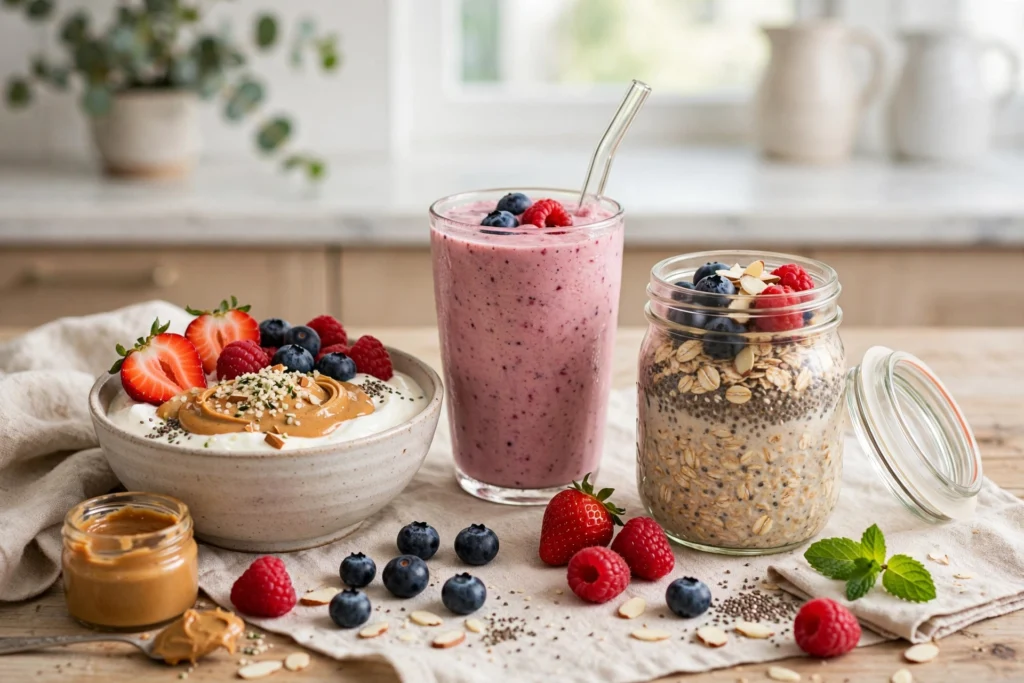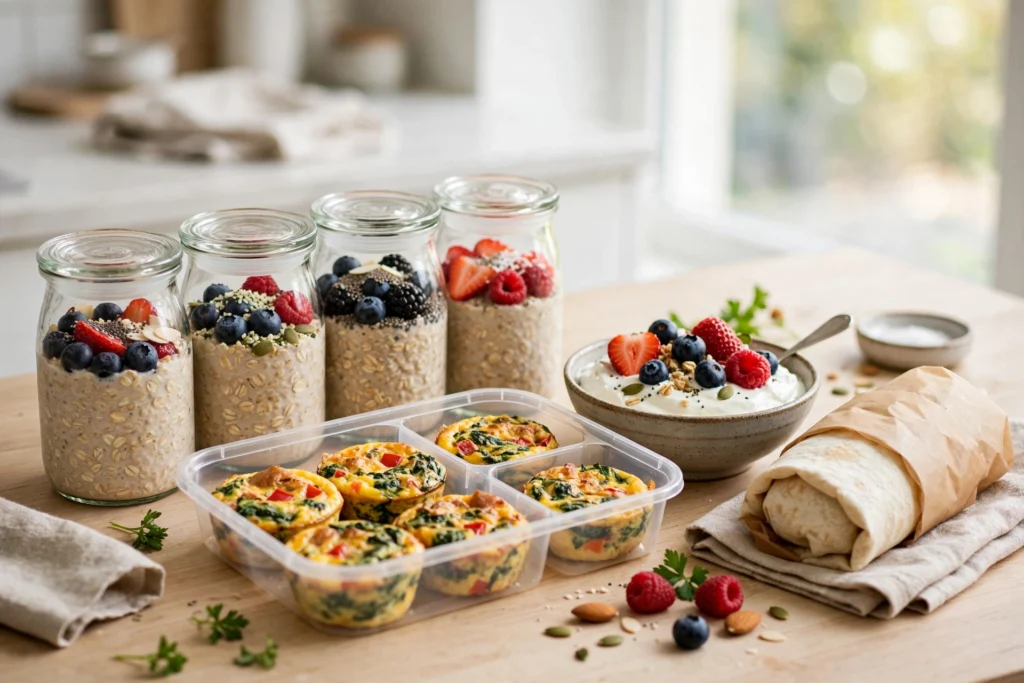
Protein chia pudding is what you make the night before a morning you do not trust: chia seeds whisked into milk, Greek yogurt, and vanilla protein powder, left in the fridge until the seeds drink up the liquid and set the whole jar into a spoonable pudding. The active work takes about five minutes. The fridge does the rest, and the set needs at least 4 hours, so this is a make-ahead breakfast, not a same-morning one. Each serving carries about 28g of protein — counted from the ingredients below, where the whey, the yogurt, and the milk all contribute, not just the seeds — with about 365 calories and 12g of fiber. This is a high protein chia pudding built on a simple principle: the creaminess comes from yogurt whisked into the base, not poured on top at the end.
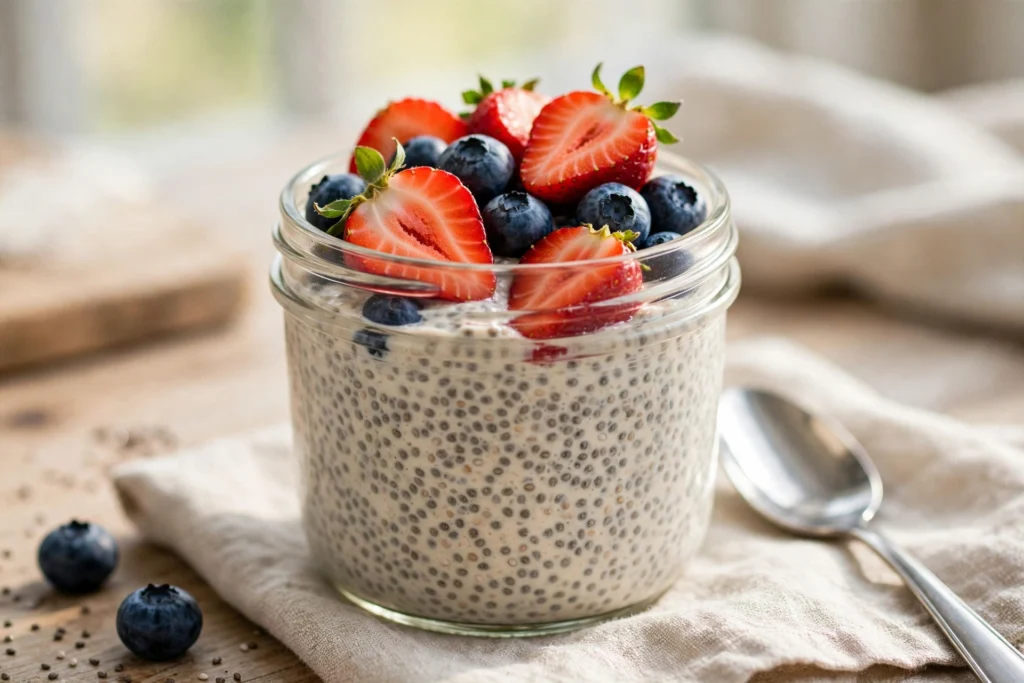
Table of Contents
ToggleWhat Is Protein Chia Pudding?
Chia pudding starts with a dry seed that behaves like no other breakfast ingredient. Put chia seeds in liquid and the outer coat of each seed forms a gel, absorbing many times its own weight in water. Stir enough seeds into enough liquid, wait, and the mixture stops being a drink and becomes a pudding — thick, spoonable, and sliceable-soft, with no cooking, no eggs, and no starch to thicken it.
Plain chia pudding, though, is a modest breakfast. The seeds bring fiber and healthy fats, but a basic milk-and-chia mix lands in the single digits for protein. Protein chia pudding is the same format with the base rebuilt: part of the liquid is Greek yogurt, and a scoop of protein powder goes in before the seeds, so the finished jar delivers a real protein serving instead of a garnish of one.
The texture sits in its own category. It is thicker and more set than yogurt, softer and colder than oatmeal, and nothing like a smoothie — it is eaten with a spoon, slowly. Readers who like the make-ahead idea but want a cooked breakfast instead should look at the stovetop protein oatmeal, which owns the saucepan version of this routine; the oven-baked member of the same family is the protein baked oatmeal. On mornings that call for drinking breakfast, the high-protein breakfast smoothies cover that format. This page is only about the jar that sets in the fridge.
Ingredients for Protein Chia Pudding
Makes 2 servings. Everything is whisked in one bowl or a large jar — no cooking equipment at all.
Chia seeds, 6 tablespoons (72g). The structure of the whole recipe. The seeds are the thickener: their gel is what turns flavored milk into pudding. Six tablespoons across two servings is the ratio this recipe is built on — enough seeds that the set is firm and creamy rather than loose. Black and white chia behave the same here. Old seeds that have sat open in a pantry for a year absorb less eagerly; if a batch ever refuses to set, seed age is a fair suspect.
2% milk, 1 cup (244g). The liquid base. Dairy milk matters to the protein count — a cup contributes about 8g before anything else goes in. Whole milk works and tastes richer; skim milk works and sets slightly softer. Plant milks change the math, which the protein section below covers honestly.
Plain non-fat Greek yogurt, ½ cup (120g). The creaminess and a serious share of the protein — about 12g from this half cup alone. It is whisked into the base, not spooned on top, which is what makes the set pudding taste like pudding instead of sweetened seeds in milk. This is a chia pudding with Greek yogurt in the mixture itself. The site’s Greek yogurt recipes roundup shows the same ingredient carrying bowls, dips, and bakes. Use plain yogurt: a flavored, sweetened one stacks sugar on top of the maple syrup already counted here.
Vanilla whey protein powder, 1 scoop (30g). The largest single protein contribution, about 24g. Whey is specified because it dissolves cleanly into cold milk with a whisk; plant powders work but drink up more liquid and can turn the texture slightly pasty, so add an extra tablespoon or two of milk if you swap. Brands differ in sweetness and absorption — the label on your tub outranks any number printed here. This makes the recipe a chia pudding with protein powder as well as yogurt, which is why the protein total climbs as high as it does.
Maple syrup, 1 tablespoon (20g). Measured sweetness to balance plain yogurt and unsweetened seeds. Honey swaps in at the same amount. Readers who take breakfast barely sweet can cut it to 2 teaspoons; the set is unaffected.
Vanilla extract, 1 teaspoon. Rounds out the whey and yogurt so the jar tastes like vanilla pudding rather than flavored milk. A pinch of fine salt is optional and sharpens everything slightly; it is not in the nutrition count because it is genuinely a pinch.
Optional toppings — berries, banana, nut butter, cocoa — are covered in their own section below and are NOT included in the base nutrition, because everyone tops differently.
How to Make Protein Chia Pudding
Active time is about 5 minutes. The steps are few, but the order matters — powder into liquid first, seeds last, and the second stir is not optional.
- Build the smooth base first. In a medium bowl or a large jar, whisk the milk, Greek yogurt, protein powder, maple syrup, and vanilla together until no powder pockets remain. This is easier now than after the seeds go in, and it is the step that prevents a chalky jar later.
- Add the chia seeds. Sprinkle them over the base and whisk or stir thoroughly for about 30 seconds, scraping the bottom, until the seeds are distributed through the liquid rather than floating in a raft on top.
- Rest 5 minutes, then stir again. Leave the mixture on the counter for 5 minutes. The seeds begin gelling immediately and drift into clumps as they do. Stir or whisk again, breaking up every clump you find. This second stir is the difference between an even pudding and a jar of lumps in thin milk.
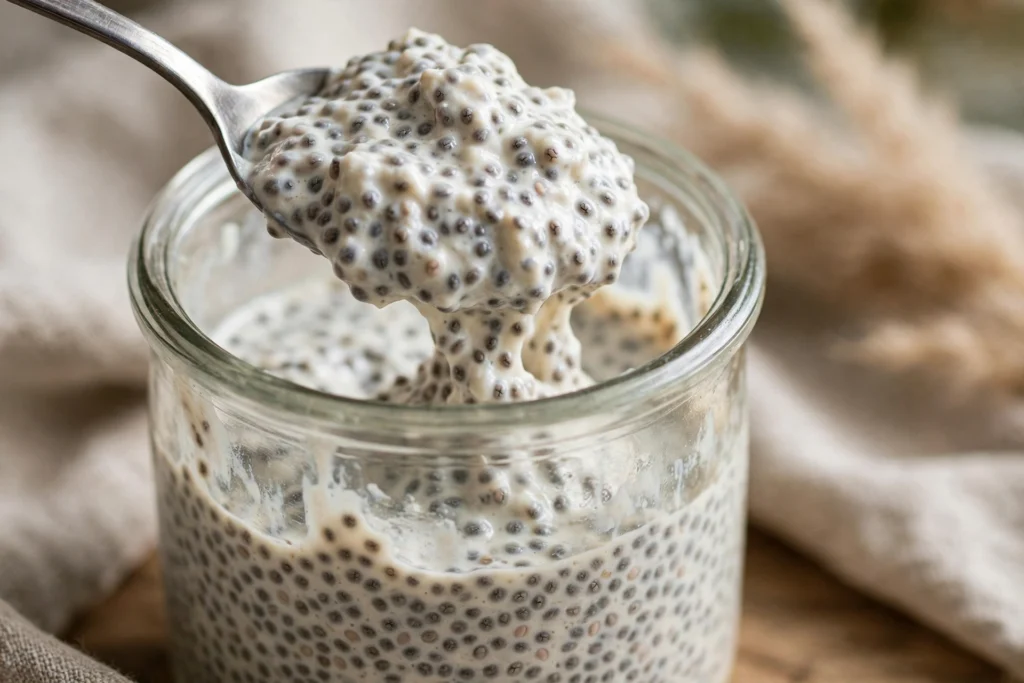
- Portion, cover, and refrigerate at least 4 hours. Divide the mixture between two jars or covered containers, cover them, and refrigerate. Overnight is ideal. At the 4-hour mark the pudding is set and spoonable; by 8 hours it is at its firmest. Before chilling, the mixture looks like flavored milk with seeds suspended in it — thin and a little unpromising. After chilling, it holds soft peaks on a spoon and the seeds are no longer individually visible as dry specks.
- Stir and top at serving. Give the set pudding a good stir — it loosens into creaminess — and add toppings at serving time, not before storage.
How to Make Chia Pudding High in Protein
The protein in this jar comes from four places, and understanding the split is what lets you adjust the recipe without wrecking it. Per serving, roughly: the whey contributes about 12g, the Greek yogurt about 6g, the milk about 4g, and the chia seeds themselves about 6g — 28g in total. This is what high protein chia pudding actually requires: stacking moderate sources, not relying on one.
Greek yogurt is the most useful lever after the powder. It adds protein and thickness at the same time, so swapping part of the milk for more yogurt raises protein while making the set firmer, not looser. It is the rare substitution that improves both columns at once.
Milk choice moves the number more than readers expect. Dairy milk gives about 8g of protein per cup. Almond milk gives about 1g per cup and oat milk only about 2 to 3g — a swap that barely changes the calories quietly removes about 7g of protein from the batch with almond milk, and about 5g with oat. Soy milk, at roughly 7g per cup, is the plant option that keeps the recipe’s math close to intact.
Protein powder is the biggest single jump and the most variable. A scoop can carry anywhere from 20 to 25g of protein depending on the brand, and powders absorb liquid at different rates — a thirsty plant blend may need an extra splash of milk to reach the same set. Count from your own tub’s label.
Nut butter belongs in the toppings conversation, not the base. A tablespoon of peanut butter adds about 4g of protein alongside roughly 95 calories of mostly fat. It is a fine topping. It is not a substitute for the powder or the yogurt, and presenting it as one would flatter the numbers while changing the dish.
The honest rule: the total is whatever your actual ingredients add up to. Chia pudding is not automatically high in protein — a seeds-and-almond-milk version is a fiber breakfast wearing a protein recipe’s title. The yogurt, dairy milk, and powder are what earn the name here.
How to Get the Perfect Chia Pudding Texture
Most chia pudding disappointment is a ratio or a stirring problem, not a recipe problem. The fixes below are specific to this recipe’s proportions.
Too thin and watery. Two causes, usually. The pudding has not chilled long enough — chia gel keeps building for hours, and a jar judged at 90 minutes is not the jar you get at 4 hours. Or the second stir was skipped, so half the seeds clumped together and never made contact with the liquid. For a genuinely loose batch, whisk in 1 extra teaspoon of chia, stir well, and give it another 2 hours. Next time, check the milk measure: a generous pour is the quiet culprit behind most thin puddings.
Too thick and pasty. The seeds won. Protein powders absorb differently, and a thirsty brand can pull the set past pudding into paste. Stir in milk 1 tablespoon at a time until the spoon moves the way you want. Two or three tablespoons is normally the whole correction — add it gradually, because the trip from too thick to too thin is short.
Clumpy. The seeds gel on contact with liquid, and seeds that land together gel into each other, forming rubbery clusters with dry centers. The defense is mechanical: whisk the seeds in gradually rather than dumping them, stir once more after the 5-minute rest, and break up any cluster against the side of the bowl. A jar shaken hard with the lid on does the same job.
Gritty or uneven. Some seeds hydrated and some did not. This points back to distribution — seeds stuck to the bowl’s sides or resting on the bottom never join the pudding. Scrape the bowl down during both stirs, and allow the full chill: hydration that looks complete at the surface is often still catching up in the middle of the jar.
Too chalky. That is protein powder that never fully dissolved — dry pockets whisked into the seeds before they could disperse. The base-first order in the method exists for this reason. If a finished jar tastes chalky, a vigorous stir and 30 more minutes of rest smooths most of it; a powder that stays chalky in milk on its own will stay chalky here, and a different brand is the real fix.
Protein Chia Pudding Topping Ideas
Toppings go on at serving time. All of them change the numbers — berries modestly, nut butter seriously — and none are included in the base nutrition.
- Strawberry: sliced fresh strawberries, the lightest option, adding mostly freshness and a little natural sugar.
- Blueberry: a handful of blueberries with the vanilla already in the base — the simplest variation and the one that changes the base least.
- Banana and peanut butter: half a medium banana, sliced, with 1 measured tablespoon of peanut butter. Delicious, and honestly a second course: it adds roughly 150 calories and about 4g of protein on top of the base figures.
- Chocolate: 1 teaspoon of unsweetened cocoa powder whisked into the base before chilling, or a teaspoon of mini chocolate chips scattered on top at serving. The cocoa route deepens flavor for about 4 calories; the chips route costs more.
- Mixed berries: strawberries, raspberries, and blueberries together — the best-looking jar, and the fruit stays bright because it never sits in the pudding during storage.
Keep toppings fresh and add them per serving. Fruit folded in before a 4-day stay in the fridge softens, weeps, and shortens the pudding’s good days.
Can You Make Protein Chia Pudding Without Protein Powder?
Yes — and the recipe does not fall apart without it, provided the swap is made properly instead of just leaving the scoop out. Protein powder absorbs liquid as well as adding protein, so a straight omission gives a slightly looser jar with a plain hole in the nutrition.
The adjusted version: remove the whey, raise the Greek yogurt to ¾ cup (180g), and cut the milk by 2 tablespoons (to about 214g). Everything else stays the same, including the double stir and the 4-hour minimum chill. The extra yogurt restores the body the powder was providing, and the small milk reduction keeps the set firm instead of soupy.
The adjusted jar carries about 19g of protein and about 315 calories per serving, with roughly 31g of carbs, 14g of fat, and 12g of fiber. That is a respectable breakfast by any measure — it is simply a different number from 28g, and the article will not pretend otherwise. Flavor shifts slightly tangier from the extra yogurt; an additional teaspoon of maple syrup balances it for readers who want it, at about 17 more calories.
How to Meal Prep Protein Chia Pudding
This recipe was built for the fridge, and the prep pattern is simple. Make the base exactly as written, do both stirs, then divide the mixture into two jars or covered containers before chilling rather than portioning after it sets — the pudding sets in its serving jar, and there is no scooping, no mess, and no second container to wash.

Close the jars, refrigerate, and the texture is at its best from the next morning onward. The pudding continues to firm slightly across its storage life, so on day three or four a jar may want a splash of milk and a stir before eating to bring back the first day’s creaminess. Delicate toppings — sliced banana especially, berries if you want them bright — go on at serving. Granola always goes on at serving; sealed into the jar the night before, it hydrates into softness and the crunch is gone.
A week of breakfasts is just the recipe doubled in a bigger bowl, portioned into four jars. Readers assembling a full make-ahead rotation can pair this with the high protein breakfast without eggs list for the savory days. The jars also work as a substantial snack — the high-protein snacks roundup covers the rest of that category for readers planning both.
How to Store Protein Chia Pudding
Keep the pudding covered and refrigerated, and eat it within 4 days. That window follows the standard food-safety guidance for refrigerated prepared foods and leftovers (3–4 days, per FoodSafety.gov), and it is the right window for a dairy-based pudding made with milk and yogurt — combinations built on different bases do not automatically share the same storage life, so this figure belongs to this recipe.
Refrigerate promptly after mixing rather than leaving jars on the counter; the chill the recipe needs and the chill food safety needs are the same trip to the fridge. Store toppings separately wherever they are delicate — cut fruit in its own small container — and stir the pudding before serving, both to check the texture and because a firm top layer over a softer base is normal after days in the fridge. If a jar smells sour beyond the yogurt’s natural tang, or the texture has gone slimy rather than gelled, that jar is done regardless of which day it is.
Freezing is not recommended for this version. The yogurt base thaws grainy and separated, and the result is a poor argument for the recipe. The recipe’s whole design — five minutes of work, four jars in the fridge — makes freezing unnecessary anyway.
Frequently Asked Questions
Is protein chia pudding high in protein?
This recipe is: about 28g of protein per serving, because the whey, Greek yogurt, and dairy milk are stacked on top of the chia seeds. Chia pudding in general is not automatically high in protein — a basic version made with seeds and almond milk can land under 10g per serving. The ingredients decide the answer, not the dish’s name.
How much protein is in chia pudding?
In this recipe, about 28g per serving with protein powder, and about 19g per serving in the adjusted no-powder version (more yogurt, slightly less milk). The chia seeds themselves contribute roughly 6g of each serving’s total; the rest comes from the yogurt, milk, and powder.
Can you make chia pudding without protein powder?
Yes. Raise the Greek yogurt to ¾ cup and reduce the milk by 2 tablespoons to replace the body the powder provides. The result is about 19g of protein per serving — lower than the main recipe’s 28g, and a little tangier, but a properly set pudding, not a compromised one.
How long does chia pudding take to thicken?
The seeds start gelling within about 15–20 minutes, but this recipe needs at least 4 hours in the fridge to reach its intended set, and it is firmest after about 8 hours. The 5 minutes in the recipe’s title is the active prep time — the chilling is separate, and there is no shortcut that produces the same texture.
Why is my chia pudding watery?
Usually one of three things: it has not chilled long enough, the second stir was skipped so the seeds clumped instead of spreading through the liquid, or the milk measure ran generous. Whisk in 1 extra teaspoon of chia and give it 2 more hours before judging it.
Can you use Greek yogurt in chia pudding?
Yes — it is built into this recipe’s base rather than added on top. Greek yogurt makes the pudding thicker and creamier and contributes about 6g of protein per serving here. Plain yogurt is the right choice; sweetened flavored yogurt stacks sugar on top of the maple syrup already counted.
Can protein chia pudding be made ahead?
It is designed for exactly that. Portion the mixture into covered jars before chilling and keep them refrigerated for up to 4 days. Add delicate toppings at serving time, and loosen a later-day jar with a splash of milk and a stir if it has firmed up.
Can you eat chia pudding every day?
For most people, a serving of chia pudding fits comfortably into a varied diet — it is, at base, seeds, milk, and yogurt. Two practical notes: the fiber is substantial at about 12g per serving, so readers new to chia do better building up over a week or two than starting at a daily jar on day one, and chia absorbs a lot of liquid, so eating it alongside a normal intake of water is sensible. Anyone managing a specific medical condition should follow their own clinician’s guidance on their diet as a whole.
References
- USDA FoodData Central — nutrient values for chia seeds, 2% milk, and plain non-fat Greek yogurt, used for the recipe calculations: https://fdc.nal.usda.gov/
- FoodSafety.gov — Cold Food Storage Chart: refrigerate leftovers and prepared foods promptly and use within 3–4 days: https://www.foodsafety.gov/food-safety-charts/cold-food-storage-charts
- Ullah R, et al. (2016). “Nutritional and therapeutic perspectives of Chia (Salvia hispanica L.): a review.” Journal of Food Science and Technology, 53(4), 1750–1758 — on chia’s gel-forming fiber and nutrient profile: https://doi.org/10.1007/s13197-015-1967-0
Recipe: Protein Chia Pudding
Chia seeds whisked into milk, Greek yogurt, and vanilla whey, chilled until set into a creamy, spoonable pudding. Five minutes of prep the night before; breakfast is waiting in the morning.
- Prep time: 5 minutes
- Chilling time: at least 4 hours (overnight ideal)
- Total time: about 4 hours 5 minutes
- Servings: 2
Ingredients
- 6 tablespoons chia seeds (72g)
- 1 cup 2% milk (244g)
- ½ cup plain non-fat Greek yogurt (120g)
- 1 scoop vanilla whey protein powder (30g)
- 1 tablespoon maple syrup (20g)
- 1 teaspoon vanilla extract
- Pinch of fine salt (optional)
- Toppings of choice, at serving (not included in nutrition)
Instructions
- Whisk the milk, Greek yogurt, protein powder, maple syrup, and vanilla in a medium bowl or large jar until completely smooth, with no powder pockets.
- Add the chia seeds and whisk thoroughly for about 30 seconds, scraping the bottom, until the seeds are evenly distributed.
- Rest the mixture for 5 minutes, then stir or whisk again, breaking up any clumps that have formed.
- Divide between two jars or covered containers, cover, and refrigerate for at least 4 hours or overnight, until set and spoonable.
- Stir before serving and add toppings.
Serving suggestions: Eat straight from the jar, topped with fresh berries, sliced banana with a tablespoon of peanut butter, or a teaspoon of cocoa whisked into the base before chilling for a chocolate version.
Storage: Covered and refrigerated for up to 4 days. Store toppings separately. Stir before serving; loosen with a splash of milk if the pudding has firmed up. Freezing is not recommended — the yogurt base thaws grainy.
Nutrition per serving (calculated from the ingredients above; toppings excluded): about 365 calories, 28g protein, 32g carbohydrates, 14g fat, 3g saturated fat, 12g fiber, 15g sugar, about 145mg sodium. No-powder adjusted version (¾ cup yogurt, milk reduced by 2 tbsp, no whey): about 315 calories, 19g protein, 31g carbohydrates, 14g fat, 3g saturated fat, 12g fiber, 15g sugar, about 85mg sodium. Figures are calculations from standard ingredient values and product labels, not laboratory analysis; your brands will shift them slightly.