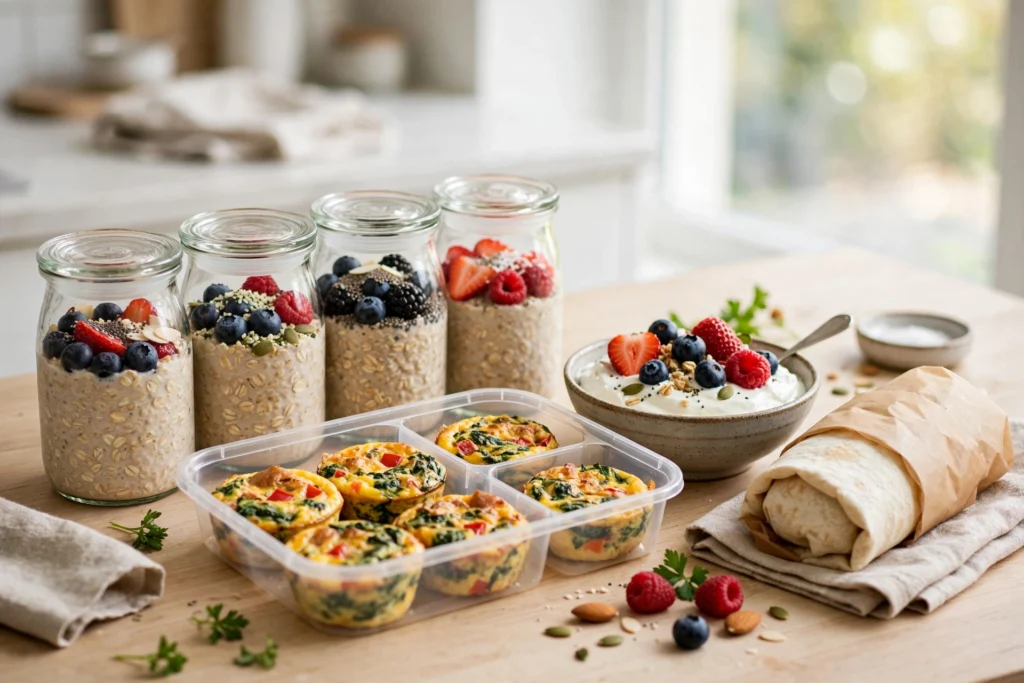
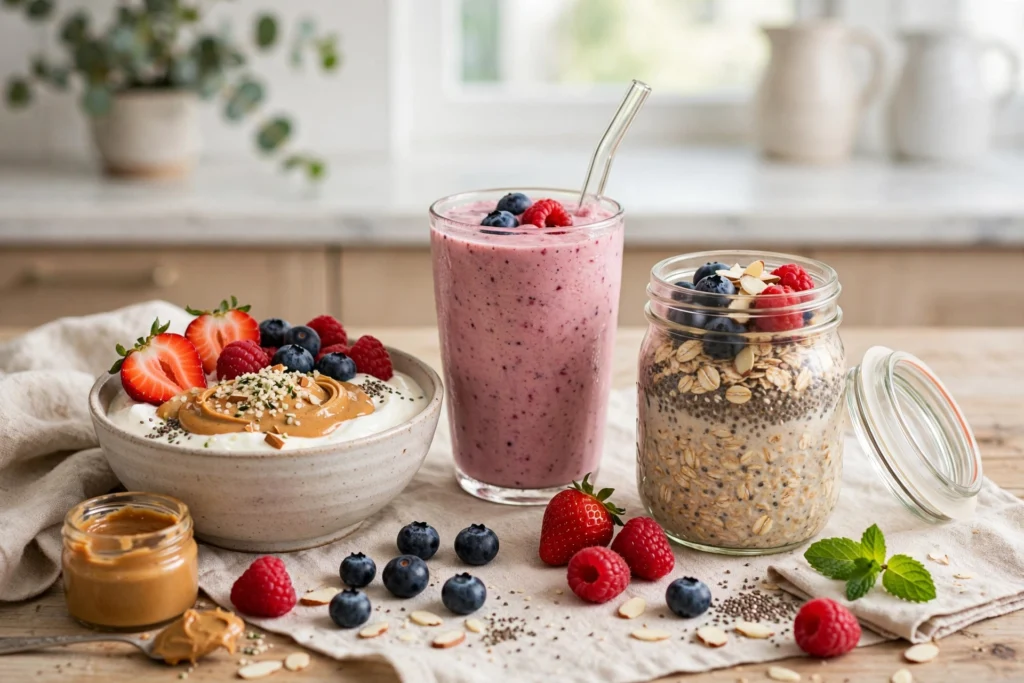
Yes, you can hit 25–30 grams of protein at breakfast without a single egg. The three fastest options: a Greek yogurt bowl (about 27g), a peanut butter banana shake (about 32g), and protein overnight oats (about 25g). When I stopped eating eggs every morning — partly boredom, partly the price — these are the breakfasts that actually stuck, because none of them take more than 10 minutes and none leave you hungry by 10 a.m.
Eggs are the default high-protein breakfast for a reason. They are cheap and easy. But plenty of people can’t eat them, won’t eat them, or just can’t face another omelette. What most people miss is that dairy, oats, and nut butters quietly cover the same ground. You just have to stack them on purpose instead of hoping a bowl of cereal does the job. It won’t. A plain bowl of cereal has about 4 grams of protein. These have five to eight times that.
Table of Contents
ToggleThe yogurt and dairy bowls
1. Greek yogurt power bowl — about 27g protein. 170g plain Greek yogurt, 2 tablespoons of peanut butter swirled through, a handful of berries, and a tablespoon of honey. This is the breakfast I land on most often. It takes three minutes, there is nothing to cook, and the peanut butter makes it taste like dessert rather than diet food.
2. Cottage cheese toast — about 24g protein. Half a cup of cottage cheese spread thick on two slices of whole-grain toast, topped with sliced tomato, black pepper, and a pinch of salt. People wrinkle their nose at this one until they try it. Spread it like ricotta and it works.
3. Skyr with high-protein granola — about 24g protein. 170g skyr with 40g of granola. Skyr is thicker than Greek yogurt and slightly higher in protein, so the bowl feels substantial. Check the granola label before you buy — some brands are basically crushed cookies at 3g of protein per serving. You want 8g or more.
4. Chocolate protein pudding — about 30g protein. One scoop of chocolate protein powder stirred into 150g of Greek yogurt with a tablespoon of cocoa. Ten minutes in the fridge and it sets into something close to mousse. I make this the night before when I know the morning will be chaos.
The smoothies
5. Peanut butter banana shake — about 32g protein. One scoop of protein powder, 2 tablespoons of peanut butter, a banana, a cup of milk, and ice. The highest-protein option on this list, and the one that keeps me full the longest. Frozen banana makes it thick enough to eat with a spoon.
6. Berry cottage cheese smoothie — about 22g protein. Half a cup of cottage cheese, a cup of frozen berries, half a cup of milk, a tablespoon of honey. Blend it for a full minute. It comes out completely smooth — nobody has ever guessed the cottage cheese was in there.
7. Oatmeal cookie shake — about 28g protein. One scoop of vanilla protein powder, 40g of raw oats, a tablespoon of almond butter, a cup of milk, cinnamon, and ice. It tastes like the top of a muffin. Raw oats blend fine in any decent blender; just give it an extra 20 seconds.
The warm options
8. Protein overnight oats — about 25g protein. 40g oats, 200g Greek yogurt, a splash of milk, and whatever fruit you have, mixed in a jar the night before. Five of these take 15 minutes to prep on a Sunday and breakfast is handled until Friday. That math is why this one never leaves my rotation.
9. Loaded savory oatmeal — about 20g protein. Oats cooked in milk instead of water, with a handful of grated cheddar melted through and a big spoonful of Greek yogurt on top. Sounds strange. Tastes like a baked potato met porridge, in a good way. Black pepper is not optional.
10. No-egg protein pancakes — about 21g protein. Blitz 40g oats, 150g Greek yogurt, half a scoop of protein powder, a teaspoon of baking powder, and a splash of milk into a batter. Fry small pancakes, three minutes a side. They are denser than regular pancakes — that is the trade for the protein, and with berries and syrup on top you stop caring.
The savory plates
11. Turkey and cheese breakfast sandwich — about 28g protein. A toasted bagel, two slices of turkey, a slice of cheese, and tomato. Bagels carry more protein than people expect — around 10g on their own — so this stacks up fast. Two minutes in a sandwich press if you want the cheese melted.
12. Tofu scramble — about 22g protein. 150g firm tofu crumbled into a pan with turmeric, garlic powder, and a tablespoon of nutritional yeast, cooked like scrambled eggs with whatever vegetables are around. The turmeric is there for color as much as flavor. On toast, this is the closest thing on the list to the breakfast you gave up.
The formula I actually use
Every breakfast above follows the same build, and once you see it you can improvise your own:
- Pick a base with real protein — Greek yogurt, skyr, cottage cheese, tofu, or milk. Not almond milk; most brands have 1g per cup.
Add one booster — peanut butter, protein powder, hemp seeds, or cheese. This is where the extra 7–10g comes from.
Then make it taste like food — fruit, honey, cinnamon, cocoa, hot sauce. Protein you enjoy beats protein you endure.
In my experience, the base-plus-booster habit matters more than any single recipe here. Get the base right and even a lazy morning lands somewhere near 20g.
Questions people ask
Can you really get 30g of protein without eggs? Yes. The peanut butter banana shake hits about 32g and the chocolate protein pudding about 30g, and neither takes more than five minutes.
Do I need protein powder for this? No. Six of the twelve ideas above skip it completely and still clear 20g, because Greek yogurt, skyr, and cottage cheese do the heavy lifting. Powder just makes the smoothies easier.
What is the cheapest option here? The overnight oats. Oats and store-brand Greek yogurt work out to roughly a dollar a serving where I shop, and it preps for the whole week in one go.
Start with three
If this list feels like a lot, ignore most of it. Make the yogurt bowl on day one, the shake on day two, and a jar of overnight oats for day three. That covers about 80 grams of protein across three mornings with no eggs, no cooking skills, and no sad cereal. The rest of the list is there for week two, when you get bored — because you will, and that is exactly when most people drift back to toast.