This high protein lasagna recipe puts about 38g protein and 500 calories into a proper, sliceable square of lasagna — lean beef layered with cottage cheese, mozzarella and marinara, baked until the top goes golden. It is real lasagna, not a diet imitation: the pasta stays, the cheese stays, and the protein comes from building the layers with intent instead of hoping the beef carries the whole dish.
The trick is the cheese layer. Classic lasagna leans on ricotta, which brings more fat than protein. Blended cottage cheese does the same job in the layers — creamy, mild, sliceable once baked — at roughly 11g of protein per 100g instead of ricotta’s 7 or so, and with a fraction of the fat. Between the beef, the cottage cheese and the mozzarella, no single ingredient has to do all the work.
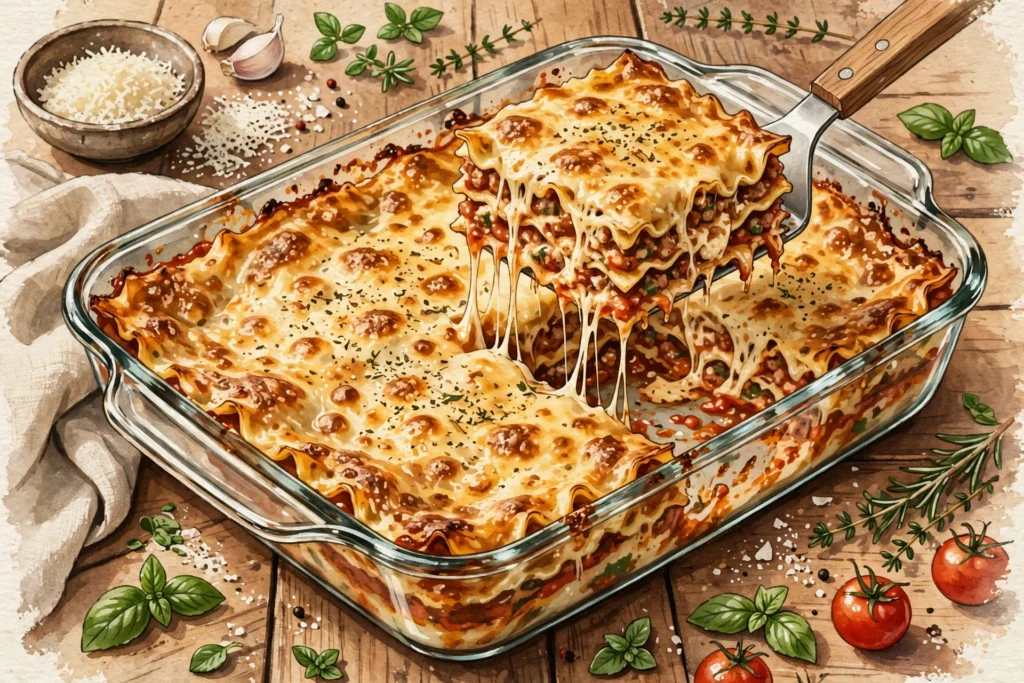
Table of Contents
ToggleWhy This Lasagna Has More Protein
In most lasagna, nearly all of the protein comes from the meat alone. This one spreads the load across four layers of the dish:
The beef layer: about 15g of each serving’s protein comes from the lean ground beef in the sauce.
The cottage cheese layer: about 6g per serving, from 500g of blended cottage cheese spread through the dish.
The mozzarella and parmesan: about 10g per serving between them — the top of the dish is doing nutritional work, not just looking good.
The noodles themselves: about 5g per serving. Pasta is not a protein food, but twelve sheets of it still contribute.
Add the sauce, egg and onion, and the square on the plate reaches about 38g — calculated from the ingredient list below, not rounded up from a classic recipe’s numbers.
Ingredients You’ll Need
Everything is weighed where it matters. The lasagna fills a 9×13 inch (23×33 cm) baking dish and cuts into 9 servings.
For the meat sauce:
- 1½ lb lean ground beef, 90/10 (680g)
- 1 large yellow onion, diced (about 150g)
- 3 garlic cloves, minced (about 9g)
- 3 cups marinara sauce (700g), store-bought or homemade
- 1 teaspoon Italian seasoning
- ½ teaspoon fine salt, plus more to finish
- ½ teaspoon black pepper
For the cheese layer:
- 2 cups cottage cheese, 2% (500g), blended smooth
- 1 large egg
- ¼ cup grated parmesan (25g), plus ¼ cup (25g) for the top
- 2 tablespoons chopped fresh parsley, or 2 teaspoons dried
- ¼ teaspoon fine salt
- ¼ teaspoon black pepper
To assemble:
- 12 lasagna noodles, regular (not no-boil), about 340g dry
- 3 cups shredded part-skim mozzarella (300g)
How to Make High-Protein Lasagna
- Boil the noodles. Cook the lasagna noodles in well-salted water until just shy of done — about 2 minutes less than the box directs. They soften further in the oven, and starting with firm noodles is what keeps the finished dish sliceable instead of slumped. Lay them flat on a lightly oiled tray so they do not stick together.
- Brown the beef. In a large pan over medium-high heat, cook the beef and onion together, breaking the meat up well, 8 to 10 minutes until no pink remains. Drain off the loose fat. Stir in the garlic for 30 seconds, then add the marinara, Italian seasoning, salt and pepper. Simmer 10 minutes, until the sauce thickens slightly. A thin sauce now means a watery lasagna later.
- Mix the cheese layer. Stir the blended cottage cheese, egg, the first ¼ cup of parmesan, parsley, salt and pepper until even. The egg is the binder — it is what sets this layer in the oven so the slices hold their edges.
- Heat the oven to 375°F (190°C).
- Layer. Spread about 1 cup of meat sauce over the bottom of the 9×13 dish. Lay 4 noodles over it. Spread a third of the cottage cheese mixture over the noodles, then a third of the remaining meat sauce, then a third of the mozzarella (about 100g). Repeat the noodle / cottage cheese / meat sauce / mozzarella layers twice more, finishing with the last of the mozzarella and the remaining ¼ cup parmesan on top.
- Bake covered, then uncovered. Cover the dish loosely with foil (tent it so it does not touch the cheese) and bake 25 minutes. Remove the foil and bake 20 to 25 minutes more, until the top is golden in spots and the sauce bubbles at the edges.
- Rest before slicing — do not skip this. Rest the lasagna 15 minutes out of the oven. The layers set as it stands, and a rested lasagna cuts into clean squares; a rushed one slides apart on the plate.

How Much Protein Is in One Serving?
Per serving — one ninth of the pan: about 38g protein, 500 calories, 41g carbs, and 21g fat.
The split, per serving: the beef contributes about 15g, the mozzarella and parmesan about 10g, the cottage cheese about 6g, the noodles about 5g, and the marinara, egg and onion the remaining few grams. Nothing here depends on a single heroic ingredient, which is also why the variations below hold up — swapping one layer moves the total by a few grams, not by half.
Labels vary. A fattier beef than 90/10 pushes the fat up and the protein share down slightly; a 1% cottage cheese trims a little fat. Treat 38g as an honest center calculated from the ingredients above, with the meat at raw weight and the cheeses as weighed.
How to Make It Even Higher in Protein
Two levers work without changing what the dish is.
Add more cottage cheese. Blend an extra 250g of cottage cheese into the cheese layer (750g total). The layer spreads a little thicker and each serving climbs to about 41g of protein and 530 calories.
Top the serving, not the recipe. A ¼ cup (60g) of plain 0% Greek yogurt over a hot square adds about 6g of protein and reads like a cool, tangy counterpoint to the sauce — the same trick that works on chili works here.
Tips for Lasagna That Slices Cleanly
Watery lasagna has three usual causes, and all three are handled in the method above. The sauce went in thin — simmer it down first. The noodles went in fully cooked — pull them early. Or the dish was sliced hot — the 15-minute rest is structural, not a serving suggestion.
On the cottage cheese texture: blending it smooth is what makes the layer read as ricotta in the finished dish. Left unblended it still tastes fine, but the curds stay visible and the layer sets looser. A stick blender in the tub takes twenty seconds.
Make-ahead is where lasagna quietly beats most dinners. Assemble the whole dish, cover and refrigerate it unbaked for up to 24 hours, then bake as directed, adding about 10 minutes to the covered stage while it comes up to temperature.
Variations and Substitutions
Turkey lasagna. Swap the beef for 1½ lb (680g) of lean ground turkey, 93/7, and change nothing else. Calculated on its own ingredients: about 37g protein, 490 calories, 41g carbs, and 20g fat per serving. Season the sauce a touch more assertively — turkey takes seasoning quietly.
Vegetarian lentil lasagna. Take the meat out and simmer 300g of cooked lentils (about 1¾ cups) into the marinara instead, keeping the cheese layers exactly as written. Calculated on its own ingredients: about 26g protein, 415 calories, 48g carbs, and 13g fat per serving. That is a genuinely good vegetarian number for lasagna, and it comes from the cheese layers doing their share — the same reason the main recipe works.
Vegetable-loaded. Add 200g of chopped spinach (wilted and squeezed dry first — this matters, spinach carries water) or a layer of thin zucchini slices over one noodle layer. The macros barely move; the dish eats fresher. Squeeze the spinach properly or the watery-lasagna problem returns through the side door.
Meal Prep, Storage and Freezing
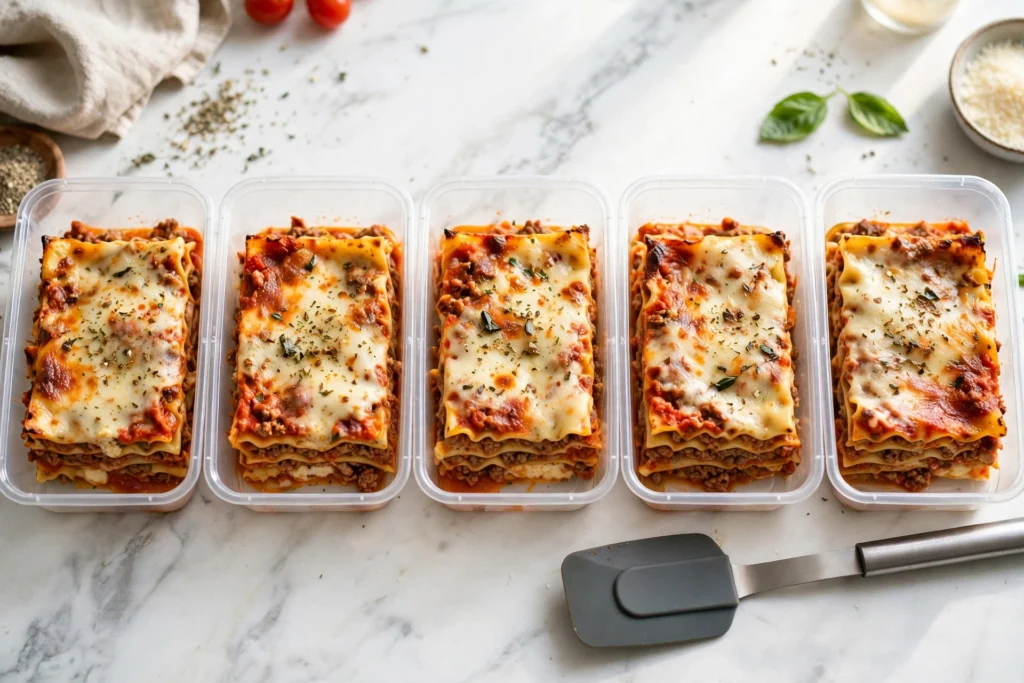
Lasagna is one of the best meal-prep dinners there is: it reheats evenly, the flavor deepens overnight, and it freezes in the same portions it serves in. Let the baked dish cool until it stops steaming, then refrigerate — covered, it keeps 3 to 4 days, in line with standard leftover guidance.
For the freezer, cut the rested lasagna into squares, wrap each square well or pack into containers with a little headspace, and freeze for up to 3 months at best quality. Thaw overnight in the fridge. Reheat covered in a 350°F (175°C) oven until it reaches 165°F (74°C) all the way through — about 25 to 30 minutes for a refrigerated square — or microwave a single portion, covered, until steaming throughout, accepting softer edges as the trade.
It sits comfortably in a freezer rotation next to the site’s high protein chili recipe: cook either on a Sunday and the two cover a week of dinners between them. And if pasta night is the theme rather than lasagna specifically, the site’s high protein pasta recipes roundup covers ten more formats, from baked dishes to skillet pastas.
Frequently Asked Questions
Q: Cottage cheese or ricotta — which is better for a high-protein lasagna?
A: Cottage cheese, on the numbers. Per 100g, 2% cottage cheese carries about 11g of protein and 2.5g of fat; whole-milk ricotta carries about 7.5g of protein and 13g of fat. Blended smooth, cottage cheese behaves like ricotta in the layers — which is why this recipe is built on it. The same swap runs through the site’s high protein cottage cheese recipes, if you want more ways to use the tub.
Q: Can I use no-boil lasagna noodles?
A: Yes. Swap them in at the same weight, and add about ½ cup (120ml) of extra marinara or water around the edges of the dish — no-boil sheets drink more sauce as they bake. Keep the dish covered for the first 35 minutes instead of 25, then uncover to finish. The nutrition stays effectively the same.
Q: Why did my lasagna come out watery?
A: Almost always one of three things: the sauce was not simmered down, the noodles were fully cooked before layering, or the dish was sliced before resting. Cottage cheese adds one more possibility — if it was very wet, drain it in a sieve for 10 minutes before blending. The fixes are cheap; the dish is forgiving once they are habits.
Q: Can I make this lasagna ahead, or freeze it?
A: Both. Assembled and unbaked, it holds in the fridge for up to 24 hours (add about 10 minutes to the covered bake). Baked, it keeps 3 to 4 days refrigerated and freezes, portioned, for up to 3 months. Reheat to 165°F (74°C) throughout.
Q: Can I make it gluten-free?
A: Yes — swap in gluten-free lasagna noodles at the same dry weight and follow the same method. Most gluten-free sheets are rice- or corn-based and land close enough on nutrition that the stated numbers still describe the dish honestly.
References
- Nutrition values for beef, cottage cheese, mozzarella, pasta and lentils: USDA FoodData Central — https://fdc.nal.usda.gov/
- Storage, freezing and reheating guidance (3 to 4 days refrigerated, reheat to 165°F): FoodSafety.gov — https://www.foodsafety.gov/
One pan, nine squares, and a protein number that was built layer by layer instead of wished for. That is the whole idea.
RECIPE CARD — High-Protein Lasagna Recipe
Prep time: 25 minutes
Cook time: 50 minutes (plus 15 minutes resting)
Total time: about 1 hour 30 minutes
Servings: 9 servings (one 9×13 inch pan)
Ingredients:
- 1½ lb lean ground beef, 90/10 (680g)
- 1 large yellow onion, diced (about 150g)
- 3 garlic cloves, minced (about 9g)
- 3 cups marinara sauce (700g)
- 1 teaspoon Italian seasoning
- ½ teaspoon fine salt, plus more to finish
- ½ teaspoon black pepper
- 2 cups cottage cheese, 2% (500g), blended smooth
- 1 large egg
- ½ cup grated parmesan (50g), divided
- 2 tablespoons chopped fresh parsley, or 2 teaspoons dried
- ¼ teaspoon fine salt
- ¼ teaspoon black pepper
- 12 lasagna noodles, regular, about 340g dry
- 3 cups shredded part-skim mozzarella (300g)
Instructions:
- Boil the noodles until just shy of done, about 2 minutes less than the box directs. Lay flat on an oiled tray.
- Brown the beef with the onion, 8 to 10 minutes; drain. Add garlic, marinara and seasonings; simmer 10 minutes.
- Stir the blended cottage cheese, egg, half the parmesan, parsley, salt and pepper.
- Heat the oven to 375°F (190°C).
- Layer in a 9×13 dish: thin sauce layer, 4 noodles, a third of the cottage cheese mixture, a third of the meat sauce, a third of the mozzarella. Repeat twice; finish with mozzarella and the remaining parmesan.
- Bake covered with tented foil 25 minutes, then uncovered 20 to 25 minutes, until golden and bubbling.
- Rest 15 minutes before slicing into 9 squares.
Nutrition per serving: about 38g protein, 500 calories, 41g carbs, 21g fat (calculated from the ingredients above using USDA values).
Notes and substitutions:
- Turkey version: 1½ lb (680g) lean ground turkey 93/7 instead of the beef — about 37g protein, 490 calories, 41g carbs, 20g fat per serving.
- Vegetarian version: no meat; 300g cooked lentils simmered into the sauce — about 26g protein, 415 calories, 48g carbs, 13g fat per serving.
- Higher protein: blend an extra 250g cottage cheese into the cheese layer — about 41g protein, 530 calories per serving.
Storage and reheating: Refrigerate covered for 3 to 4 days, or freeze portioned squares for up to 3 months. Thaw overnight in the fridge and reheat covered at 350°F (175°C) until 165°F (74°C) throughout.