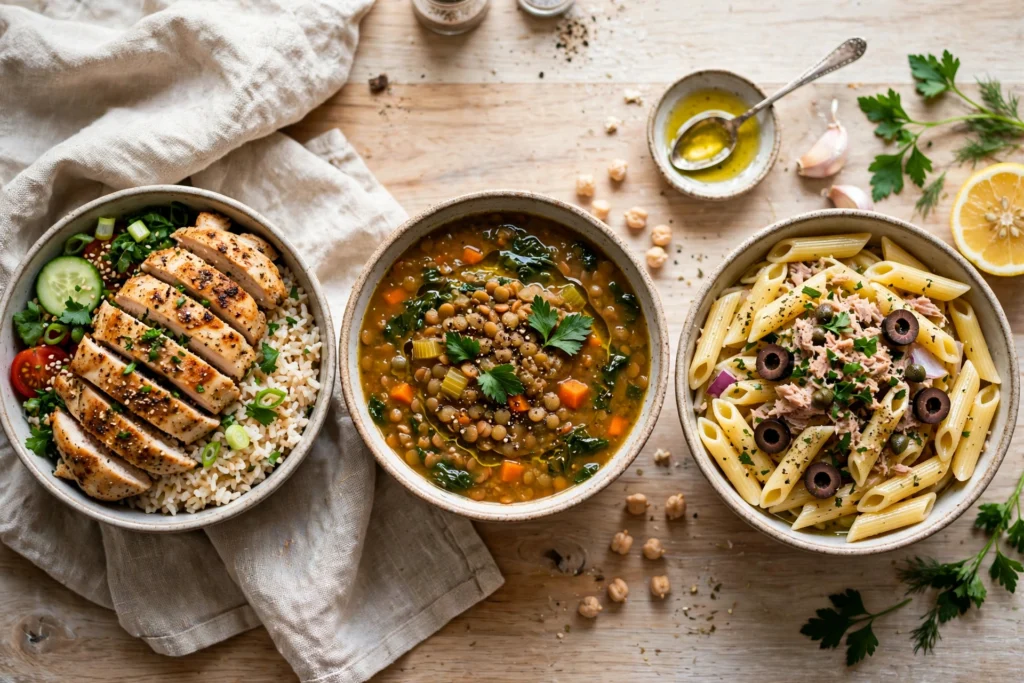
Pasta is not the low-protein food it gets labeled as. It just needs the right company. The 10 high protein pasta recipes below run from about 26g to about 49g of protein per serving, built on ordinary supermarket ingredients: chicken, turkey, tuna, shrimp, beans, lentils, cottage cheese, Greek yogurt. Some are creamy. Some are tomato-based and fast enough for a Tuesday. Three are fully vegetarian, and one swaps the pasta itself for a lentil version that changes the math before the sauce even goes on. Every figure here is calculated from the ingredient list of that recipe, on the serving size stated under it, because a protein number with no portion attached is just a rumor. If you want the wider dinner rotation around these, the site’s high protein dinner meals roundup covers the non-pasta nights.
Table of Contents
ToggleWhat Makes a Pasta Recipe High in Protein?
Start with the pasta itself, because it contributes more than people credit. Regular dry pasta carries about 13g of protein per 100g, which works out to roughly 7g in a cooked cup before anything else lands on the plate. That is a base, not a headline. The headline comes from what the pasta is cooked with.
Lean meat and poultry are the heavy lifters. Cooked chicken breast sits at about 31g of protein per 100g, ground turkey and lean beef land near 20g per 100g raw, and a modest portion of any of them moves a plate of pasta into genuinely filling territory. Seafood pulls its weight differently: canned tuna is concentrated, around 26g per 100g drained, and shrimp gives you about 20g per 100g for very few calories, which is why the shrimp recipe below reaches 35g a serving without feeling heavy.
Then there is the sauce route, which is where most pasta dinners quietly lose their protein. A sauce built on blended cottage cheese or Greek yogurt instead of cream swaps fat for protein at the same creamy texture, and hard cheese counts too: Parmesan is about 38g of protein per 100g, so the 30g grated over a pan is a real contribution, not a garnish. Legumes are the plant-based lever. Beans, lentils and peas bring protein plus fiber, and lentil pasta rewrites the base number entirely at about 25g of protein per 100g dry, close to double the regular kind. None of this works on autopilot, though. The same recipe at a bigger portion is a different number, which is why every entry below names its serving size and shows its working.
10 High-Protein Pasta Recipes
Each recipe serves four, states its pasta in dry weight, and is calculated on the ingredients as written. Where chicken is listed cooked, the raw equivalent is given so you can shop either way.
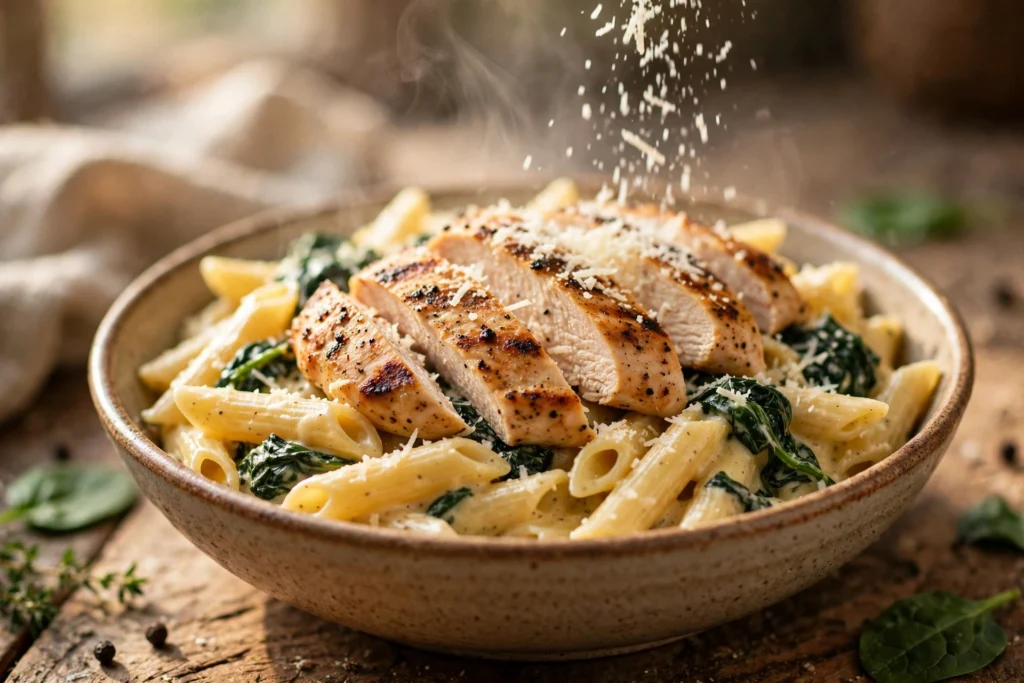
Creamy High-Protein Chicken Pasta
The flagship. A milk and Parmesan sauce that eats like a cream sauce, sliced chicken over the top, spinach wilted through at the end so it stays green instead of giving up.
Serves 4 (about 2 cups per serving) · Prep 10 minutes · Cook 20 minutes
Ingredients:
- 12 oz (340g) penne
- 14 oz (400g) cooked chicken breast, sliced — from about 1¼ lb (560g) raw
- 1 tbsp olive oil
- 3 garlic cloves, minced
- 1 cup (240ml) whole milk
- 1 oz (30g) grated Parmesan, plus extra to serve
- 3½ oz (100g) baby spinach
- Salt and black pepper
Steps:
- Boil the penne in well-salted water until a minute shy of the packet time. Reserve a mug of the pasta water, then drain.
- If your chicken is raw, sear it in the olive oil over medium-high heat for 6 to 7 minutes a side until cooked through, rest it 5 minutes, then slice. Cooked chicken from a roast works fine here; warm it through in the sauce instead.
- In the same pan, soften the garlic for 30 seconds. Pour in the milk, bring it to the gentlest simmer, and stir in the Parmesan until the sauce turns glossy and coats a spoon, about 3 minutes. Keep it below a boil or it can split.
- Add the spinach by the handful and let it wilt, a minute or two.
- Tip the pasta and chicken back in with a splash of pasta water. Toss for a minute until everything is coated and the sauce clings. Serve with the extra Parmesan.
Per serving: about 48g protein, about 585 calories. The chicken and pasta do most of the work; the milk and Parmesan are counted in full, not waved away.
Meal-prep note: this one reheats best with a spoonful of milk stirred in as it warms, which brings the sauce back together.
Ground Turkey Pasta
A weeknight staple that behaves like a bolognese without the long simmer. Turkey takes on tomato and Italian seasoning well, and the sauce is forgiving about timing, which matters at 6pm.
Serves 4 (about 2 cups per serving) · Prep 10 minutes · Cook 25 minutes
Ingredients:
- 12 oz (340g) penne or rigatoni
- 1 lb (450g) raw ground turkey, 93% lean
- 1 tbsp olive oil
- 1 medium onion (about 110g), finely chopped
- 3 garlic cloves, minced
- 1 can (14 oz / 400g) crushed tomatoes
- 2 tsp Italian seasoning
- Salt and black pepper
Steps:
- Brown the turkey in the olive oil over medium-high heat, breaking it into small crumbles, until no pink remains, 7 to 8 minutes. Drain off any excess liquid if the pan looks wet.
- Add the onion and cook until soft, about 4 minutes. Stir in the garlic and Italian seasoning for 30 seconds.
- Pour in the crushed tomatoes with a pinch of salt. Simmer on low for 12 to 15 minutes, until the sauce thickens slightly and the raw tomato edge cooks off.
- Meanwhile boil the pasta in salted water until just done. Reserve a mug of pasta water and drain.
- Toss the pasta through the sauce with a splash of pasta water, rest it a minute off the heat so the sauce settles into the tubes, and serve.
Per serving: about 35g protein, about 575 calories. Calculated on 93/7 turkey; a fattier grind raises the calories without adding protein.
Swap: the same sauce takes 90/10 ground beef cleanly if turkey is not your thing, landing at about the same protein, around 35g a serving, at slightly higher calories.
High-Protein Tuna Pasta
Pantry cooking at its best. Two cans of tuna, a bag of frozen peas, lemon, and enough olive oil to make it a sauce instead of a dressing. Get the tuna right — the kind canned in water, drained well — and this recipe is far better than its reputation.
Serves 4 (about 1¾ cups per serving) · Prep 10 minutes · Cook 12 minutes
Ingredients:
- 12 oz (340g) fusilli
- 2 cans (5 oz / 142g each) tuna in water, drained — about 8½ oz (240g) drained tuna
- 2 tbsp olive oil
- 7 oz (200g) frozen peas
- 5 oz (150g) cherry tomatoes, halved
- 2 garlic cloves, thinly sliced
- Zest and juice of 1 lemon
- Salt, black pepper, and chilli flakes
Steps:
- Boil the fusilli in salted water. Add the peas for the last 2 minutes. Reserve a mug of pasta water, then drain.
- While the pasta cooks, warm the olive oil on low and soften the garlic slices for a minute without colouring them. Add the cherry tomatoes and cook until they slump, about 3 minutes.
- Take the pan off the heat. Flake in the tuna in large chunks — small flakes disappear, chunks stay interesting.
- Add the pasta and peas with a splash of pasta water, the lemon zest and juice, and toss gently so the tuna stays in pieces. Season hard: tuna pasta is under-salted more often than it is under anything else.
- Serve with black pepper and chilli flakes over the top.
Per serving: about 30g protein, about 490 calories. The tuna type matters: this is calculated on tuna canned in water and drained. Tuna in oil adds roughly 50 calories a serving for the same protein.
Tip: this is the strongest cold option in the list. Leftovers eat well straight from the fridge as a pasta salad, with an extra squeeze of lemon to wake them up.
Creamy Cottage Cheese Pasta
The blended cottage cheese trick, done properly. Blended smooth with milk and Parmesan, cottage cheese becomes a sauce that reads as creamy and slightly tangy, and nobody at the table will place it. The quantities below matter — too little cottage cheese and it is just wet pasta, too much and it turns grainy on reheating.
Serves 4 (about 2 cups per serving) · Prep 10 minutes · Cook 15 minutes
Ingredients:
- 12 oz (340g) rigatoni
- 2 cups (450g) cottage cheese, 2% milkfat
- ½ cup (120ml) whole milk
- 1 oz (30g) grated Parmesan
- 1 tbsp olive oil
- 2 garlic cloves, minced
- 7 oz (200g) baby spinach
- Salt, black pepper, and a pinch of nutmeg if you keep it
Steps:
- Blend the cottage cheese and milk until completely smooth, a full minute. Gritty sauce is almost always under-blended sauce.
- Boil the rigatoni in salted water until just done. Reserve a mug of pasta water and drain.
- Soften the garlic in the olive oil for 30 seconds, then pour in the blended sauce and warm it through on the lowest heat, stirring, for 2 to 3 minutes. Do not boil it — high heat is what makes dairy sauces separate and turn thin.
- Stir in the Parmesan, then the spinach, and let it wilt.
- Add the pasta with a splash of pasta water and toss until glossy. Rest a minute and serve.
Per serving: about 29g protein, about 500 calories. Calculated on 2% cottage cheese; the fat-free version trims roughly 15 calories a serving, with the protein about the same.
Meal-prep note: the sauce thickens in the fridge and loosens again with a splash of milk during reheating. Reheat it gently, not at a rolling boil.
Greek Yogurt Chicken Pasta
The highest-protein plate in this roundup, and the one with a technique you have to respect. Greek yogurt splits if it is boiled, full stop. Tempered with hot pasta water and stirred in off the heat, it stays silky and gives the sauce a tang that cream never will.
Serves 4 (about 2 cups per serving) · Prep 10 minutes · Cook 20 minutes
Ingredients:
- 12 oz (340g) penne
- 12½ oz (350g) cooked chicken breast, sliced — from about 1 lb (490g) raw
- 1 cup (245g) plain Greek yogurt, 0% fat, at room temperature
- 1 tbsp olive oil
- 3 garlic cloves, minced
- 1 oz (30g) grated Parmesan
- 7 oz (200g) broccoli florets
- Zest of 1 lemon, plus a squeeze of juice
- Salt and black pepper
Steps:
- Boil the penne in salted water, adding the broccoli for the last 3 minutes. Reserve a full mug of the hot pasta water — you need it hot for the sauce. Drain.
- If your chicken is raw, sear it in the olive oil for 6 to 7 minutes a side until cooked through, rest, and slice.
- Soften the garlic in the same pan for 30 seconds, then take the pan completely off the heat.
- Put the yogurt in a bowl and whisk in the hot pasta water a few spoonfuls at a time until the yogurt is warm and pourable. This is the tempering step, and skipping it is how yogurt sauces split.
- Pour the tempered yogurt back into the pan with the pasta, broccoli, and chicken. Stir over no heat — the residual warmth is enough — until everything is coated. Finish with the Parmesan, lemon zest, and juice.
Per serving: about 49g protein, about 575 calories. The yogurt is doing double duty here, sauce and protein source at once, which is how a pasta dinner reaches this number without a mountain of chicken.
Honest limitation: of all ten recipes, this is the weakest reheater. The sauce loosens and can look slightly grainy on day two. Eat it fresh if you can; it is worth it.
Lentil Pasta with Tomato Sauce
This recipe swaps the pasta, not just the sauce, and the calculation below is for red lentil pasta itself — not regular pasta with lentils stirred through, which is a different and lower number. Lentil pasta roughly doubles the protein of the wheat kind and brings fiber with it. It also cooks faster and goes soft if you wander off, so stay near the pot.
Serves 4 (about 1¾ cups per serving) · Prep 5 minutes · Cook 15 minutes
Ingredients:
- 12 oz (340g) dry red lentil pasta (penne or fusilli shapes hold up best)
- 1 tbsp olive oil
- 1 medium onion (about 110g), finely chopped
- 3 garlic cloves, minced
- 1 can (14 oz / 400g) crushed tomatoes
- 1 tsp dried oregano or Italian seasoning
- 1 oz (30g) grated Parmesan, to serve
- Salt and black pepper
Steps:
- Soften the onion in the olive oil for 4 to 5 minutes. Add the garlic and oregano for 30 seconds.
- Add the crushed tomatoes and a pinch of salt, and simmer 10 minutes until the sauce thickens slightly.
- Boil the lentil pasta in salted water for 1 minute less than the packet says — most brands land between 6 and 8 minutes — and start checking early. It goes from firm to collapsing fast.
- Drain, saving a little pasta water, and toss the pasta through the sauce for a minute. Lentil pasta drinks sauce, so the splash of pasta water earns its place.
- Serve with the Parmesan over the top.
Per serving: about 26g protein, about 400 calories — the lightest plate in the roundup, and still a full protein serving, which tells you what the pasta swap alone can do.
Swap: chickpea pasta runs a similar trick at slightly lower protein and a firmer bite. The method is identical.
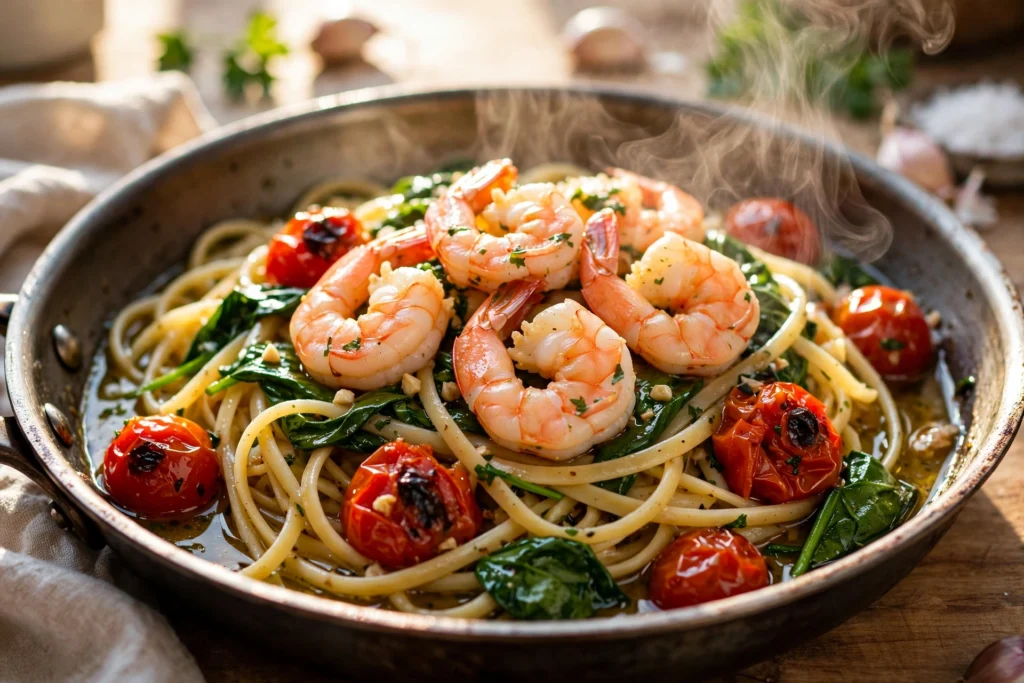
Garlic Shrimp Protein Pasta
Shrimp is the fastest protein in this list and the easiest to ruin. It needs two minutes a side at most, and it keeps cooking in the hot pasta, so pull it slightly early. Everything else here is support: garlic, tomatoes that blister in the oil, spinach for bulk.
Serves 4 (about 1¾ cups per serving) · Prep 10 minutes · Cook 12 minutes
Ingredients:
- 12 oz (340g) linguine
- 1 lb (450g) raw peeled shrimp
- 2 tbsp olive oil
- 4 garlic cloves, thinly sliced
- 7 oz (200g) cherry tomatoes, halved
- 3½ oz (100g) baby spinach
- ½ tsp chilli flakes
- Zest and juice of ½ lemon
- Salt and black pepper
Steps:
- Boil the linguine in salted water until just done. Reserve a mug of pasta water and drain.
- Pat the shrimp dry — wet shrimp steam instead of searing — and season with salt and pepper. Sear in 1 tablespoon of the olive oil over high heat, about 2 minutes a side, until just pink. Remove to a plate.
- Lower the heat, add the second tablespoon of oil, and soften the garlic and chilli flakes for a minute. Add the tomatoes and cook until they blister and slump, about 3 minutes.
- Wilt the spinach in the pan, then add the pasta with a splash of pasta water and toss until glossy.
- Return the shrimp with any juices, add the lemon zest and juice, toss once, and serve immediately.
Per serving: about 35g protein, about 485 calories. Shrimp delivers that at fewer calories than any meat recipe here, because there is so little fat on it to begin with.
Timing note: cooked shrimp waits for nobody. Have the pasta drained and the table ready before the shrimp hits the pan, not after.
Lean Beef Bolognese Pasta
A proper bolognese, kept lean on purpose. The beef percentage is stated because it changes the answer: this is calculated on 90/10 beef, and if your pack says 80/20, expect slightly less protein and noticeably more calories from the same pan of sauce. The milk is not a typo — it softens the tomato’s acidity and gives the sauce its rounded finish.
Serves 4 (about 2 cups per serving) · Prep 15 minutes · Cook 45 minutes
Ingredients:
- 12 oz (340g) spaghetti
- 1 lb (450g) raw ground beef, 90% lean / 10% fat
- 1 tbsp olive oil
- 1 medium onion (about 110g), finely chopped
- 1 medium carrot (about 80g), finely diced
- 3 garlic cloves, minced
- 1 can (14 oz / 400g) crushed tomatoes
- ½ cup (120ml) whole milk
- Salt, black pepper, and a bay leaf if you have one
Steps:
- Brown the beef in the olive oil over medium-high heat, breaking it up well, until it takes on real colour, 8 to 10 minutes. Pale, steamed beef makes a pale sauce, so let it sit undisturbed for a minute at a time.
- Add the onion and carrot and cook until softened, about 5 minutes. Stir in the garlic for 30 seconds.
- Pour in the crushed tomatoes and milk, add the bay leaf and a good pinch of salt, and bring it to the barest simmer.
- Cook on the lowest heat for 30 to 35 minutes, stirring now and then, until the sauce is thick and the fat has mostly folded back in. Fish out the bay leaf and adjust the salt.
- Boil the spaghetti in salted water, drain with a mug of pasta water saved, and toss through the sauce with a splash of water.
Per serving: about 36g protein, about 610 calories. One of the heartiest plates here, and the one that improves overnight as the flavors settle.
Freezer note: the sauce alone freezes for up to 3 months and is the best freezer candidate in this roundup. Freeze it without the pasta and cook the spaghetti fresh.
White Bean and Spinach Pasta
The quiet overachiever. Half the beans get blended into the sauce with pasta water, which gives you a creamy, protein-carrying sauce from a can, and the other half stay whole for texture. No cream, no cheese sauce, and it still eats rich.
Serves 4 (about 2 cups per serving) · Prep 10 minutes · Cook 15 minutes
Ingredients:
- 12 oz (340g) orecchiette or small shells
- 2 cans (15 oz / 425g each) white beans (cannellini), drained and rinsed — about 17 oz (480g) drained beans
- 1 tbsp olive oil
- 3 garlic cloves, thinly sliced
- ½ tsp chilli flakes
- 7 oz (200g) baby spinach
- 1 oz (30g) grated Parmesan, to serve
- Zest and juice of ½ lemon
- Salt and black pepper
Steps:
- Boil the pasta in salted water until just done. Reserve a full mug of pasta water before draining — the sauce is built from it.
- Soften the garlic and chilli flakes in the olive oil on low for a minute without colouring.
- Add half the beans with about ½ cup (120ml) of the pasta water and crush them roughly with the back of a spoon, or blend that portion smooth if you want a silkier sauce. Simmer 2 minutes until it thickens into something that coats a spoon.
- Add the remaining whole beans and the spinach, and stir until the spinach wilts and the beans are hot through.
- Toss in the pasta with more pasta water as needed, finish with lemon zest and juice, and serve with the Parmesan.
Per serving: about 26g protein, about 540 calories, with the beans also bringing the fiber that most pasta dinners lack entirely.
Swap: butter beans work in place of cannellini and hold their shape even better. Chickpeas change the character — firmer, nuttier — and keep the protein about the same.
Chicken Pesto Pasta
Pesto is the calorie trap of the pasta world, so this recipe measures it instead of pouring it. A weighed 100g, loosened with hot pasta water, coats a whole pan of pasta properly — and the protein headline stays where it belongs, on the chicken.
Serves 4 (about 2 cups per serving) · Prep 10 minutes · Cook 15 minutes
Ingredients:
- 12 oz (340g) fusilli
- 12½ oz (350g) cooked chicken breast, sliced or shredded — from about 1 lb (490g) raw
- About 6 tbsp (100g) prepared basil pesto
- 2 tbsp of the pesto jar’s oil, or olive oil, if needed
- 7 oz (200g) cherry tomatoes, halved
- 5 oz (150g) frozen peas
- Salt and black pepper
Steps:
- Boil the fusilli in salted water, adding the peas for the last 2 minutes. Reserve a mug of pasta water and drain.
- If your chicken is raw, sear it first in a little oil for 6 to 7 minutes a side, rest, and slice.
- Warm the cherry tomatoes in the pasta pan for 2 minutes until they just start to slump.
- Take the pan off the heat. Add the pasta, peas, and chicken, then the pesto with a splash of hot pasta water, and toss until the pesto loosens into a sauce that coats everything. Heat is pesto’s enemy twice over: it dulls the basil and can split the oil out, so this step stays off the burner.
- Taste before salting — pesto and pasta water are both already salted — then serve.
Per serving: about 42g protein, about 620 calories — counted on the pesto as written; the optional jar oil, if you use it to loosen the sauce, adds roughly another 60 calories a serving. Be honest with yourself about the pesto portion when you make it: an unmeasured free pour can add 150 calories a serving for almost no extra protein.
Tip: a spoonful of Greek yogurt stirred through at the end stretches the pesto further and adds a few grams of protein, at the cost of a slightly tangier finish.
How to Add More Protein to Pasta
None of the levers below require a specialty shop. Most are already in the recipes above; the point is knowing which dial you are turning.
Change the pasta. Lentil pasta at about 25g of protein per 100g dry, and chickpea pasta not far behind it, nearly double the base contribution of regular pasta at about 13g. That single swap is worth roughly 10 extra grams across a serving before the sauce does anything.
Add a lean protein, and portion it properly. A serving of chicken breast the size of a deck of cards — about 100g cooked — adds roughly 31g of protein. Half-portions sprinkled over the top for looks are why so many “high-protein” pasta recipes online land under 20g when you actually run their numbers.
Build the sauce out of protein. Blended cottage cheese, Greek yogurt stirred in off the heat, beans crushed into the cooking water: all three turn the sauce from a topping into a contributor. The cottage cheese pasta above gets over half of its protein from the sauce alone.
Use the small contributors on purpose. Parmesan at 38g of protein per 100g, frozen peas at about 5g per 100g, an egg yolk whisked into a hot pan off the heat — none of these headline a recipe, but stacked together they are worth 5 to 8 grams a serving. That is the difference between a dinner that keeps you full and one that has you back in the kitchen by nine.
Tips for Cooking and Meal Prepping Protein Pasta
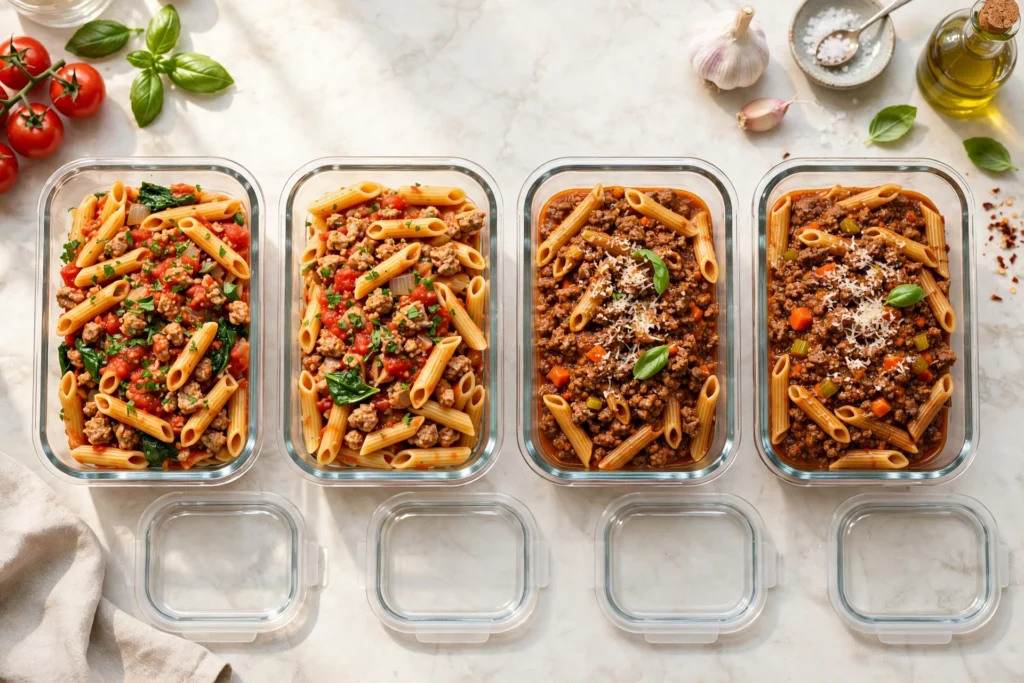
Texture first. Pasta cooked for meal prep should come off the heat 1 to 2 minutes before the packet time, because it keeps absorbing sauce in the fridge and softens further when reheated. Mushy meal-prep pasta is almost never a storage problem; it was overcooked on day one.
Salt the water properly — about a tablespoon of salt per large pot — because most of it stays in the pot, and under-seasoned pasta cannot be rescued by a well-seasoned sauce. And save the pasta water every time. The starch in it is what lets a sauce cling instead of pool.
Storage depends on the sauce. Tomato-based sauces like the turkey pasta and the bolognese can be stored mixed with the pasta or separately; separately reheats better and freezes better. The bean sauce holds up well for days. Dairy sauces are the exception: the cottage cheese sauce wants gentle reheating with a splash of milk, the yogurt sauce is at its best fresh, and the shrimp pasta should be eaten within a day or two while the shrimp is still itself.
The safety rules are plain. Get cooked pasta dishes into the fridge within 2 hours of cooking, keep the fridge at or below 40°F (4°C), and eat refrigerated pasta within 3 to 4 days, per FoodSafety.gov guidance. Reheat until steaming hot all the way through, and add a splash of water or milk first so the pasta steams instead of frying in its own sauce.
Frequently asked questions
Q: Which pasta has the most protein?
A: Among the pastas themselves, legume-based ones. Red lentil pasta runs about 25g of protein per 100g dry, chickpea pasta a little behind it, and regular wheat pasta about 13g. In this roundup the biggest finished plates are the chicken ones — the Greek yogurt chicken pasta at about 49g a serving and the creamy chicken pasta at about 48g — because pasta plus a full portion of chicken plus a protein-built sauce stacks three sources at once.
Q: Can regular pasta fit into a high-protein meal?
A: Yes, and most of this roundup is the proof. A cooked cup of regular spaghetti already brings about 7g of protein. Add a real portion of chicken, tuna, beans, or a cottage cheese sauce and the plate lands between 26g and 49g without a single specialty product. Regular pasta was never the problem; pasta with a token garnish of protein was.
Q: What are the best vegetarian protein sources for pasta?
A: Lentil and chickpea pasta, beans and lentils in the sauce, cottage cheese, Greek yogurt, peas, and hard cheeses like Parmesan. Three recipes here are fully vegetarian — the cottage cheese pasta at about 29g a serving, the lentil pasta at about 26g, and the white bean and spinach pasta at about 26g — and none of them needs a meat substitute to get there.
Q: Is pasta good for meal prep?
A: Most of it, yes. The turkey pasta, bolognese, tuna pasta, and white bean pasta all hold 3 to 4 days in the fridge and reheat well with a splash of water; the bolognese sauce also freezes for up to 3 months on its own. The two to treat differently are the shrimp pasta, best within a day or two, and the Greek yogurt chicken pasta, which is at its best eaten fresh because yogurt sauces loosen on reheating.
References
- Protein and calorie values for pasta, meats, seafood, dairy, and legumes: USDA FoodData Central — https://fdc.nal.usda.gov/
- Leftover storage times, refrigeration temperatures, and reheating guidance: FoodSafety.gov — https://www.foodsafety.gov/