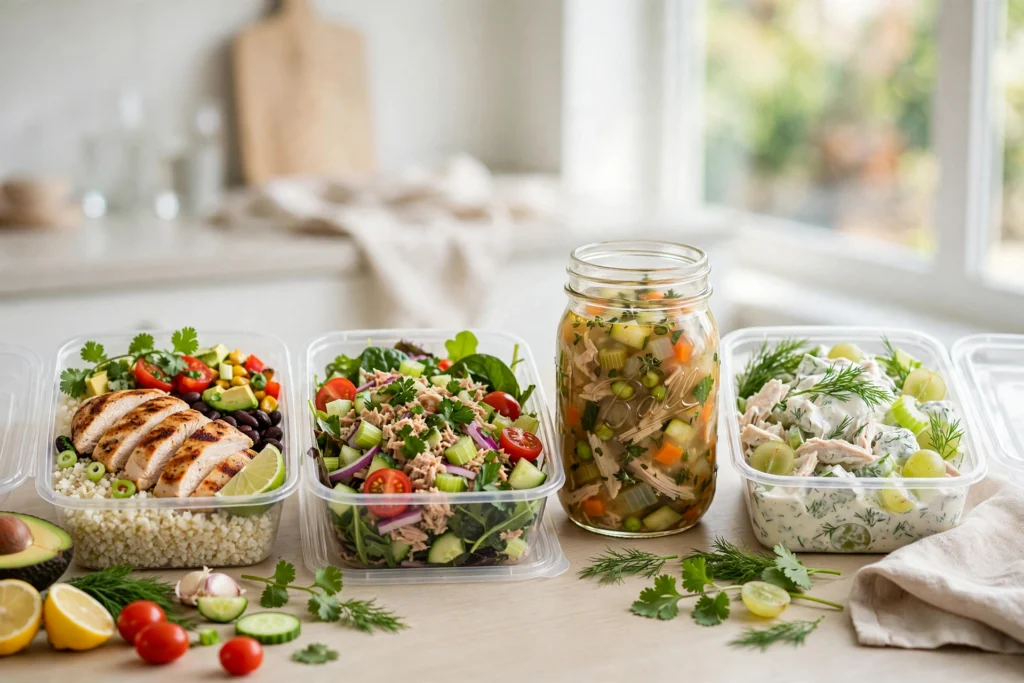
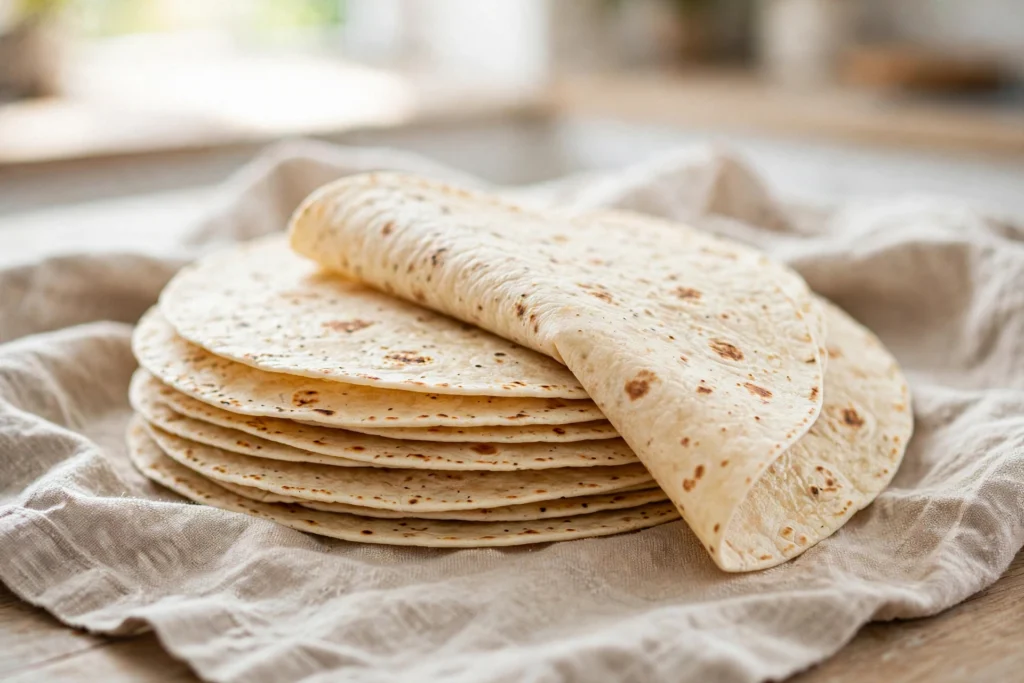
This high protein wraps recipe makes the tortilla itself the protein source: a soft, flexible homemade wrap built from Greek yogurt and flour, at about 8 grams of protein per wrap with no protein powder anywhere in it. Six wraps from four ingredients, about 150 calories each — roughly double the protein of a standard shop bought wrap at similar calories, because the yogurt is doing structural work instead of just filling space. The dough is the forgiving kind: stir, rest, roll, ninety seconds in a dry pan. Make a batch on Sunday and the week’s lunches start from a wrap that contributes something instead of just holding the filling together. If what you need is the meal to put inside it, the companion recipe is the high protein chicken wrap; this page is the wrap it goes in.
Table of Contents
ToggleWhy make homemade high-protein wraps?
Control, mostly. A homemade wrap’s ingredient list is four items long and every one of them is in the recipe for a reason you can point to. Size is yours to choose: roll the batch into six lunch sized wraps, or five larger ones for burrito duty, and the protein per wrap rises with the size because the batch total never changes. Batch cooking is the other argument — twenty minutes of rolling and pan work on a quiet afternoon covers most of a week’s lunches, and the wraps freeze in the same parchment separated stack they were stored in. There is also a quieter benefit: a wrap that carries 8 grams of protein changes the arithmetic of everything put inside it. A filling that needed to reach 40 grams on its own only needs 32 when the bread is helping.
Ingredients for high-protein wraps
Makes 6 wraps. Everything is weighed where it matters, because dough is a ratio, not a mood.
- 275g 0% Greek yogurt (1 cup plus 2 tablespoons) — the protein source and the liquid in one ingredient. Its thickness is what makes a no yeast dough possible; a runny yogurt will not give the same dough, which is why the recipe specifies the thick Greek style.
- 200g plain flour (1⅔ cups), plus extra for dusting — the structure. Plain flour keeps the crumb soft; the protein maths and swap options for other flours are in the FAQ.
- 1½ tsp baking powder — the lift. It puffs small bubbles through the wrap in the pan, which is what keeps a thin flatbread from eating like a cracker.
- ½ tsp fine salt — flavour, and it tightens the dough slightly. Unsalted flatbread tastes unfinished no matter what goes inside it.
That is the whole list. No oil in the dough (a dry pan and the yogurt’s moisture do the work), no egg, and no protein powder — the powder version is a different recipe, and the FAQ explains what changes if you want it.
How to make the high protein wraps recipe
- Stir the flour, baking powder, and salt together in a large bowl. Add the yogurt and mix with a spoon until the mixture comes together in shaggy lumps, then bring it into a ball with your hands, scraping the bowl clean as you go.
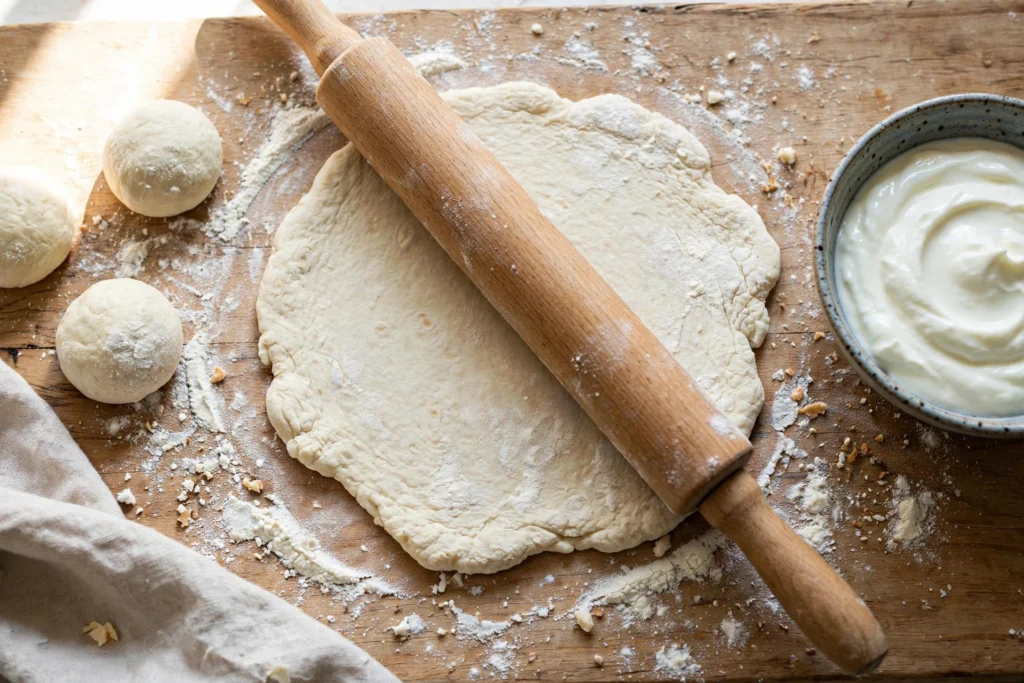
- Knead on a floured surface for 2 to 3 minutes, until the dough is smooth and only slightly tacky. Yogurt dough announces its state honestly: if it sticks to your fingers in ribbons, knead in flour a teaspoon at a time; if it cracks at the edges, wet your hands and knead the moisture in. Aim for the texture of an earlobe, soft with a little resistance.
- Rest the dough, covered, for 20 to 30 minutes. This is hydration, not ceremony: the flour absorbs the yogurt’s liquid, the dough relaxes, and rolling becomes dramatically easier. Skipping the rest is the single most common reason this style of wrap fights back.
- Divide into 6 equal balls (about 80g each). Keep the ones you are not rolling under the cloth so they do not dry out.
- Roll each ball on a floured surface into a round about 20cm (8 inches) across and 1 to 2mm thick — thin enough to see the shadow of your hand through it, thick enough to lift without tearing. Rotate the dough a quarter turn between rolls to keep it round, and dust lightly rather than often.
- Cook in a dry skillet or frying pan over medium high heat for 45 to 60 seconds per side. The cues: the underside develops pale golden spots, large bubbles rise on the surface, and the wrap feels set rather than doughy when pressed. Flip once. A second flip toughens it.
- Stack each finished wrap straight onto a clean tea towel and fold the towel over the stack. The trapped steam is the flexibility system — a wrap left uncovered on a plate while its siblings cook will be the stiff one of the batch.
How much protein is in each wrap?
Per wrap, from a batch of six, calculated from the ingredient list: about 8g protein, about 150 kcal, about 26g carbs, and about 1g fat. The batch maths: the yogurt contributes about 27 to 28 grams of protein, the flour about 21, and the baking powder and salt none — roughly 48 grams across six wraps. Two honest notes. First, Greek yogurt labels vary: a yogurt at 9g protein per 100g instead of 10 brings each wrap down by about half a gram, which is inside the rounding but worth knowing if you track tightly.
Second, the size lever is real: roll five wraps instead of six and each carries about 9½ grams, at roughly 180 calories. The comparison that explains why this recipe exists: a standard shop wrap of similar size and calories usually holds 4 to 5 grams of protein. The yogurt swap nearly doubles it without changing what a wrap is.
Tips for soft, flexible wraps
Most failed wraps fail for one of four reasons, all fixable. Dry and stiff means overcooked or uncovered: the pan time is under a minute a side, and the towel stack is not optional. Cracked at the fold means rolled too thick or rested too little — a rested dough rolls thinner without springing back, and thin wraps bend instead of breaking. Sticky dough means the yogurt was wetter than the recipe assumes; Greek yogurts vary, so hold back the last spoonful, see how the dough feels, and add it only if the ball is dry at the edges.
Tough wraps usually mean too much flour worked in during kneading and rolling — dust the board, not the dough, and use just enough to stop sticking. One more: cook the wraps in order and eat the first one cook’s tax is traditional, but for a stored batch, let the stack cool inside the towel before bagging it, so condensation does not spot the surfaces.
Ways to use homemade protein wraps
The wrap is a platform, and the site already owns its best first use: the high protein chicken wrap was built for a tortilla like this, and its 46 grams become easier to reach when the wrap itself brings 8 of them.
Beyond that plate: turkey and cheese with mustard and shredded lettuce for the packed lunch that survives a commute; scrambled egg and vegetables for a breakfast wrap (the wrap reheats well enough to be rolled around hot eggs); beans, rice, and salsa for the vegetarian version where the wrap’s protein matters most; tuna and white bean salad for the no cooking day. The same dough logic, baked instead of rolled, is also the family this site’s high protein cottage cheese pizza crust belongs to — different dairy, same idea of making the base carry protein.

Storage, refrigeration, and freezing
Same day: keep the cooled wraps in the towel, then a sealed bag at room temperature, and they stay flexible until evening. Fridge: up to 4 to 5 days in a sealed bag with a sheet of parchment or baking paper between each wrap — the separator is what stops the stack becoming one thick wrap by Wednesday. Freezer: up to 2 months, separated the same way and bagged with the air pressed out; thaw the stack at room temperature for half an hour or peel off one wrap at a time and warm it straight from frozen.
Reheating decides whether a stored wrap eats like a fresh one: 20 seconds in a dry pan brings back the pliability best; the microwave works at 15 to 20 seconds wrapped in a barely damp paper towel. Never reheat in a low oven and wander off — flatbreads dry at the edges first, and five distracted minutes is enough.
Frequently asked questions
What is the best flour for protein wraps?
Plain (all purpose) flour is this recipe’s choice for the softest fold. Wholemeal flour works and adds fibre, but it drinks more liquid: expect to add an extra tablespoon of yogurt and give the dough the full 30 minute rest; each wrap gains roughly 2 grams of fibre, and the protein edges up slightly, to about 9 grams. Bread flour rolls slightly chewier. Self raising flour can replace the plain flour and baking powder together at the same weight; keep the salt.
Can I make these wraps without protein powder?
Yes — that is exactly what this recipe is. The Greek yogurt replaces the powder as the protein source, which is why the ingredient list stays at four. A powder based version exists as a method (swap about 30g of the flour for whey isolate and add a splash of water, since powders drink liquid), and it pushes each wrap to roughly 11 grams — but powders vary so much in behaviour that the swap is given here as a direction, not a promise, and the yogurt recipe remains the reproducible one.
How do I keep homemade wraps flexible?
The three habits in the method: rest the dough so it rolls thin, keep the pan time under a minute a side, and stack the cooked wraps under a towel so they steam softly while the batch finishes. A wrap that has gone stiff in the fridge usually revives in a dry pan; one that was overcooked on day one does not, which is why the cues in step 6 are visual rather than a timer alone.
Can I freeze protein wraps?
Yes, and they freeze better than most breads because there is no crumb to stale. Separate each wrap with parchment, bag with the air pressed out, and use within 2 months for best texture. Thaw at room temperature or warm from frozen in a dry pan.
How can I get more protein in each wrap?
Three honest levers. Make five wraps instead of six (about 9½ grams each). Add the protein powder swap described above (roughly 11 grams, with the variability warning attached). Or choose a higher protein yogurt: strained yogurts and skyr style products at 11 to 12 grams per 100g lift each wrap by about half a gram on their own. What does not work is adding more yogurt to the same flour — past a point the dough stops being dough.
References
- Protein and calorie values for Greek yogurt and flour: USDA FoodData Central
- Storage guidance for baked goods and leftovers: FoodSafety.gov
- The meal built for this wrap: high protein chicken wrap
Four ingredients, one bowl, and a tea towel doing quiet technical work. The wrap was never supposed to be the low point of the meal — now it pulls its weight.