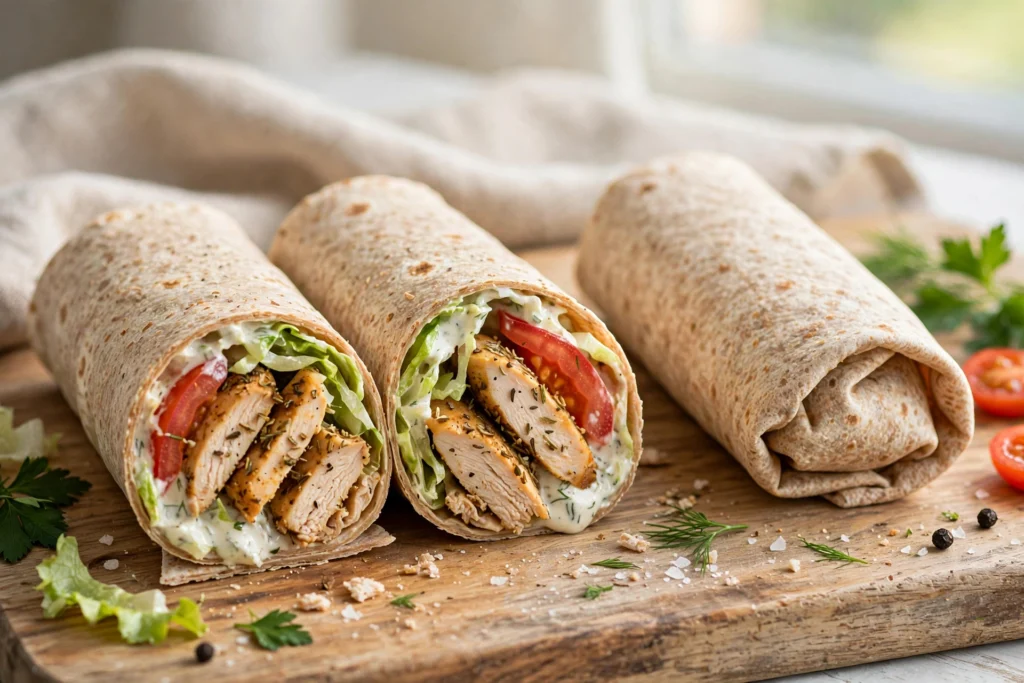
A high protein chicken wrap is a complete lunch in one tortilla: seasoned chicken breast, a creamy yogurt sauce, cheese, and crunchy vegetables, at about 46 grams of protein per wrap with the sauce included. This is one full recipe rather than a roundup — two wraps, exact quantities, a sauce measured instead of waved at, and the meal prep method that keeps wrap number two from going soggy in the fridge. The protein comes from honest stacking rather than a trick: a proper portion of chicken, a large whole wheat tortilla that contributes its own share, Greek yogurt standing where mayonnaise usually wastes the space, and cheese doing flavour and protein at once. Start to finish is about 25 minutes, and most of that is the chicken cooking. It sits squarely in high protein lunch territory — filling enough that the afternoon does not need a second one.
Table of Contents
ToggleWhy you'll like this chicken wrap
The ingredient list is supermarket ordinary, which is the point: chicken breast, tortillas, yogurt, cheese, and salad vegetables, plus a seasoning blend built from spices most kitchens already own. It is customisable without breaking — the variations section runs it spicy, Greek style, lighter, and higher in fibre — and it is built for packed lunches from the start, with the assembly order designed to protect the tortilla from the sauce. What most people miss is that a wrap’s protein is decided by its ratios, not its title. A thin smear of chicken in a large tortilla is a salad in a coat. This recipe reverses that: the chicken is the main event by weight, and everything else is chosen to add protein or protect texture rather than pad the roll.
Ingredients you'll need
Makes 2 wraps. The nutrition section below is per wrap, sauce included.
240g (about 8½ oz) boneless, skinless chicken breast — two pieces of about 120g each. The protein base: each wrap gets about 27 grams from the chicken alone.
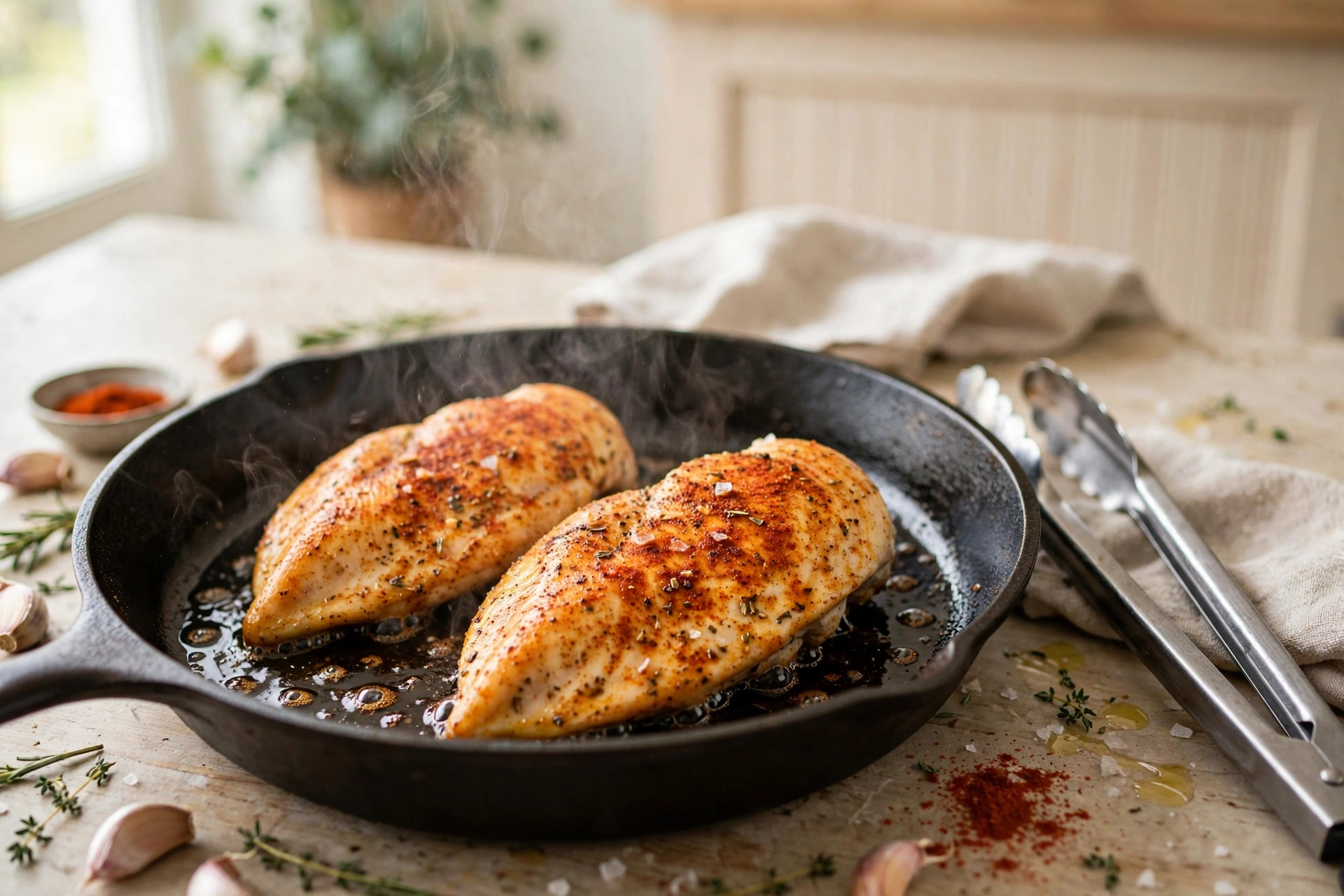
1 tsp smoked paprika, 1 tsp garlic powder, ½ tsp ground cumin, ½ tsp salt, ¼ tsp black pepper — the seasoning blend. Paprika brings the colour and the gentle smoke; cumin keeps it savoury rather than sweet.
2 tsp olive oil — for the pan. Counted in the nutrition, because oil that goes in the recipe belongs in the numbers.
2 large whole wheat tortillas, 10-inch (about 70g each) — the wrap itself contributes about 7 grams of protein and the fibre a white tortilla skips. Label values vary by brand; the calculation uses typical values for this size.
120g (about ½ cup) 0% Greek yogurt — the sauce base. Where mayonnaise would add fat and nothing else, the yogurt adds about 6 grams of protein per wrap.
1 tbsp lemon juice, 1 small garlic clove grated, a pinch of salt — the sauce seasoning. Stirred into the yogurt with a teaspoon of water if it needs loosening.
40g shredded mozzarella or cheddar — about 20g per wrap, split between the two. Flavour, melt, and roughly 5 grams of protein per wrap.
80g shredded lettuce, 1 medium tomato sliced, ½ small red onion sliced thin — the crunch and freshness, portioned so the wrap folds without bursting.
How to make a high-protein chicken wrap
1. Mix the seasoning blend. Pat the chicken dry, then coat both pieces all over with the blend, pressing it on with your hands.
2. Heat the oil in a skillet over medium high heat. Cook the chicken for 6 to 7 minutes per side, until the thickest part reads 165°F (74°C) on a food thermometer and the juices run clear. Chicken breast sizes vary more than clock times do, so the temperature is the instruction and the minutes are the estimate.
3. Rest the chicken on a board for 5 minutes, then slice it across the grain into strips. Resting is not a chef’s flourish; sliced immediately, the juices run onto the board instead of staying in the meat, and the wrap eats dry.
4. While the chicken rests, stir the yogurt, lemon juice, garlic, and salt into a sauce, and slice the vegetables. Pat the tomato slices and lettuce dry with a paper towel if they are wet — this small step is half of the anti soggy system.
5. Warm each tortilla for 20 to 30 seconds in a dry pan or directly over a low flame, until pliable. A cold tortilla cracks at the fold; a warm one wraps.
6. Assemble in this order, down the centre of each tortilla: cheese first, then the hot chicken strips (their warmth softens the cheese), then lettuce and onion, then tomato, then the sauce spooned over. The cheese layer against the tortilla is a deliberate barrier between bread and sauce.
7. Fold the sides in, then roll tightly from the bottom, tucking as you go. Rest the wrap seam side down for a minute, then cut it in half on the diagonal if you are serving it now.
How much protein is in a chicken wrap?
Per wrap, calculated from the ingredient list above with the sauce and cheese included: about 46g protein, about 570 kcal, about 45g carbs, and about 18g fat. The build, so the number can be checked rather than trusted: the chicken contributes about 27 grams, the tortilla about 7, the yogurt sauce about 6, the cheese about 5, and the vegetables about 1. Two honest qualifications. Tortilla labels vary more than any other ingredient here — a different brand of large wrap can move the wrap by 30 to 50 calories and a gram or two of protein either way, so check your own packet if you track closely. And a wrap built with half the chicken, which is how many café versions are made, lands near 30 grams: the protein in this recipe is the portion, not the format.
Chicken wrap meal prep and storage
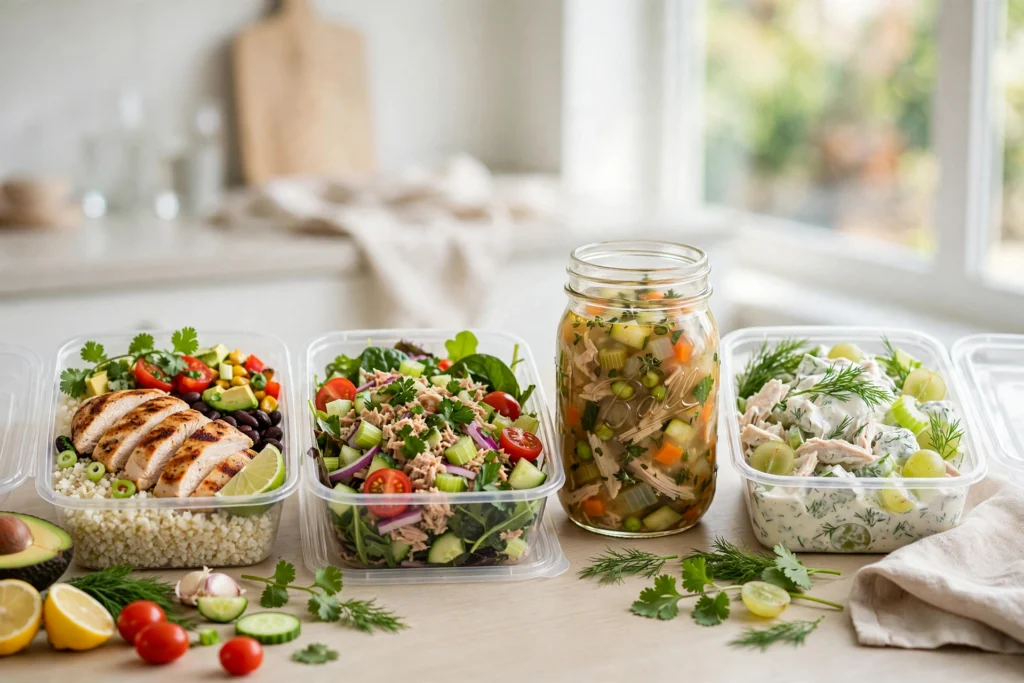
This is where high protein chicken wraps earn their keep, if the components are stored like components. Cooked chicken keeps in the fridge for 3 to 4 days in a sealed container, sliced or whole. The yogurt sauce keeps for up to 3 days in its own small pot. Vegetables are best cut fresh, but lettuce and onion hold a day in a container lined with paper towel. The packing rule that decides everything: a wrap assembled more than a few hours ahead will soften, no matter what the internet promises. For a packed lunch, either assemble in the morning (five minutes, with the cheese barrier and dry lettuce doing their jobs) or pack the filling and tortilla separately and roll it at your desk. Assembled wraps travel best wrapped in foil and eaten the same day. To reheat, warm the chicken on its own before assembling; microwaving a finished wrap steams the tortilla and undoes the texture the recipe built. The cooked chicken filling also freezes well for up to 2 months — thaw it overnight in the fridge, reheat until steaming, and assemble fresh.

Easy variations
Spicy chicken: add ½ tsp chilli flakes or a teaspoon of your usual hot sauce to the seasoning blend, and stir a second teaspoon into the yogurt sauce. Heat at both ends, no extra calories worth counting. Greek style: swap the cumin for dried oregano, replace the mozzarella with 30g crumbled feta across the two wraps, and add cucumber slices and a few olives; the feta is saltier and slightly lower in protein than the mozzarella, so the wrap lands nearer 44 grams. Lighter sauce: make the sauce with yogurt, lemon, garlic, and a teaspoon of mustard, and skip the cheese — the wrap drops to about 41 grams of protein and roughly 500 calories, and the mustard keeps the sauce tasting deliberate rather than diluted. Higher fibre: the whole wheat tortilla already starts ahead of a white one; adding ¼ cup of black beans per wrap pushes fibre up by about 4 grams and protein by about 4 more, at roughly 60 extra calories. Each variation keeps the method; only the seasoning and fillings move.
Frequently asked questions
Can I make a chicken wrap ahead of time?
The components, yes — chicken for 3 to 4 days, sauce for 3. The assembled wrap is a same day food. Morning assembly holds well until lunch; overnight assembly softens the tortilla however carefully it is built.
Which tortilla is best for a high protein wrap?
A large whole wheat tortilla is this recipe’s choice because it balances protein (about 7 grams), fibre, and foldability. Purpose made protein wraps exist and add a few grams, usually at a higher price and a denser chew; low carb tortillas cut calories but often fold badly when warm. Whatever the packet, the label is the truth — check it against the numbers in this recipe.
Can I use leftover chicken?
Yes, and it is the fastest version of the recipe. Use about 90g of cooked chicken per wrap (the cooked equivalent of the raw portion), season it generously since it missed the spice rub, and warm it through until steaming before assembling. Rotisserie chicken works well; keep the skin out if you want the numbers to stay close to the recipe’s.
How do I stop the wrap from getting soggy?
Four habits, all already in the method: dry the lettuce and tomato, put the cheese down as a barrier, keep the sauce in the middle rather than spread to the edges, and assemble as late as you reasonably can. Sogginess is a logistics problem, not a recipe problem.
Can I freeze the filling?
Yes. The cooked, seasoned chicken freezes for up to 2 months and reheats well. Freeze the sauce separately or make it fresh — yogurt sauces can split slightly after thawing and need a vigorous stir. The assembled wrap should not be frozen; the vegetables and tortilla do not come back from it.
References
Protein and calorie values for chicken breast, Greek yogurt, cheese, and tortillas: USDA FoodData Central
Safe cooking temperature for chicken (165°F / 74°C) and storage times for cooked chicken: FoodSafety.gov
More high protein lunches: high protein lunch meals and a sauce worth swapping in: high protein cottage cheese dip
One tortilla, a real portion of chicken, and a sauce that works for its place in the numbers. Build the components on Sunday, assemble in the morning, and lunch stops being the meal the protein target goes to die.