
Table of Contents
ToggleHigh-Protein Cottage Cheese Dip (Easy and Creamy)
A high protein cottage cheese dip is what happens when a tub of cottage cheese meets a blender and ninety seconds of patience: the curds disappear, and what is left is a smooth, tangy, garlicky dip that behaves like a whipped cheese spread and carries about 12 grams of protein in a half cup serving. This is the full version of the whipped dip in my high protein cottage cheese recipes collection, with the seasoning order, the consistency fixes, and the variations written out properly. It takes about 10 minutes, no cooking, and the flavour direction is lemon, garlic, and herbs, closer to a ranch dip than to anything sweet. One honest note before the ingredients: this article will not call the dip a health food in disguise. It is a protein carrying snack with real numbers, and the numbers are printed where you can check them.
Why you'll like this cottage cheese dip
Three reasons, and texture is the first. Blended fully smooth, cottage cheese loses every trace of curd and turns spoonable and creamy, the quality people assume it cannot have. The second is that it takes seasoning like a blank page: garlic and lemon are the base here, but the variations section turns the same tub into a ranch style dip, a spicy one, and a roasted pepper one without changing the method. The third is the arithmetic. Two cups of cottage cheese bring about 50 grams of protein to the bowl before anything else is added, so a serving lands at about 12 grams next to the vegetables, at about 140 calories. It is a snack that does some actual work.
Ingredients you'll need
Makes about 2 cups of dip. Serves 4 as a snack with dippers, at about half a cup each. Per serving: about 12g protein and about 140 kcal, calculated from this list.
2 cups (450g) cottage cheese: the base and nearly all of the protein. Regular full fat is the version these numbers use.
1 tbsp olive oil: softens the tang and helps the dip coat a cracker instead of sitting on it.
1 tbsp lemon juice: the brightness. Add half, taste, then decide on the rest.
1 small garlic clove, grated or crushed: raw garlic is stronger than people expect in a no cook dip, so one small clove is the starting point, not two.
1 tsp dried dill or oregano, or 1 tbsp fresh herbs: the flavour direction. Dill reads ranch adjacent, oregano reads Mediterranean.
Salt and black pepper: season after blending, because tubs vary in saltiness and a salty tub needs almost none.
A pinch of chilli flakes (optional): background warmth, not heat.
1 to 3 tsp milk or the liquid from the tub, only if needed: this is blending help, held back until the method asks for it.
How to make high protein cottage cheese dip
1. If your tub of cottage cheese looks watery, spoon off the loose liquid sitting on top, or tip the cheese into a sieve for five minutes. This one habit prevents most runny dips before they happen.
2. Put the cottage cheese, olive oil, half the lemon juice, the garlic, and the herbs into a food processor or blender. Hold back the salt, the rest of the lemon, and the milk.
3. Blend for 60 to 90 seconds, stopping once to scrape down the sides, until the dip is completely smooth with no curds visible. It should fall off a spoon in a thick ribbon.
4. Taste, then season in this order: salt first, a pinch at a time, because salt changes how strong the garlic reads. Then the rest of the lemon if it needs lift. Then pepper and chilli.
5. Judge the consistency. Too thick to swirl: blend in milk one teaspoon at a time. Too thin: the fixes are in the next section, and blending longer is not one of them.
6. If you have time, chill the dip for 30 minutes before serving. The flavours settle into each other and the texture firms slightly. Stir once, spoon into a bowl, and finish with a thread of olive oil and a pinch of herbs if you like.

How to make the dip extra smooth
Equipment first. A food processor handles this amount without any added liquid, which is why it is the better tool here. A blender works, but its narrower base often needs a teaspoon or two of milk to get the cheese moving, and that liquid is the beginning of a runny dip if it goes in all at once. Time second: ninety seconds is longer than feels necessary, and it is the difference between smooth and almost smooth, a gap your tongue will find even when your eyes cannot. Scrape once halfway, because the curds that hide on the walls are the ones that survive.
Fat level changes the texture in ways worth knowing before you shop. Full fat cottage cheese blends into the richest dip with the firmest set. Low fat blends a little softer and tangier, and it is the version most likely to arrive watery, so the draining step matters more. Fat free gives the thinnest result of the three; it still works, and the protein per serving holds at about 12 grams either way, with the low fat version landing nearer 120 calories.
If the dip does come out thin, fix it by adding body, not by blending. Stir in 2 tablespoons of unblended cottage cheese, or a heaped spoon of Greek yogurt, or chill it for an hour and stir again. A dip that is too thick is the easier problem: milk, one teaspoon at a time, blended for five seconds between additions, because it loosens faster than you expect.
What to serve with cottage cheese dip
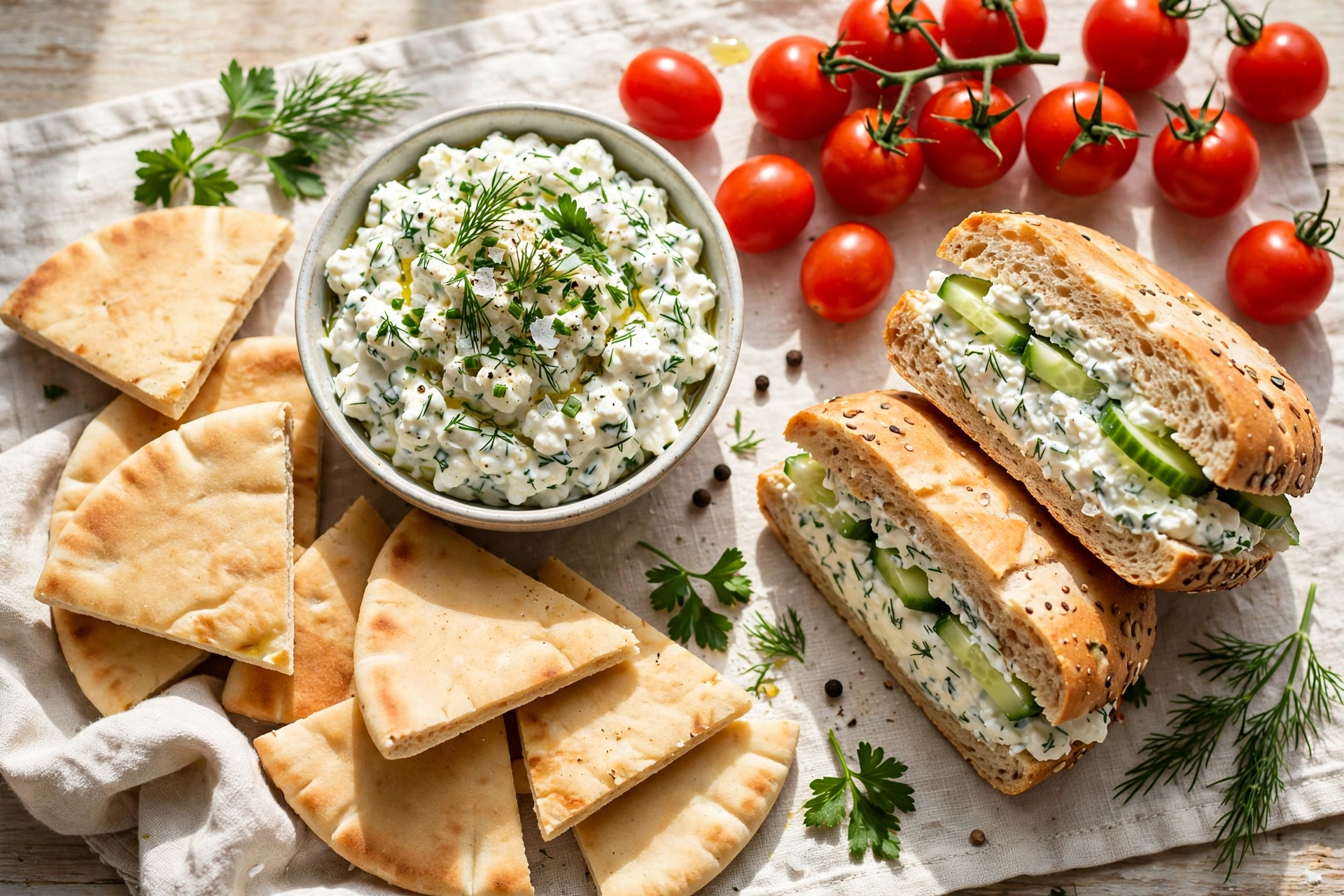
The classic board: carrot and cucumber sticks, bell pepper strips, and radishes, all cut thick enough to carry a loaded dip without snapping. Whole grain crackers and warm pita wedges are the sturdier vehicles, and the dip holds on both. Where it earns a second life is as a spread. It replaces mayonnaise in sandwiches and wraps at a fraction of the calories and with protein mayonnaise never had, it goes under sliced tomato on toast, and a spoonful stirred through warm pasta or grain bowls melts into something close to a sauce. Leftovers are rarely a problem once the sandwich use is discovered.
Variations and substitutions
Ranch style: swap the dill or oregano for 1 tablespoon of ranch seasoning, or make the seasoning from dried dill, garlic powder, onion powder, and parsley in equal pinches. The numbers barely move; the sodium climbs, which is the honest cost of ranch anything. Spicy: add the chilli flakes without apology, a teaspoon of your usual hot sauce, and a pinch of smoked paprika. Heat costs no calories here. Roasted red pepper: blend in half a cup of drained roasted peppers from a jar. The dip turns the colour of sunset, gains a gentle sweetness, and loosens slightly, so skip any added milk and count about 6 extra calories a serving. Yogurt swap: replacing a quarter of the cottage cheese with Greek yogurt sharpens the tang and firms the set, at about the same protein. Every variation changes the nutrition a little; the base recipe is the one the numbers on this page belong to.
Storage and frequently asked questions
Spoon the dip into an airtight container and refrigerate it for up to 3 days. Stir before serving each time: a little clear liquid on the surface after the second day is whey separating, which is normal for a blended dairy dip and stirs straight back in. It can be made a day ahead and arguably should be, since the flavours have had time to meld overnight. One caution runs the other way: raw garlic can read a touch stronger on day two, so a light hand at the start pays off when making it ahead. Do not freeze it. Frozen cottage cheese turns grainy when thawed, and the dip comes back thin and separated. Food safety follows the usual dairy rules: back into the fridge within two hours of serving, sooner on a hot day, and if it smells sour rather than fresh and garlicky, it goes.
Can you taste the cottage cheese?
Mostly, no. What survives blending and seasoning is a mild, fresh tang underneath the garlic, lemon, and herbs. People who dislike cottage cheese usually dislike the curds, and the curds are gone. If a very mild, sweet tub is used, the dip can taste almost like a soft cheese spread.
Do I need a food processor, or will a blender do?
Both work. The processor is easier at this quantity because it needs no added liquid. With a blender, use the milk a teaspoon at a time to get the mixture moving, scrape down twice, and expect to blend the full ninety seconds.
Why is my dip runny?
Three causes cover nearly every case: the tub was watery and went in undrained, too much milk or lemon went in at the start, or the dip was blended well past smooth in a warm kitchen and loosened. The fixes are the adding body steps above, and the prevention is draining first and adding liquid last, in teaspoons.
Can I make it ahead?
Yes. It keeps 3 days in the fridge and tastes better on day two than in the first hour, once the flavours have melded. Give it a stir and a fresh pinch of herbs before serving and nobody will know it was not made that morning.
Is low fat cottage cheese as good here?
Nearly. The protein per serving stays at about 12 grams, the calories drop to about 120, and the texture runs a touch softer and tangier. Drain a low fat tub well and it is a fair trade. Fat free is the one version that noticeably thins the dip, and it benefits from the Greek yogurt stir in described above.
References
Protein and calorie values for cottage cheese and olive oil: USDA FoodData Central
Practical protein targets for active people: Bean A, The Complete Guide to Sports Nutrition, 9th edition (Bloomsbury Sport, 2022).
The short version of this dip first appeared in: high protein cottage cheese recipes
One tub, one blender, ten minutes. Cut the vegetables thick, season in the order given, and let the fridge do the last part of the work overnight.