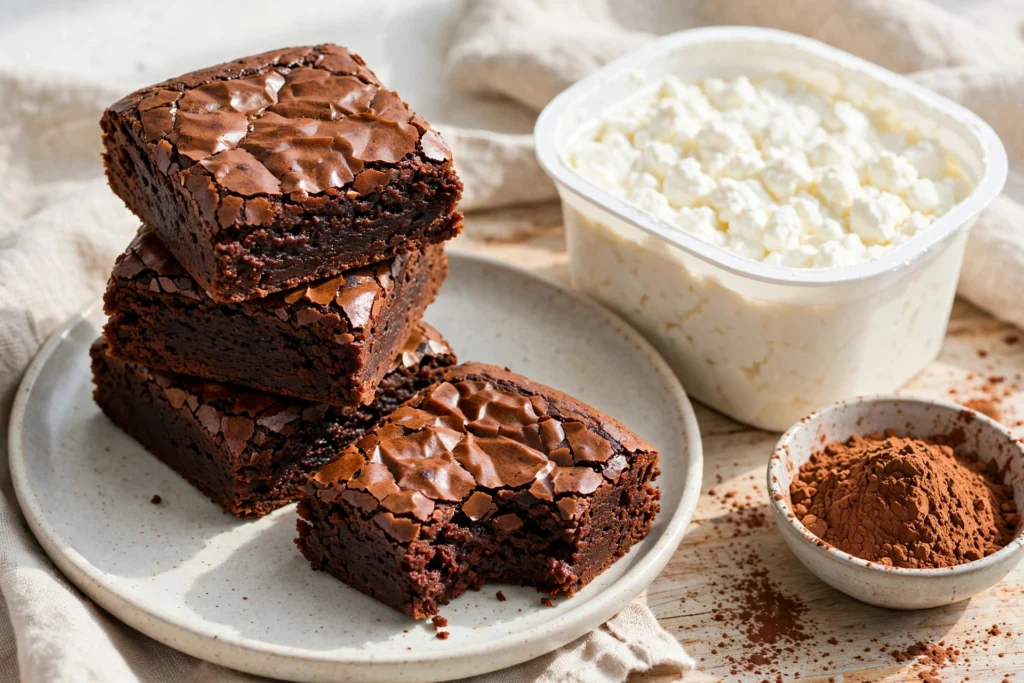
These high protein cottage cheese brownies are the deep-dive version of the brownie that first appeared in my high protein cottage cheese recipes roundup — one recipe, done properly: exact weights, the blending step that decides the texture, doneness cues instead of a blind timer, and nutrition calculated from the actual ingredient list. Each brownie lands at about 12 grams of protein and 125 calories, with roughly 9 grams of carbs and 5 grams of fat, and the cottage cheese — blended completely smooth before it meets the cocoa — is in there for moisture and protein, not as a flavour anyone is meant to find. What to expect: a dense, fudgy brownie, closer to the centre of a normal pan than the edges. What this article will not claim: that the recipe is tested or foolproof. It is a developed recipe with estimated timings, and the cues below are written so a first bake can be judged and adjusted honestly.
Table of Contents
ToggleWhy use cottage cheese in brownies?
Two jobs. The first is protein: 2 cups of cottage cheese bring about 50 grams to the batch before the eggs and protein powder are counted, which is how a brownie reaches 12 grams a slice without tasting like a protein bar. The second is moisture — cottage cheese is a wet ingredient that stays wet in the oven, and a brownie built on it can skip most of the butter or oil a standard recipe leans on. One honest limit, because the title invites the misunderstanding: cottage cheese does not automatically make a brownie high-protein or low-calorie. The whole list decides that. This batch is engineered to land where it lands; the same cheese in a batter full of sugar and butter would just be a richer ordinary brownie, and the numbers section of any recipe — including this one — is where that gets proven or exposed.
Ingredients you'll need
Makes 8 high protein cottage cheese brownies in a 20cm (8-inch) square pan. Per brownie: about 12g protein · about 125 kcal · about 9g carbs · about 5g fat — all calculated from the list below.
2 cups (450g) cottage cheese — the protein and the moisture. Regular 4% fat is the version these numbers use; the fat question is answered in the substitutions.
2 eggs — structure. There is too little flour here to hold anything together, so the eggs are what set the slice.
1 scoop (about 30g) chocolate protein powder — about 24g protein to the batch. Optional, with a cost stated in the substitutions.
½ cup (40g) cocoa powder — the flavour, entirely. This is what makes the cheese undetectable.
½ cup (50g) oat flour — just enough body to slice cleanly. More flour than this is where fudgy goes to cakey.
⅓ cup (about 65g) granulated sweetener — counted at zero calories; the sugar swap and its real cost are in the substitutions.
1 tsp vanilla extract, ½ tsp baking powder, a pinch of salt — the salt is not decoration; cocoa reads flat without it.
How to make high-protein cottage cheese brownies
1. Heat the oven to 175°C / 350°F. Line the pan with parchment, leaving an overhang on two sides — these brownies are lifted out, not tipped out.
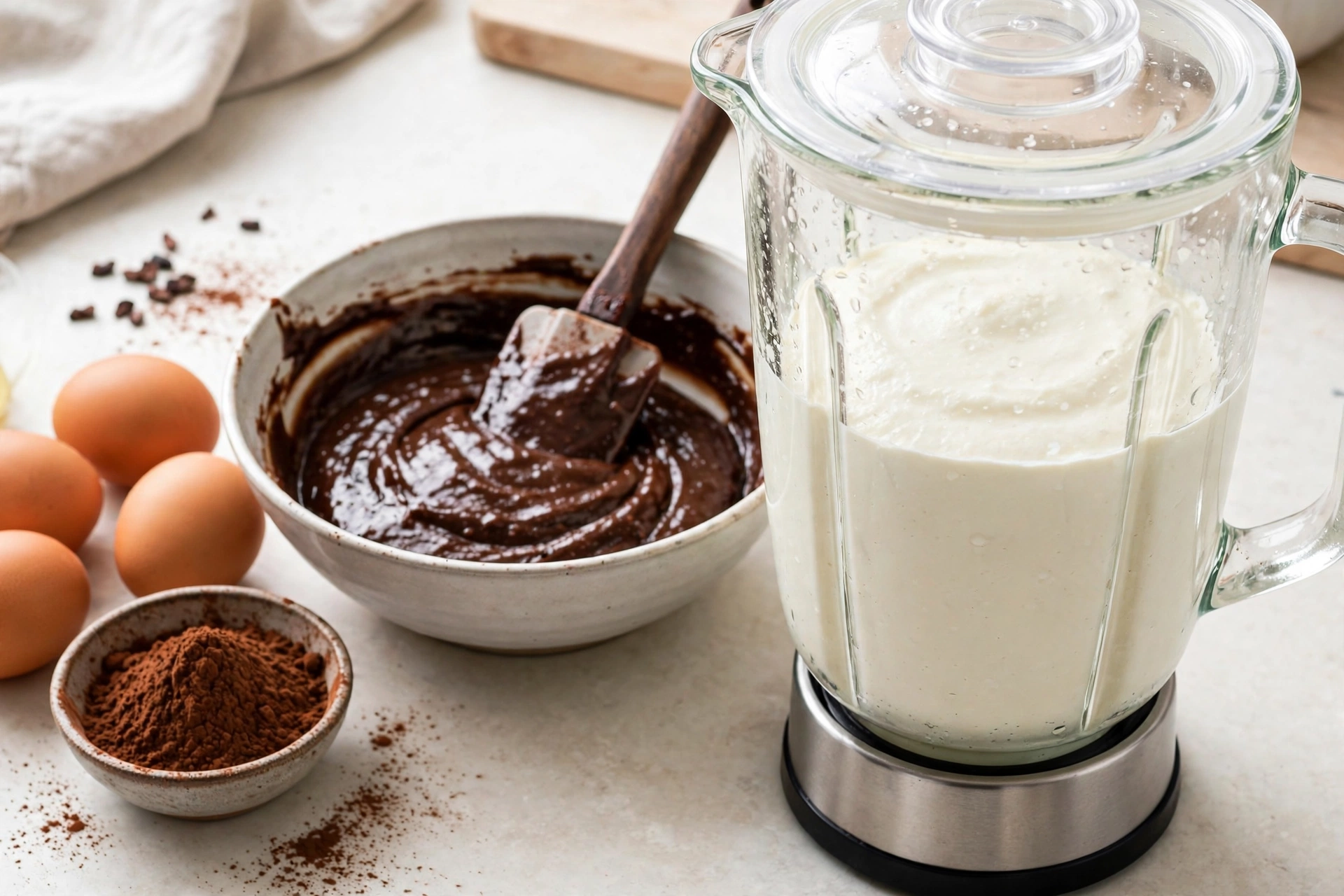
2. Blend the cottage cheese for a full 60 to 90 seconds until it is completely smooth and pourable, with no curds visible. This step is the texture of the entire recipe: any curd that survives the blender survives the oven, as a white fleck with a cheesy taste.
3. Whisk the eggs and vanilla into the blended cheese.
4. Fold in the protein powder, cocoa, oat flour, baking powder, and salt until just combined. The batter should be thick and glossy, dropping from the spatula in slow ribbons, not pouring like cake batter and not standing like dough.
5. Spread the batter into the pan, level the top, and bake for 22 to 27 minutes.
6. Judge doneness by the cues, not the clock: the edges are set and pulling very slightly from the sides, the centre has lost its wet shine and jiggles only faintly when the pan is nudged, and a toothpick in the centre comes out with moist crumbs — not wet batter, and not clean. Clean means overbaked, for this recipe.
7. Cool in the pan for at least an hour before slicing. This is a step, not a waiting room: the brownies finish setting as they cool, and a slice cut hot will read as gummy no matter how well it was baked. For the cleanest cut, chill the cooled pan for an hour and slice cold into 8.
Tips for fudgy brownies
Blend longer than feels necessary. Ninety seconds, a scrape down, thirty more — the difference between a brownie that tastes of chocolate and one that tastes of its secret ingredient is almost entirely blender time. Keep the flour at the stated amount; the urge to add “a little more so it slices better” is how this recipe turns cakey, because the set comes from the eggs and the cooling, not from flour. Pull them early rather than late — a cottage cheese brownie has far less fat protecting it than a butter brownie, so the gap between fudgy and dry is a few minutes, which is why the toothpick test above asks for moist crumbs. And if the centre stays gummy after full cooling, the causes in order of likelihood: it was sliced too soon, the cottage cheese went in unblended or very watery (drain loose whey off a wet tub first), or it is genuinely underbaked — in which case the next batch gets 3 more minutes, not 10.

Ingredient substitutions
Flour: all-purpose at the same ½ cup works, with a lighter, slightly cakier crumb and about the same protein. Almond flour is not a straight swap — it brings its own fat and moisture, so use ⅓ cup and expect a softer set at about the same calories. Coconut flour absorbs several times its weight in liquid and will wreck the batter at a 1:1 swap; if it is all you have, use 2 tablespoons and add an egg, and accept a different brownie. Sweetener: granulated sugar at the same measure adds about 30 calories per brownie (the batch gains roughly 250) and a slightly better crust; liquid sweeteners like honey add moisture the batter does not need and push the centre toward gummy, so they are the swap this recipe advises against. Cocoa: Dutch-process gives a darker, milder brownie; natural cocoa a sharper one; either works at the same amount, and an extra 2 tablespoons for a darker crumb needs a tablespoon of milk to balance the dryness. Protein powder: leaving it out drops each brownie to about 10 grams of protein and makes the texture a touch more tender — a fair trade, printed rather than hidden. If you keep it, a casein or blended powder stays moister than a straight whey, which can dry the crumb; whey users should check doneness at the early end of the window. Fat level: low-fat cottage cheese (about 180 calories a cup) trims roughly 10 calories per brownie with the protein unchanged at about 24 grams a cup; fat-free tubs bake drier and benefit from the full 90-second blend.
Storage and freezing
These are moist, dairy-based brownies, so they live in the fridge, not on the counter. Cool them fully (within about 2 hours of baking), then refrigerate in an airtight container for up to 5 days. They eat best at room temperature or after 10 seconds in the microwave — fridge-cold understates the chocolate. To freeze: wrap slices individually, freeze for up to 2 months, and thaw in the fridge overnight or on the counter for about an hour; the texture comes back slightly denser, which most people read as fudgier anyway. If a refrigerated brownie ever smells sour rather than chocolatey, that is the dairy talking, and it goes in the bin.
Frequently asked questions
Do the brownies taste like cottage cheese?
No — with one condition. Blended completely smooth and baked with this much cocoa, the cheese reads as moisture and richness, and its mild tang disappears under the chocolate. The condition is the blending: under-blend, and flecks of curd survive with their flavour intact, which is the version of this recipe that gives it a bad name.
Does the cottage cheese really need blending?
For brownies, yes — it is the one non-negotiable step here. In scrambles and bakes the curds are a feature; in a brownie batter they are white spots and an uneven set. A stick blender in the tub works if a countertop blender is a production.
How do I know the centre is done without drying the edges?
Watch for the three cues together: edges set and just pulling from the pan, centre matte instead of shiny with only a faint jiggle, and a toothpick carrying moist crumbs. Any single cue can mislead; the three together are reliable. Remember the cooling hour is part of the set — judge the brownie after it, not before.
Is the protein powder necessary?
No. Without it the batch makes high protein cottage cheese brownies at about 10 grams of protein each, a little more tender, and still well ahead of an ordinary brownie’s 2 to 3 grams. The powder buys 2 grams per brownie and a firmer set. I think the recipe stands either way; which version is worth it depends on whether the point of the bake is dessert first or protein first.
Can I make them without eggs?
The eggs are the structure, so the swap changes the bake rather than translating it. A flax egg (1 tbsp ground flax + 3 tbsp water, per egg) sets softer and more fragile; the brownies must cool and chill completely before slicing, and the centre stays on the fudgy side of set. It works as a different, softer brownie — not as the same one.
References
Protein and calorie values for cottage cheese and eggs: USDA FoodData Central
Practical protein targets for active people: Bean A, The Complete Guide to Sports Nutrition, 9th edition (Bloomsbury Sport, 2022).
The shorter version of this recipe first appeared in: high protein cottage cheese recipes. For the full dessert shelf, see high protein dessert recipes.
One pan, eight slices, and a brownie that does not need its protein explained to anyone eating it. Blend the cheese smooth, pull the pan on moist crumbs, and give it the full cooling hour — the recipe is mostly those three decisions.