A high protein dessert is not a contradiction — it is a base swap. Build dessert on Greek yogurt, cottage cheese, or a scoop of protein powder instead of cream and butter, and the same cheesecake cups, brownies, and puddings land between 10 and 27 grams of protein per serving while still tasting like dessert. The ten high protein dessert recipes below are ordered honestly: the puddings and mousses carry the biggest numbers, the baked recipes sit lower, and every total is printed on its recipe so nobody has to guess which kind they are getting.
The same honesty note as every recipe list on this site: these are developed recipes, not lab work. Protein and calories are calculated from the ingredients as written, using the standard values in the note below, and cooking times are realistic estimates — ovens and microwaves vary, so the first batch of anything is the one to watch. Where a claim rests on published research, the study is linked next to the claim. The rest is kitchen reasoning, and it is written that way on purpose.
Why bother putting protein in dessert at all? Because dessert is where the day’s eating usually unravels, and protein is the one nutrient that pushes back. In a 2014 trial in Nutrition Journal, a 160-calorie high-protein yogurt snack cut afternoon hunger more than chocolate did and left women eating about 100 fewer calories at dinner (Ortinau et al., 2014). I think that is the real case for these recipes: not dessert as a health food, but dessert that does not send you back to the cupboard an hour later. For the savoury side of the same idea, the high protein snacks list covers the rest of the day.
How the numbers were calculated: protein is counted from these standard values — Greek yogurt 23g per cup, cottage cheese 25g per cup, ricotta 14g per cup, light cream cheese about 8g per 100g, protein powder 24g per scoop (check your tub; brands run 20 to 25), egg about 6g each, peanut butter 8g per 2 tablespoons, almond flour about 6g per quarter cup, whole milk 8g per cup, chia seeds 2g per tablespoon, cocoa powder about 1g per tablespoon. Batch recipes state how many servings they make, and every figure is per serving. Treat the totals as solid estimates, not lab results.
Table of Contents
ToggleThe ten at a glance
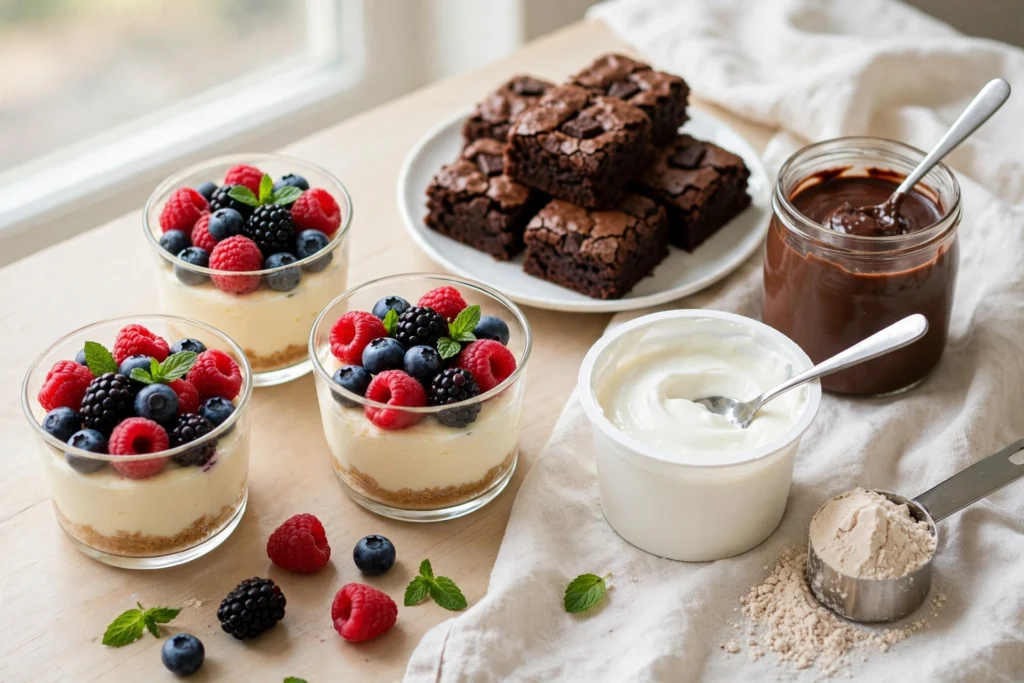
1. Greek Yogurt Cheesecake Cups · Makes 4 · About 14g protein · About 220 kcal each
2. Protein Brownies · Makes 6 · About 12g protein · About 130 kcal each
3. Cottage Cheese Chocolate Pudding · Serves 1 · About 26g protein · About 230 kcal
4. Protein Ice Cream · Makes 2 · About 16g protein · About 190 kcal each
5. Peanut Butter Protein Cookies · Makes 8 · About 10g protein · About 170 kcal each
6. Tiramisu Protein Cups · Makes 2 · About 15g protein · About 220 kcal each
7. Lemon Protein Mousse · Makes 2 · About 17g protein · About 140 kcal each
8. Chocolate Chia Protein Pudding · Serves 1 · About 27g protein · About 400 kcal
9. Protein Mug Cake · Serves 1 · About 23g protein · About 240 kcal
10. Frozen Yogurt Bark · Makes 4 · About 17g protein · About 120 kcal each
The recipes
1. Greek Yogurt Cheesecake Cups
Makes 4 cups · Prep 15 minutes + 2 hours chilling · No baking · About 14g protein · About 220 kcal each
Ingredients: 2 cups Greek yogurt, 100g light cream cheese at room temperature, 2 tbsp honey, 1 tsp vanilla, zest of ½ lemon, 8 tbsp crushed digestive or graham biscuit crumbs, berries to top.
Method: press 2 tbsp crumbs into the base of each cup. Whisk the yogurt, cream cheese, honey, vanilla, and zest until completely smooth — room-temperature cream cheese is what keeps it lump-free — then divide over the crumbs and chill at least 2 hours. The protein maths is mostly the yogurt: 2 cups carry about 46 grams before the cream cheese adds its share. Chill longer and the texture firms up properly; one hour is the minimum, overnight is better.
2. Protein Brownies
Makes 6 · Prep 10 minutes · Bake about 20 minutes at 175°C / 350°F · About 12g protein · About 130 kcal each
Ingredients: 1½ scoops chocolate protein powder (about 36g protein), ¾ cup Greek yogurt, 1 egg, ½ cup almond flour, 2 tbsp cocoa powder, 3 tbsp sweetener or sugar, ½ tsp baking powder, a pinch of salt, 2 to 3 tbsp milk if the batter needs loosening.
Method: whisk everything to a thick batter, spread in a small lined tin, and bake until the top is set but the centre still looks slightly soft — that slight softness is the difference between a brownie and a sponge. Protein powder bakes dry if it is pushed; pull them early rather than late. Times are an estimate: start checking at 18 minutes. Cool fully before cutting; they firm as they sit.
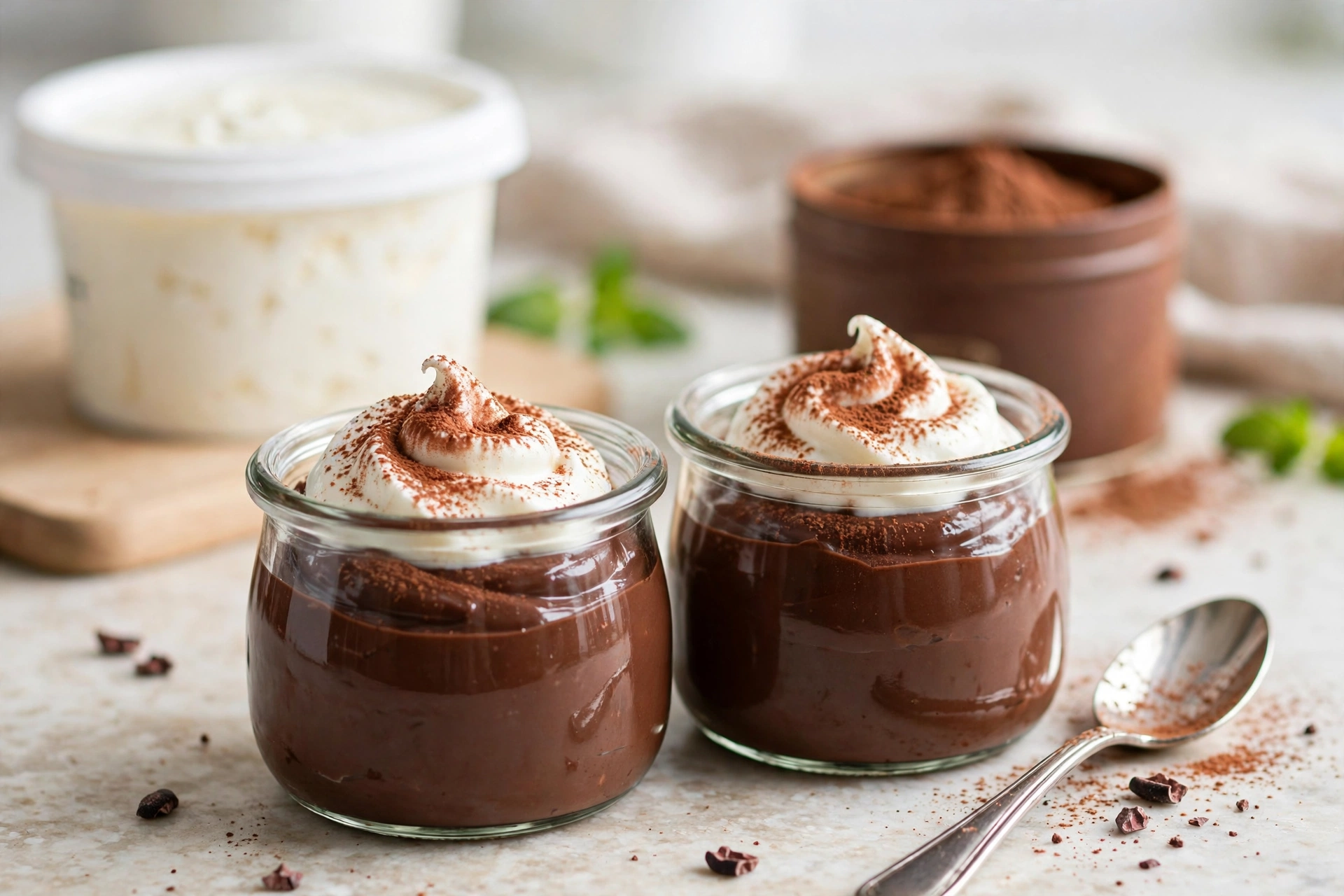
3. Cottage Cheese Chocolate Pudding
Serves 1 · Prep 5 minutes · No cooking · About 26g protein · About 230 kcal
Ingredients: 1 cup cottage cheese, 1 tbsp cocoa powder, sweetener to taste (or 1 tbsp honey, which adds about 60 kcal), ½ tsp vanilla, a pinch of salt, 1 to 2 tbsp milk if your blender needs help.
Method: blend for a full 60 to 90 seconds, scraping down once, until no curd texture remains anywhere. This is the highest-protein no-cook dessert on the list, and the whole trick is patience with the blender — stop early and it is cottage cheese, blend fully and it is chocolate pudding. Serve straight away or chill an hour for a firmer set.
4. Protein Ice Cream
Makes 2 servings · Prep 5 minutes + 2 to 3 hours freezing · About 16g protein · About 190 kcal each
Ingredients: 1 scoop vanilla protein powder (about 24g protein), 1 cup whole milk, 1 frozen banana, ½ tsp vanilla, a pinch of salt.
Method: blend everything smooth, pour into a shallow freezer container, and freeze 2 to 3 hours, stirring hard every 45 minutes or so to break up the ice crystals — or churn in an ice-cream maker if you own one. Eat it the day it is made; by day two it freezes brick-hard and needs 15 minutes on the counter before it scoops. The texture lands between soft-serve and proper ice cream, and the banana is doing the sweetening, so a ripe one matters.
5. Peanut Butter Protein Cookies
Makes 8 · Prep 10 minutes · Bake 10 to 12 minutes at 175°C / 350°F · About 10g protein · About 170 kcal each
Ingredients: ¾ cup peanut butter, 1 scoop vanilla protein powder (about 24g protein), 1 egg, 2 tbsp cocoa powder, 2 tbsp sweetener or sugar.
Method: stir everything to a stiff dough, roll into 8 balls, flatten with a fork in a cross-hatch, and bake until the edges look set — the centres stay soft and finish setting as they cool. I do not pretend these match a bakery cookie gram for gram; at 10 grams of protein they are the lowest on this list, and they are here because a warm peanut butter cookie at 170 calories is a fair trade most evenings. Overbaking is the one real failure mode: dry in, dry out.
6. Tiramisu Protein Cups
Makes 2 · Prep 15 minutes + 1 hour chilling · No baking · About 15g protein · About 220 kcal each
Ingredients: 1 cup Greek yogurt, ½ cup ricotta, 1 tbsp honey or sweetener to taste, ½ tsp vanilla, 4 sponge fingers, 120ml strong coffee, cooled, cocoa powder for dusting.
Method: whisk the yogurt, ricotta, honey, and vanilla smooth. Dip each sponge finger in the coffee for two seconds a side — longer and they collapse — and layer biscuits and cream in two glasses, finishing with cream. Dust with cocoa and chill at least an hour. Ricotta is the quiet protein here: it keeps the mascarpone-style richness while carrying far more protein than mascarpone, which is mostly fat.
7. Lemon Protein Mousse
Makes 2 · Prep 10 minutes + 1 hour chilling · About 17g protein · About 140 kcal each
Ingredients: 1½ cups Greek yogurt, juice and zest of 1 lemon, 1 tbsp honey, 1 tsp powdered gelatin bloomed in 2 tbsp warm water (or ½ tsp agar for a vegetarian set).
Method: whisk the yogurt, lemon, and honey, then whisk in the warm bloomed gelatin quickly and divide between two glasses before it starts to set. Chill an hour. This is the lightest full-flavoured dessert on the list — 17 grams of protein at about 140 calories — because Greek yogurt does nearly all of it. Taste before chilling: lemons vary, and a second spoon of honey is easier to add than to forgive.
8. Chocolate Chia Protein Pudding
Serves 1 · Prep 5 minutes + 4 hours setting · No cooking · About 27g protein · About 400 kcal
Ingredients: 3 tbsp chia seeds, 1 cup whole milk, ½ scoop chocolate protein powder (about 12g protein), 1 tbsp cocoa powder, sweetener to taste.
Method: whisk everything hard in the jar or bowl it will set in, wait ten minutes, whisk again — that second whisk is what stops the chia clumping at the bottom — then refrigerate at least 4 hours, overnight is best. Honest labelling: at about 400 calories this is the biggest dessert here, closer to a small meal, and it is priced that way because chia and whole milk are both real food. Made with skimmed milk it drops to about 350.
9. Protein Mug Cake
Serves 1 · Prep 3 minutes · Microwave 60 to 90 seconds · About 23g protein · About 240 kcal
Ingredients: ½ scoop chocolate or vanilla protein powder (about 12g protein), 1 egg, 2 tbsp almond flour, 2 tbsp milk, 1 tbsp cocoa powder (skip it with chocolate powder), ½ tsp baking powder, sweetener to taste.
Method: whisk everything directly in a large mug, then microwave 60 seconds and check — the top should look just set; give it 10 to 15 seconds more only if it is still wet. Microwaves vary more than ovens do, so the first mug is an estimate you adjust once. Stop early rather than late: an overcooked mug cake turns rubbery, and that is a protein-powder trait, not a mistake in the mixing.
10. Frozen Yogurt Bark
Makes 4 servings · Prep 10 minutes + 2 to 3 hours freezing · About 17g protein · About 120 kcal each
Ingredients: 2 cups Greek yogurt, 1 scoop vanilla protein powder (about 24g protein), 1 tsp vanilla, 1 cup mixed berries, 1 tbsp dark chocolate chips.
Method: stir the yogurt, powder, and vanilla until the powder fully disappears, spread about 1cm thick on a lined tray, scatter the berries and chips, and freeze 2 to 3 hours until it snaps. Break into shards and store in a bag in the freezer. At about 120 calories a serving this is the one that works as a nightly habit rather than an occasion — and eaten straight from the freezer it slows you down, which with dessert is half the battle.

Where the protein actually comes from
Four ingredients do nearly all the work in this list, and it is worth seeing them plainly. Greek yogurt: about 23 grams a cup, and it replaces cream, mascarpone, and half the cream cheese in most desserts without changing the method. Cottage cheese: 25 grams a cup, invisible once blended, and the base of the strongest pudding here. Protein powder: 20 to 25 grams a scoop, the only realistic route to a high-protein bake — but it dries in heat, which is why the bakes carry yogurt alongside it. Ricotta and light cream cheese: supporting players at 14 and about 8 grams — they add the cheesecake texture the others cannot. What most people miss is that the flour, cocoa, and fruit contribute almost nothing; the base is the recipe.
Sweetness, stated plainly
These are desserts, and they are sweetened like it — but the choices change the maths. Honey and sugar taste the most familiar and add about 60 calories a tablespoon with zero protein. Granulated sweeteners keep the printed calories honest and most people cannot tell the difference in chocolate recipes; in the lemon mousse and cheesecake cups, where there is nowhere to hide, a real spoon of honey usually wins on flavour. Ripe fruit is the third route: the banana in the ice cream and the berries on the bark sweeten without a sweetener line in the ingredients at all. There is no version of this list that is sugar-free and tastes like the original — I think the workable deal is smaller portions of something genuinely good, at numbers you can see.
Make-ahead and storage
Most of this list is built for the fridge, which is dessert’s real advantage over baking. Cheesecake cups and tiramisu cups keep 3 days covered in the fridge and improve on day two. Both puddings keep 2 to 3 days; the chia pudding thickens further as it stands, so a splash of milk loosens it. Brownies and cookies keep 4 days in a sealed container — the brownies are better slightly warm, ten seconds in the microwave. The bark lives in the freezer for up to a month and the ice cream is best within 2 days. Two safety rules cover everything here: get egg- and dairy-based desserts into a fridge at 4°C / 40°F or below within two hours of making or baking (one hour on a hot day), and trust your nose over the calendar — dairy desserts that smell off go in the bin, not back in the fridge.
Swaps and substitutions
Dairy-free is the hard direction, stated honestly: coconut and almond yogurts carry 1 to 2 grams of protein a cup, so a dairy-free version of the yogurt desserts needs a different base entirely — silken tofu blended with cocoa and sweetener makes a proper chocolate mousse at about 9 grams a serving, and soy yogurt, where you can find it, is the only plant yogurt that keeps the numbers respectable. Nut-free: swap the almond flour in the brownies and mug cake for oat flour at the same weight; the protein drops by about 1 gram a serving and the texture turns slightly heartier. No protein powder: the cheesecake cups, cottage cheese pudding, tiramisu cups, lemon mousse, and bark never needed it — five of the ten stand exactly as written. Whey versus casein in the bakes: casein and whey-casein blends bake softer; straight whey is the one most likely to dry out, so if a brownie batch disappoints, the powder type is the first suspect.
Questions people ask
Do high protein desserts actually taste like dessert?
The no-bake ones, yes — blended cottage cheese pudding and the cheesecake cups are desserts first by any honest standard. The bakes are good, not identical: protein powder changes crumb and moisture, and the recipes above are written around that instead of pretending otherwise. Expect a brownie that is 90 percent of the way there, at roughly a third of the calories of a bakery brownie and about four times the protein.
Can these help with weight loss?
They help the way the yogurt snack did in the 2014 study linked in the intro: a protein dessert tends to close the kitchen for the evening instead of opening it. The lemon mousse at about 140 calories or the bark at about 120 replaces desserts that usually run 400-plus. The chia pudding, at about 400, does not belong in that sentence — it is a meal-sized dessert and the article labels it as one. The weight loss meal ideas list builds whole days on the same maths.
Why did my brownies or mug cake turn out dry or rubbery?
Heat and time, nearly always. Protein powder firms as it cooks, so a bake that would be perfect for flour goes dry with powder in it — pull bakes when the centre still looks slightly soft, and microwave the mug cake in short bursts. The powder type matters too: whey isolate is the driest option; a whey-casein blend is the forgiving one.
Can I make these for kids?
The bark, cheesecake cups, and cookies are ordinary desserts with better numbers, in ordinary portions. The powder-heavy recipes are written for adult protein targets — children need far less protein per meal, and regular food covers it; keep the family servings to the yogurt- and fruit-based ones and everyone is eating the same dessert anyway.
References
Protein snacks, hunger, and eating less at the next meal: Ortinau LC, Hoertel HA, Douglas SM & Leidy HJ, “Effects of high-protein vs. high-fat snacks on appetite control, satiety, and eating initiation in healthy women”, Nutrition Journal, 2014 — full text
Protein, fullness, and weight management: Leidy HJ et al., “The role of protein in weight loss and maintenance”, American Journal of Clinical Nutrition, 2015 — DOI record
Spreading protein across the day: Mamerow MM et al., “Dietary protein distribution positively influences 24-h muscle protein synthesis in healthy adults”, The Journal of Nutrition, 2014 — PubMed record
Practical protein targets for active people: Bean A, The Complete Guide to Sports Nutrition, 9th edition (Bloomsbury Sport, 2022).
Protein values for yogurt, cottage cheese, ricotta, peanut butter, and almond flour: USDA FoodData Central
Dessert does not have to be the meal that undoes the day. Pick the cheesecake cups for the weekend and keep a bag of bark in the freezer for the weeknights, and the sweet course starts paying rent. And on the nights only a drinkable dessert will do, the chocolate cherry blend from the breakfast smoothie recipes works after dinner exactly as written — nobody said it was only for mornings.