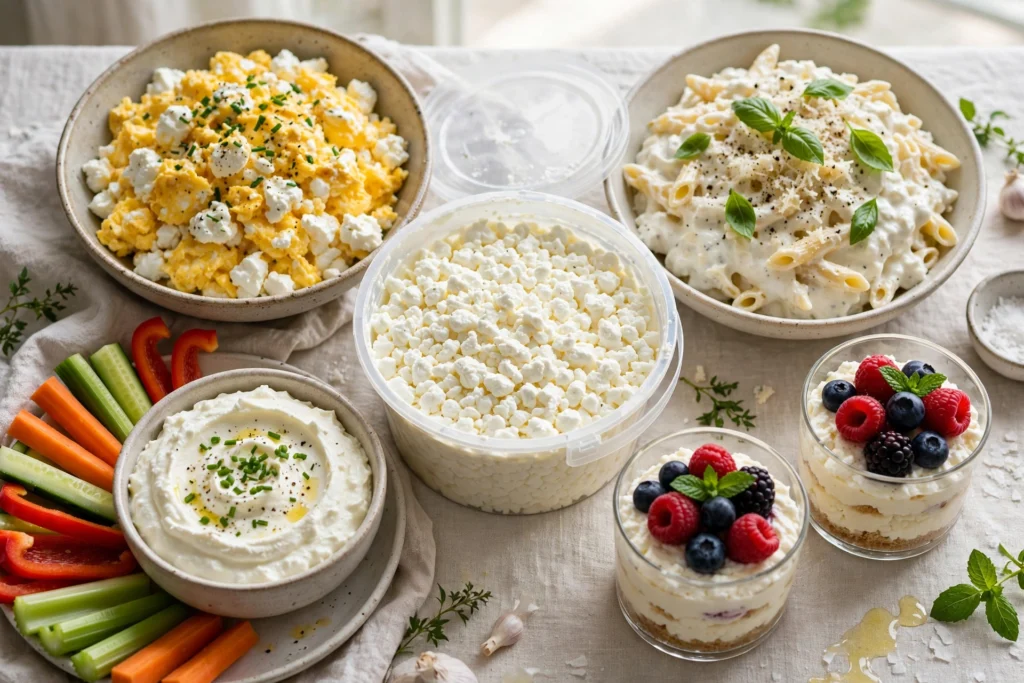
Cottage cheese is one of the cheapest protein upgrades in the dairy aisle, and the most underused. One cup carries about 25 grams of protein — more than a cup of Greek yogurt — and it scrambles into eggs, blends into pasta sauce, sets into bakes, and disappears into brownies. Below are 12 high protein cottage cheese recipes across breakfast, lunch, dinner, snacks, and dessert, running from about 12 to 50 grams of protein per serving. Every dish is a complete recipe with exact quantities and numbered steps, not a teaser; single-dish deep dives, like the brownies and the pizza crust, get their own posts later.
The numbers first, because this ingredient varies more than most: the calculations use regular (4% fat) cottage cheese at 25 grams of protein and about 220 calories per cup (225g). Check your tub — brands run from about 24 to 28 grams per cup, and low-fat versions carry similar protein for roughly 160 to 180 calories. These are developed recipes with calculated nutrition and estimated timings, not lab results, and the article will not pretend otherwise. Protein totals count the whole ingredient list, and each recipe shows its servings so the maths can be followed.
One reason this ingredient earns a whole roundup: protein is the nutrient that keeps a meal feeling like a meal. Reviews of the trial evidence credit higher-protein eating with stronger fullness and better weight management than lower-protein diets at the same calories (Leidy et al., 2015). Cottage cheese simply makes that pattern easy to cook — it is mostly casein protein, it is cheap, and it takes whatever flavour direction the dish is already going.
Table of Contents
ToggleChoosing cottage cheese, and blending it smooth
Three label decisions matter. Curd size: small curd blends smoothest and melts into sauces and bakes with the least trace; large curd is better where the curds themselves are the texture, like the snack bowl below. Fat level: the protein barely moves between fat-free, low-fat, and regular — roughly 25 to 28 grams per cup across the range — while calories swing from about 160 to 220, so the fat choice is a calories-and-richness decision, not a protein one. Regular 4% cooks best in bakes; low-fat is the better pick for dips and snack bowls eaten cold. Added ingredients: some tubs carry gums and extra sodium; a short ingredient list (milk, cream, salt, cultures) behaves most predictably in the pan.
Blending is what turns this ingredient invisible, and it is simple: tip the tub into the blender including its liquid, blend on high for a full 60 to 90 seconds, scrape down once, and blend again. What comes out is a smooth, pourable base the texture of ricotta — the form the pasta sauce, dip, cheesecake cups, and brownies below all depend on. Graininess in a finished dish is almost always under-blending, which is why the mistake section at the end starts there.
Cottage Cheese Breakfast Recipes
Three breakfasts, kept deliberately brief — a dedicated breakfast-only collection can go deeper another time.
Cottage Cheese Egg Scramble
Serves 1 · Prep 5 minutes · Cook about 5 minutes · About 25g protein · About 250 kcal
Ingredients: 2 eggs, ½ cup (115g) cottage cheese, a handful of spinach or a few chives, butter or oil spray for the pan, salt and pepper.
1. Whisk the eggs in a bowl until uniform.
2. Cook the eggs low and slow in a non-stick pan, stirring into soft curds, about 3 minutes.
3. Take the pan off the heat and fold in the cottage cheese and spinach for 30 seconds — residual heat warms it through without boiling it.
4. Season at the end and serve at once.
Swap: 1 whole egg + 2 whites keeps the protein near 25g and cuts about 35 kcal. Store: best cooked fresh; leftovers keep 1 day in the fridge and reheat gently — expect a softer scramble.
Tip: the cottage cheese goes in off the heat. Boiled cottage cheese turns watery and grainy, and this recipe is built around never letting that happen.
Savory Cottage Cheese Breakfast Bowl
Serves 1 · Prep 10 minutes · No cooking beyond the egg · About 25g protein · About 275 kcal
Ingredients: ¾ cup (170g) cottage cheese, 1 egg (boiled or fried), cherry tomatoes and cucumber, 1 tsp olive oil, everything-bagel seasoning or za’atar, black pepper.
1. Spoon the cottage cheese into a bowl and level it.
2. Add the egg, halved, and the chopped tomato and cucumber around it.
3. Drizzle the oil, scatter the seasoning, and finish with black pepper.
Swap: 30g smoked salmon over the top adds about 6g protein and 35 kcal; dropping the oil saves 40 kcal. Store: components keep 2 days in the fridge; assemble when eating.
Tip: this bowl is the fastest route here to 25 grams before 8 a.m. — the egg is the only step that touches a pan, and a boiled egg from the fridge removes even that.
Whipped Cottage Cheese Toast
Serves 1 · Prep 5 minutes · No cooking · About 17g protein · About 215 kcal
Ingredients: 1 thick slice wholegrain bread, ½ cup (115g) cottage cheese, sliced tomato, basil or chives, chilli flakes, salt.
1. Blend or whisk the cottage cheese until spreadably smooth.
2. Toast the bread firmly — the topping is wet, and a crisp base is structural, not a preference.
3. Spread thickly, layer the tomato, and finish with herbs, chilli, and salt.
Swap: a poached egg on top takes it to about 23g protein and 285 kcal. Store: the whipped cheese keeps 2 days in the fridge; toast fresh.
Tip: drain any loose liquid off the tub before whipping, or the toast pays for it.
Cottage Cheese Lunch and Dinner Recipes
Three high protein meals with cottage cheese doing the heavy lifting — one bowl, one sauce, one bake. The chicken bowl below is a close cousin of the meals in my high protein dinner meals collection, rebuilt around the tub.
Cottage Cheese Chicken Bowl
Serves 1 · Prep 10 minutes (using cooked chicken) · About 50g protein · About 430 kcal
Ingredients: 120g cooked chicken breast, sliced; ½ cup (115g) cottage cheese; ½ cup cooked rice (about 100g); cucumber and radish; a squeeze of lemon; herbs or hot sauce.
1. Warm the rice and chicken if serving hot; the bowl works cold too.
2. Blend the cottage cheese with the lemon and herbs into a sauce, or leave it in spoonfuls — both are legitimate, the sauce version coats better.
3. Build the bowl: rice, chicken, vegetables, then the cottage cheese over the top.
Swap: cauliflower rice saves about 85 kcal; swapping the chicken for 150g firm tofu drops the bowl to roughly 30g protein — real, but know the trade before making it. Store: components keep 3 days in the fridge, assembled fresh.
Tip: at 50 grams this is the biggest protein serving in the article, built from two of the cheapest complete proteins in the shop. Season the chicken properly; the bowl has nowhere to hide bland chicken.
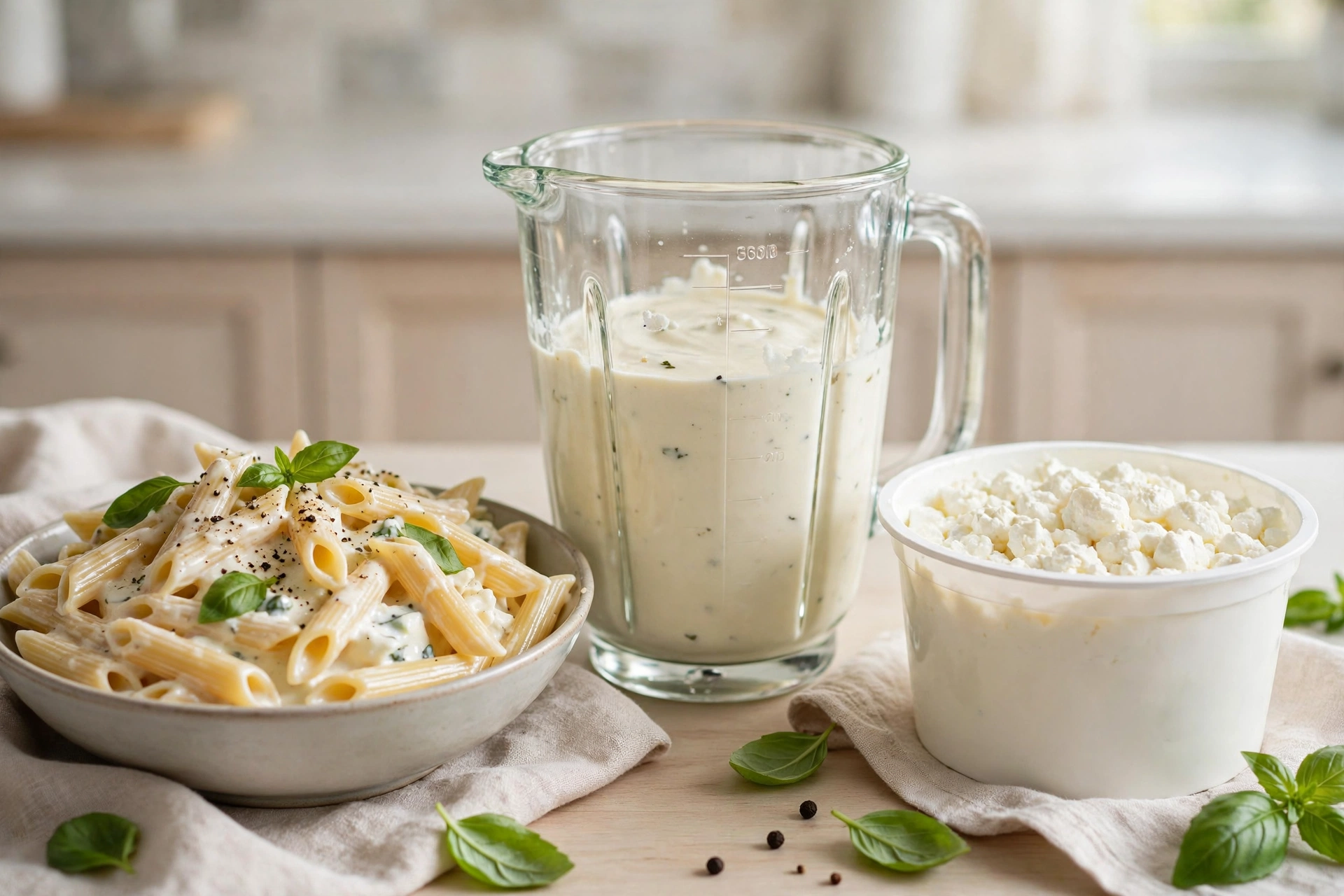
Creamy Cottage Cheese Pasta Sauce
Makes 2 servings · Prep 5 minutes · Cook about 15 minutes · About 28g protein · About 460 kcal per serving
Ingredients: 160g dry penne; 1 cup (225g) cottage cheese; ¼ cup grated parmesan; 1 garlic clove; black pepper; a ladle of pasta water; basil to serve.
1. Cook the pasta in well-salted water; save a mug of the water before draining.
2. Blend the cottage cheese, parmesan, and garlic for a full minute until completely smooth.
3. Return the pasta to its warm (not hot) pan, pour in the sauce with a splash of pasta water, and toss over the lowest heat for 1 minute — warm it through, never boil it.
4. Serve with basil and more pepper.
Swap: chickpea pasta in place of wheat adds about 8g protein per serving; 100g cooked chicken stirred through adds about 15g per serving. Store: the sauce keeps 2 days in the fridge and reheats badly if boiled — reheat the pasta gently with a splash of milk.
Tip: a cottage cheese sauce that splits was boiled. The fix is a cold pan, low heat, and pasta water — the starch is the emulsifier doing the quiet work.
Cottage Cheese and Zucchini Bake
Makes 2 servings · Prep 10 minutes · Bake about 30 minutes at 180°C / 350°F · About 26g protein · About 275 kcal per serving
Ingredients: 1 cup (225g) cottage cheese; 2 eggs; 1 medium zucchini (about 200g), grated and squeezed dry; ½ cup grated mozzarella; salt, pepper, and nutmeg or garlic powder.
1. Heat the oven and grease a small baking dish.
2. Whisk the eggs into the cottage cheese, then fold in the squeezed zucchini, most of the mozzarella, and the seasoning.
3. Tip into the dish, scatter the rest of the mozzarella, and bake until set in the centre and golden at the edges — start checking at 25 minutes.
4. Rest 5 minutes before cutting; it firms as it sits.
Swap: reduced-fat mozzarella saves about 40 kcal per serving at the same protein. Store: 3 days in the fridge; reheats well in the oven or microwave; freezes for up to a month with a slightly softer texture after thawing.
Tip: the squeezed zucchini is the recipe. Skip it and the bake weeps — a handful of grated zucchini holds roughly a third of a cup of water.
Quick Cottage Cheese Snacks
Three snacks, none longer than ten minutes. They sit alongside the wider list in my high protein snacks roundup — these are the ones where cottage cheese is the snack, not an ingredient in it.
Whipped Herb and Garlic Dip
Makes 2 servings · Prep 5 minutes · No cooking · About 13g protein · About 110 kcal per serving (dip only)
Ingredients: 1 cup (225g) cottage cheese, 1 small garlic clove, a handful of dill and parsley, lemon juice and zest, salt and pepper; vegetable sticks to serve (about 25 kcal).
1. Blend everything for a full minute until smooth and pale green.
2. Rest 10 minutes for the garlic to settle, then taste and adjust salt and lemon.
Swap: half cottage cheese, half Greek yogurt gives a tangier dip at about 12g protein per serving; a tablespoon of olive oil whisked in adds richness and about 45 kcal per serving. Store: 2 days in the fridge; the flavour improves overnight and the garlic strengthens — make it with a light hand if serving tomorrow.
Tip: this is the roundup version of the dip; a dedicated post can take it further. Raw garlic blooms in dairy, so today’s perfect dip is tomorrow’s strong one.
Cottage Cheese Snack Bowl
Serves 1 · Prep 3 minutes · No cooking · About 19g protein · About 200 kcal (sweet version)
Ingredients: ¾ cup (170g) cottage cheese; ½ cup pineapple chunks or peach; cinnamon. Savory version: cucumber, black pepper, chilli flakes.
1. Spoon the cottage cheese into a bowl.
2. Add the fruit and cinnamon, or the cucumber and pepper for the savory version (about 175 kcal).
Swap: a tablespoon of chopped nuts adds crunch, about 2g protein, and 55 kcal. Store: the cottage cheese keeps, but assemble at eating time — cut fruit weeps into it within the hour.
Tip: the snack bowl is the recipe that sells cottage cheese to people who think they dislike it, because cold and simply dressed is where its fresh, mild flavour is best.
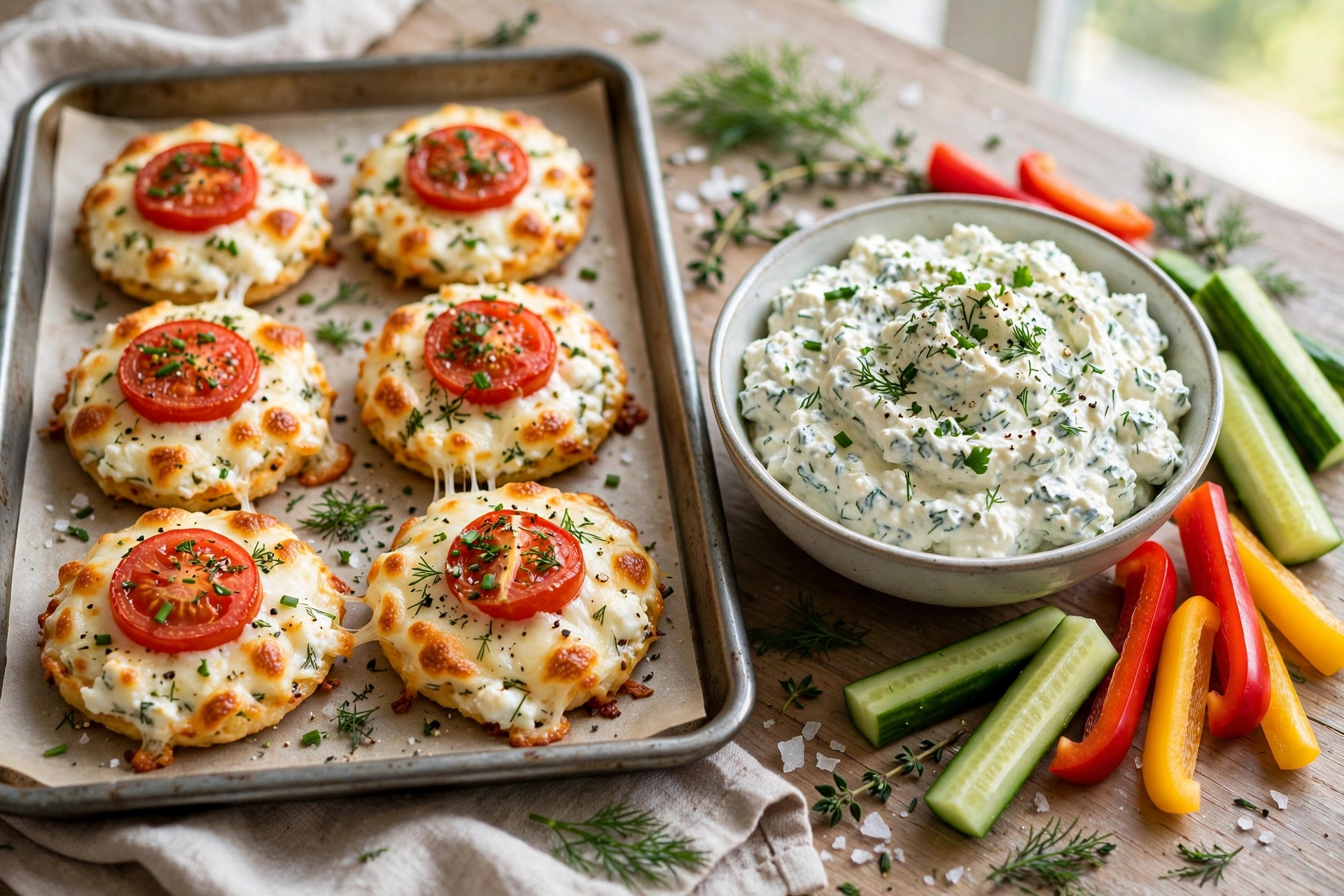
Mini Cottage Cheese Pizza Bites
Makes 4 bites, a serving is 2 · Prep 10 minutes · Bake about 25 minutes at 200°C / 400°F · About 20g protein · About 240 kcal per serving
Ingredients: 1 cup (225g) cottage cheese; 1 egg; 3 tbsp flour; 2 tbsp tomato sauce; ¼ cup grated mozzarella; oregano.
1. Blend the cottage cheese smooth, then stir in the egg and flour to a thick batter.
2. Spoon 4 rounds onto a lined tray and bake about 18 to 20 minutes until firm and golden at the edges.
3. Spread each with sauce, scatter the mozzarella and oregano, and bake 5 minutes more until melted.
Swap: wholemeal flour at the same measure adds fibre at the same numbers. Store: 2 days in the fridge; reheat in a hot oven or air fryer — a microwave returns them soft.
Tip: the base must be fully set before the sauce goes on. A wet base plus a wet sauce is the one way this recipe fails, and it fails soggy.
Sweet Cottage Cheese Recipes
Three sweets, kept compact — the fuller treatments live in my high protein dessert recipes collection, and the brownies below are first in line for a dedicated post of their own.
Cottage Cheese Brownies
Makes 4 · Prep 10 minutes · Bake about 20 minutes at 175°C / 350°F · About 12g protein · About 120 kcal each
Ingredients: 1 cup (225g) cottage cheese; 1 egg; ½ scoop chocolate protein powder (about 12g protein); 3 tbsp cocoa powder; ¼ cup oat flour; sweetener to taste; a pinch of salt.
1. Blend the cottage cheese completely smooth — this step is the texture of the whole recipe.
2. Whisk in the egg, then the powder, cocoa, oat flour, salt, and sweetener to a thick batter.
3. Spread into a small lined tin and bake until the top is set and the centre just holds — start checking at 18 minutes; these dry out if pushed.
4. Cool fully before cutting; they firm and turn fudgier as they cool.
Swap: skip the protein powder and the brownies land near 10g protein each — still respectable for 120 kcal, and the honest number to expect. Store: 4 days in the fridge (better on day two), or freeze for a month.
Tip: underbake slightly rather than overbake. A cottage cheese brownie has less fat to protect it than a butter brownie, so the margin is thinner.
Cottage Cheese Cheesecake Cups
Makes 2 · Prep 10 minutes + 2 hours chilling · No cooking · About 15g protein · About 130 kcal each
Ingredients: 1 cup (225g) cottage cheese; ¼ cup Greek yogurt; 1 tsp vanilla; zest of ½ lemon; sweetener to taste; berries to serve.
1. Blend the cottage cheese for a full 90 seconds until it pours like thick cream.
2. Whisk in the yogurt, vanilla, lemon, and sweetener.
3. Divide between two glasses and chill at least 2 hours to set softly.
Swap: 1 tbsp cocoa whisked in makes the chocolate version at the same protein and about 10 kcal more; a crushed biscuit base adds about 40 kcal per cup. Store: 2 days in the fridge, covered.
Tip: these are softer-set than a baked cheesecake — closer to a thick mousse — and the article would rather say that than promise a slice that stands up.
Blended Vanilla Cottage Cheese Pudding
Makes 2 · Prep 5 minutes + 1 hour chilling · No cooking · About 13g protein · About 150 kcal each
Ingredients: 1 cup (225g) cottage cheese; ½ banana; 2 tbsp milk; 1 tsp vanilla; sweetener only if your banana is underripe; berries or cocoa to serve.
1. Blend everything for 60 to 90 seconds until glossy and completely smooth.
2. Chill at least an hour — the flavour settles and the texture thickens.
Swap: 100g mango for the banana at near-identical numbers; ½ scoop vanilla protein powder blended in takes each serving to about 19g protein and 180 kcal. Store: 2 days in the fridge; the banana darkens slightly by day two without changing the taste.
Tip: the banana is doing two jobs — sweetness and body — so a properly ripe one means no added sweetener is needed at all.
How to add even more protein
Every boost below is costed, because a protein claim without its calories is only half a claim. An extra egg white whisked into the scramble adds about 3.5 grams of protein for 17 calories — the most efficient move in the article. A poached egg on the toast adds 6 grams for about 70. Two tablespoons of parmesan over the pasta add roughly 4 grams for about 45 calories. Half a scoop of protein powder blended into the pudding adds 12 grams to the batch (6 per serving) for 60 batch calories. And the heavy option: 100 grams of cooked chicken stirred through a pasta serving adds about 31 grams of protein for roughly 165 calories, which converts a side into a main. What most people miss is that the cheap boosts are structural, not exotic — an egg white, a spoon of parmesan, a glug of the sauce made double.
Common mistakes
Watery sauces: cottage cheese releases its whey when it is heated hard or salted long before cooking. Drain the loose liquid from the tub, blend the cheese, and add it late and gently — and in bakes, squeeze grated vegetables dry, since the vegetable water gets blamed on the cheese. Grainy textures: almost always under-blending; a full 60 to 90 seconds at high speed, with one scrape-down, is the difference between a sauce and a lumpy reminder. Overheating: dairy sauces split at a boil, so cottage cheese mixtures get warmed, baked, or folded in off the heat — never boiled. Salting eggs early: salt draws water out of a scramble as it cooks, so season at the end. None of these are talent issues; they are sequence issues, and the sequence is printed in every recipe above.
Questions people ask
Does cooking cottage cheese reduce its protein?
No. Heat changes texture and drives off water; the protein stays in the dish. What can be lost is the liquid whey if a recipe has you drain it away after cooking — which is why these recipes cook the cheese into the food rather than straining it off.
Can I freeze these recipes?
The zucchini bake and the brownies freeze well for about a month. The dip, pudding, and cheesecake cups do not — they separate on thawing. Raw cottage cheese itself freezes, but comes back crumbly, so use thawed tubs in cooked dishes like the bake, not in the snack bowl.
Can I swap cottage cheese for ricotta, or the other way round?
Cup for cup in bakes, yes. Know the trade: ricotta carries similar protein per cup (roughly 24 to 28 grams) but roughly double the calories — about 430 against 220 — with a milder, richer flavour. Cottage cheese is the leaner direction; ricotta is the richer one. In the no-cook recipes here, ricotta works but the tang disappears, and the tang is part of the point.
My cottage cheese tastes too tangy for sweet recipes. What fixes it?
Brand first — tang varies a lot between producers, and a milder tub solves it outright. In the dish: vanilla, ripe fruit, and a small pinch of salt all round the tang down; the banana pudding above is built on exactly that. Rinsing the curds under water also cuts tang and sodium, but it washes away a little protein with the whey, so treat it as the last resort, not the default.
References
Protein, fullness, and weight management: Leidy HJ et al., “The role of protein in weight loss and maintenance”, American Journal of Clinical Nutrition, 2015 — DOI record
Practical protein targets for active people: Bean A, The Complete Guide to Sports Nutrition, 9th edition (Bloomsbury Sport, 2022).
Protein and calorie values for cottage cheese and dairy: USDA FoodData Central
One tub, twelve directions — that is the real case for this ingredient. Keep a blender between the cottage cheese and anything it cooks into, respect the no-boiling rule, and one of the cheapest proteins in the dairy aisle starts behaving like the most useful one. The brownies and the pizza crust both deserve more room than a roundup can give them; those posts come later, and this collection is the map to start from.