High-Protein Meal Prep for Muscle Gain: 10 Easy Recipes

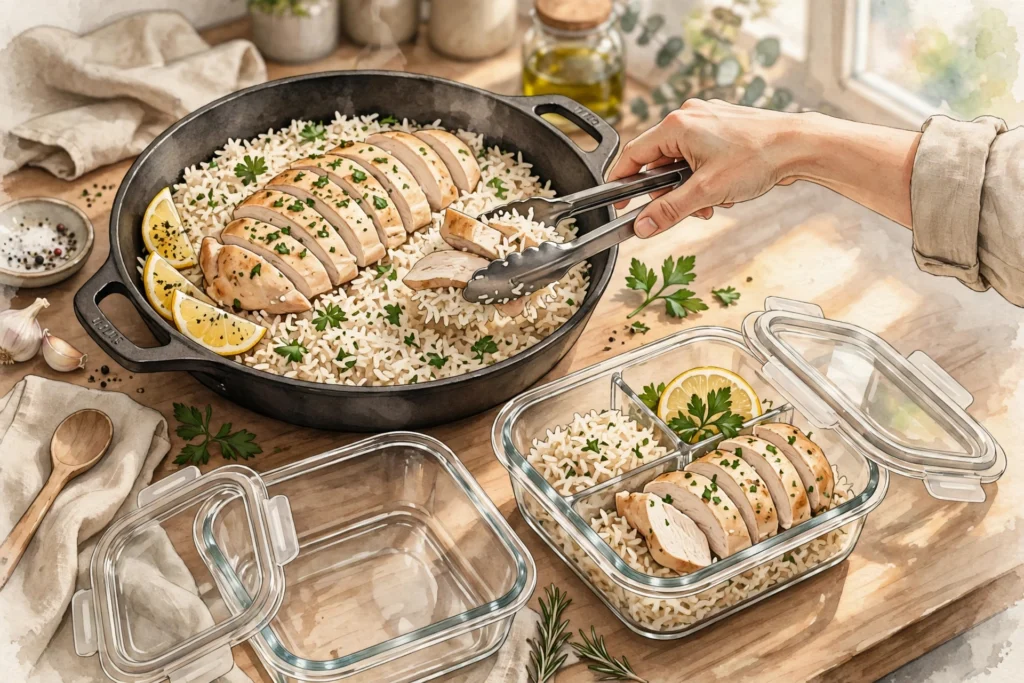
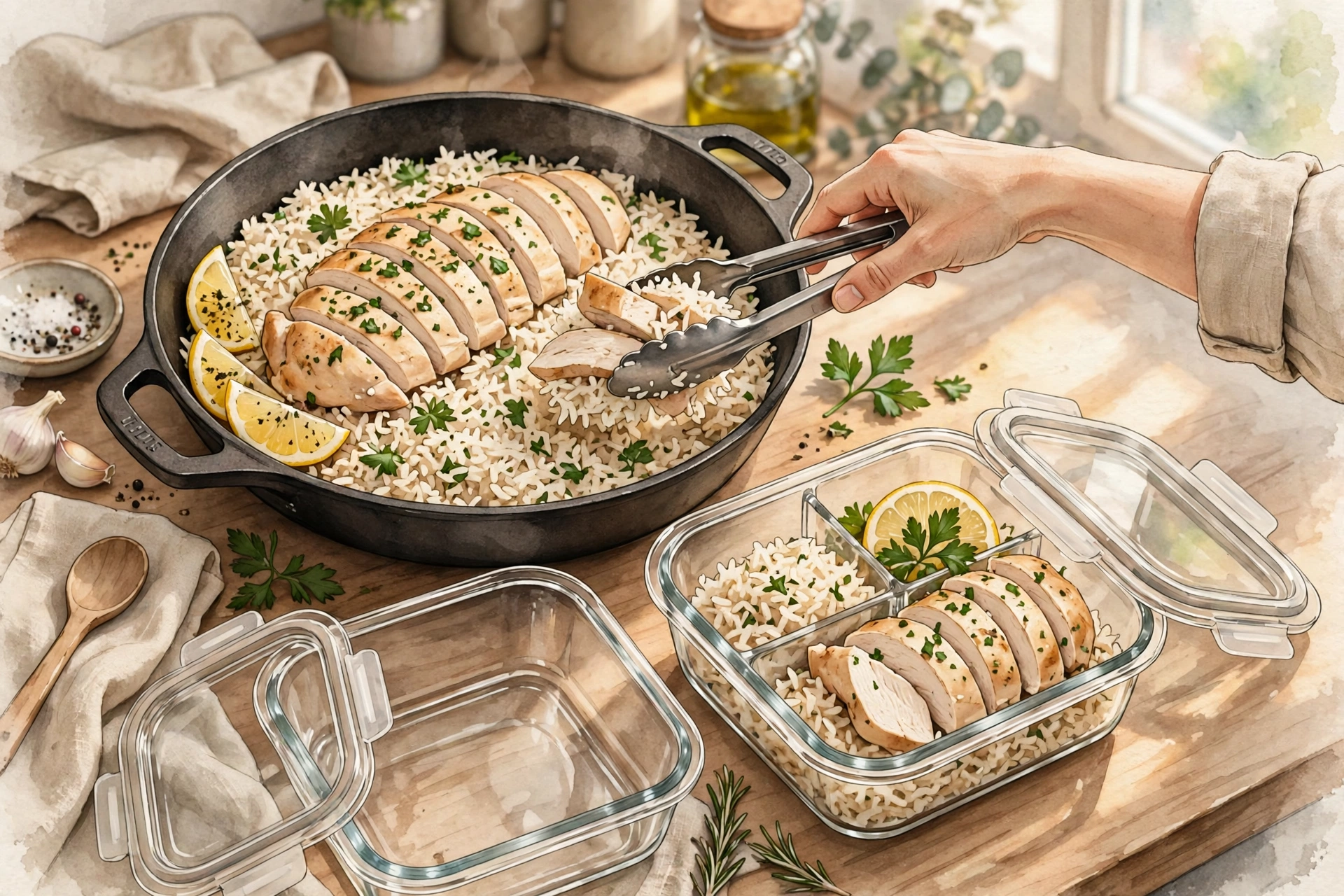
High protein meal prep for muscle gain - portioning chicken and rice into containers for the week

High protein meal prep for muscle gain comes down to one simple habit: cook once, portion honestly, and have a box ready before hunger makes the decisions. The ten recipes below run from about 35g to 58g of protein per serving, each with its ingredients weighed, its numbers calculated, and its storage limits stated. No shakes-only plan. No eating the same plain chicken breast five days in a row unless you genuinely like it that way.

Gaining muscle asks for two things at the table: enough protein, spread across the day, and enough total food to support training. Meal prep handles both without daily cooking. Two hours on a Sunday can cover lunches and dinners for most of the week, and the per-serving cost lands well below takeout.

What most people miss is portioning. A batch that “serves four” only works if it is actually divided into four measured boxes. Eyeballed portions drift — the first two boxes get generous, the last two get thin, and the two thin days quietly undercut the whole plan. Weigh or measure once, at packing time, and the numbers on this page mean something.

High protein meal prep for muscle gain - portioning chicken and rice into containers for the week

The 10 Recipes at a Glance

RecipeProtein per servingPrep timeCook timeStorage
1. Chicken, Rice and Broccoli Meal Prepabout 56g10 min25 minFridge 4 days
2. Ground Turkey Taco Bowlsabout 50g10 min20 minFridge 4 days
3. High-Protein Chicken Burrito Bowlsabout 52g15 min25 minFridge 4 days
4. Turkey Meatballs with Vegetablesabout 42g15 min25 minFridge 4 days; freezes up to 3 months
5. Greek Chicken Bowlsabout 58g15 min20 minFridge 4 days
6. Lean Beef and Vegetable Bowlsabout 44g10 min25 minFridge 4 days; freezes well
7. Salmon with Roasted Vegetablesabout 40g10 min20 minBest within 3 days
8. Chicken Fajita Meal Prepabout 52g10 min20 minFridge 4 days
9. Tofu and Edamame Bowlsabout 38g15 min20 minFridge 4 days
10. Cottage Cheese Egg Bitesabout 35g10 min22 minFridge 3 to 4 days; freezes up to 2 months

1. Chicken, Rice and Broccoli Meal Prep

The classic, done properly. This is the box most gain plans are built on, and it earns its place: the highest protein on this list per dollar, and the simplest method. The difference between a good version and a sad one is seasoning the chicken like you mean it and not overcooking it.

Ingredients (4 servings):

  • 1¾ lb boneless, skinless chicken breast (800g)
  • 1 tablespoon olive oil (14g)
  • 1 teaspoon garlic powder
  • 1 teaspoon smoked paprika
  • ½ teaspoon fine salt, plus more to finish
  • ½ teaspoon black pepper
  • 1⅓ cups jasmine rice (270g), cooked — about 4 cups cooked (800g)
  • 1⅓ lb broccoli florets (600g), fresh or frozen

Method:

  1. Cook the rice and let it rest, covered, off the heat for 10 minutes before fluffing.
  2. Rub the chicken with the olive oil, garlic powder, paprika, salt and pepper. Pan-sear over medium-high heat 6 to 7 minutes per side, until the thickest part reaches 165°F (74°C). Rest 5 minutes, then slice.
  3. Steam or microwave the broccoli until just tender — it reheats later, so leave it slightly firm now.
  4. Divide into 4 containers: about 200g sliced chicken, 200g cooked rice and 150g broccoli in each.

Nutrition per serving: about 56g protein, 580 calories, 66g carbs, 10g fat.

Storage and reheating: fridge up to 4 days. Reheat covered in the microwave with a teaspoon of water sprinkled over the rice, 2 to 3 minutes.

Variation: chicken thighs (skinless, boneless) swap in at a lower cost — about 4g less protein and about 60 more calories per serving from the extra fat.

2. Ground Turkey Taco Bowls

Taco seasoning does the heavy lifting here, and the two cans of beans are not filler — they add about 12g of each serving’s protein plus the carbs a gain phase actually needs. Salsa goes on at packing time only if the bowls will be eaten within two days; otherwise keep it in a small separate pot.

Ingredients (4 servings):

  • 1½ lb lean ground turkey, 93/7 (680g)
  • 1 tablespoon olive oil (14g)
  • 2 tablespoons taco seasoning (store-bought or a mix of chili powder, cumin, paprika, garlic powder and oregano)
  • 2 cans (15 oz / 425g each) black beans, drained and rinsed (about 520g drained)
  • 3 cups cooked jasmine rice (600g)
  • 1⅓ cups corn kernels (200g), frozen and thawed or canned and drained
  • 1 cup salsa (240g)

Method:

  1. Brown the turkey in the olive oil over medium-high heat, breaking it into crumbles, 7 to 8 minutes until no pink remains.
  2. Stir in the taco seasoning with 2 tablespoons of water and cook 1 minute more.
  3. Warm the beans and corn together in a small pan or the microwave.
  4. Build 4 bowls: 150g cooked rice in each, then the turkey, about 130g beans, corn, and salsa over the top.

Nutrition per serving: about 50g protein, 720 calories, 88g carbs, 19g fat.

Storage and reheating: fridge up to 4 days. Reheat 2 to 3 minutes in the microwave, stir halfway.

Variation: swap half the rice for roasted sweet potato cubes to change the texture without changing the protein.

3. High-Protein Chicken Burrito Bowls

Everything a burrito gives you, minus the tortilla tearing on day three. The avocado is the one component that does not prep well — add it fresh, or squeeze lime over the top at packing time and accept slightly softer edges.

Ingredients (4 servings):

  • 1½ lb boneless, skinless chicken breast (700g)
  • 1 tablespoon olive oil (14g)
  • 1 tablespoon chili-lime or fajita seasoning
  • 3 cups cooked brown rice (600g)
  • 1 can (15 oz / 425g) black beans, drained and rinsed (about 260g drained)
  • 2 large bell peppers (300g), sliced
  • 1 small red onion (100g), sliced
  • 1 large avocado (about 200g flesh), sliced
  • Lime wedges and chopped cilantro, to serve

Method:

  1. Rub the chicken with oil and seasoning; sear 6 to 7 minutes per side to 165°F (74°C). Rest, then slice.
  2. In the same pan, cook the peppers and onion over high heat 5 to 6 minutes until softened with some char at the edges.
  3. Warm the beans with a pinch of cumin and salt.
  4. Divide the rice between 4 containers; top with chicken, beans, peppers and onion. Add avocado and lime at serving time.

Nutrition per serving: about 52g protein, 605 calories, 62g carbs, 17g fat.

Storage and reheating: fridge up to 4 days (avocado added fresh). Reheat the bowl without the avocado, 2 to 3 minutes.

Variation: dairy-free as written. For a budget version, replace the avocado with 2 tablespoons of hummus per bowl — protein barely moves, cost drops.
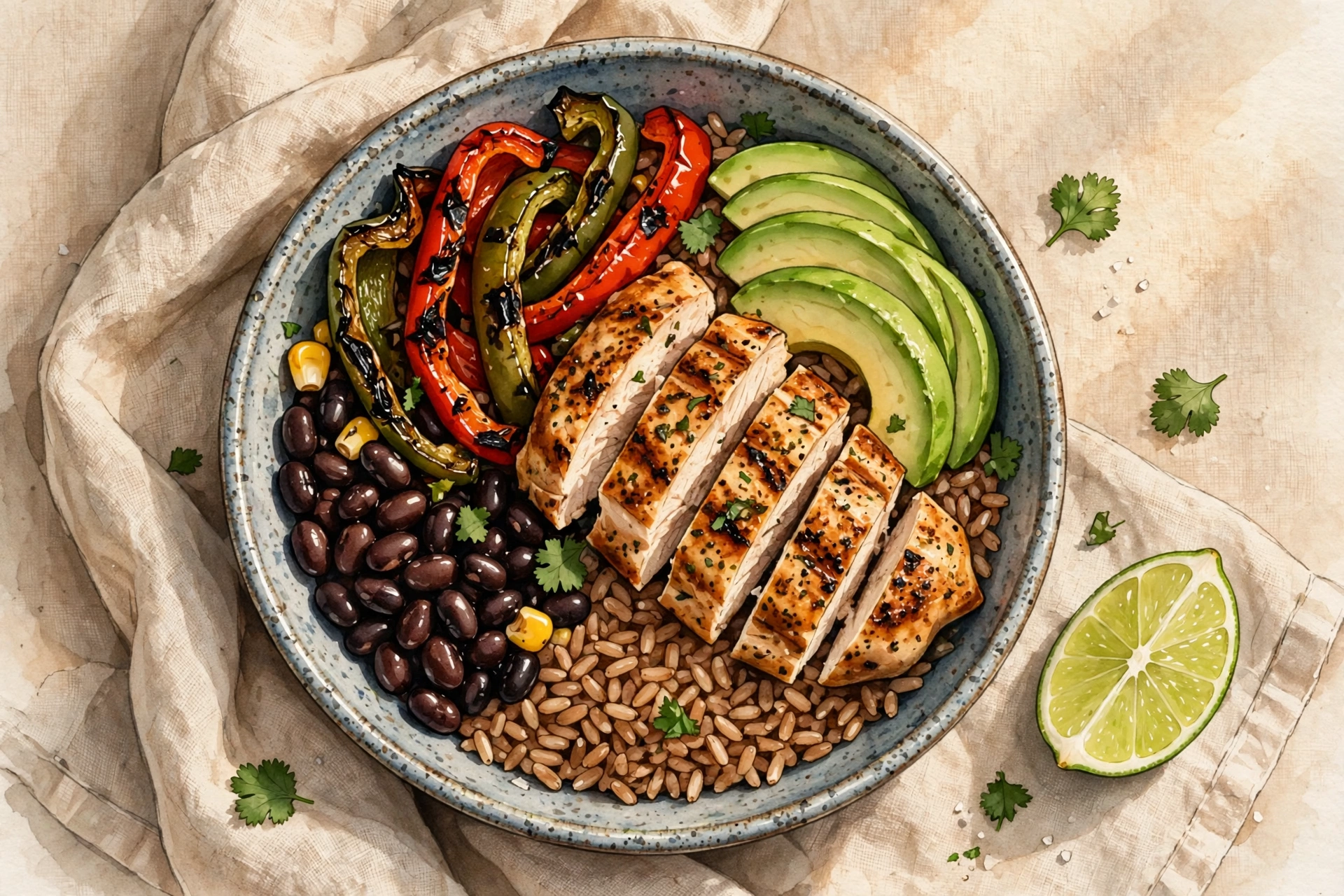
Chicken burrito bowl with brown rice, black beans and avocado, prepped for muscle gain

4. Turkey Meatballs with Vegetables

Meatballs freeze better than almost anything else on this list, which makes this the recipe to double. The oats hold moisture in a way breadcrumbs do, at a fraction of the cost, and they disappear into the mix completely.

Ingredients (4 servings — about 20 meatballs):

  • 1¾ lb lean ground turkey, 93/7 (800g)
  • 1 large egg
  • ⅓ cup rolled oats (40g)
  • 2 garlic cloves, minced
  • 1 teaspoon Italian seasoning
  • ½ teaspoon fine salt
  • ½ teaspoon black pepper
  • 2 medium zucchini (400g), cut into half-moons
  • 4 medium carrots (300g), cut into sticks
  • 1 tablespoon olive oil (14g)

Method:

  1. Heat the oven to 400°F (200°C). Mix the turkey, egg, oats, garlic, seasoning, salt and pepper until just combined — overmixing makes dense meatballs.
  2. Roll into about 20 balls (roughly 2 tablespoons each) and place on a lined tray.
  3. Toss the zucchini and carrots with the olive oil and a pinch of salt; spread on a second tray.
  4. Bake both trays 20 to 22 minutes, until the meatballs reach 165°F (74°C) inside and the vegetables are tender at the edges.
  5. Pack 5 meatballs per container with a quarter of the vegetables.

Nutrition per serving: about 42g protein, 435 calories, 17g carbs, 22g fat.

Storage and reheating: fridge up to 4 days; freezes up to 3 months (thaw overnight in the fridge). Reheat covered, 2 to 3 minutes, or in a 350°F (175°C) oven for 10 minutes.

To bulk it up: serve over 150g cooked rice per box — that brings a serving to about 46g protein, 630 calories and 59g carbs.

5. Greek Chicken Bowls

The highest protein count here, and the one that tastes least like “meal prep.” The quick tzatziki is the reason — it keeps the chicken and quinoa from eating dry on day three. Store it in a separate small container if you can; it takes ten seconds and makes a real difference.

Ingredients (4 servings):

  • 1½ lb boneless, skinless chicken breast (700g)
  • 1 tablespoon olive oil (14g), plus the marinade below
  • Marinade/seasoning: juice of 1 lemon, 2 garlic cloves minced, 1 teaspoon dried oregano, ½ teaspoon salt, ½ teaspoon black pepper
  • 3¾ cups cooked quinoa (700g)
  • 1 large cucumber (300g), diced
  • 2 cups cherry tomatoes (300g), halved
  • ½ small red onion (80g), finely sliced
  • ¾ cup crumbled feta (100g)
  • Quick tzatziki: ¾ cup plain 0% Greek yogurt (200g), 1 garlic clove grated, a squeeze of lemon, chopped dill or mint

Method:

  1. Coat the chicken in the lemon, garlic, oregano, salt, pepper and olive oil. Marinate 15 minutes if you have it; cook straight away if you do not.
  2. Sear 6 to 7 minutes per side to 165°F (74°C). Rest and slice.
  3. Stir the tzatziki ingredients together.
  4. Divide the quinoa between 4 containers; arrange chicken, cucumber, tomato and onion over it. Crumble feta on top; tzatziki on the side.

Nutrition per serving: about 58g protein, 580 calories, 48g carbs, 17g fat.

Storage and reheating: fridge up to 4 days. Reheat only the chicken and quinoa (2 minutes), then add the cold vegetables, feta and tzatziki.

Variation: swap the quinoa for the same weight of cooked orzo and the bowl turns into a bigger, more pasta-like box — about 60g protein, 645 calories and 64g carbs per serving.
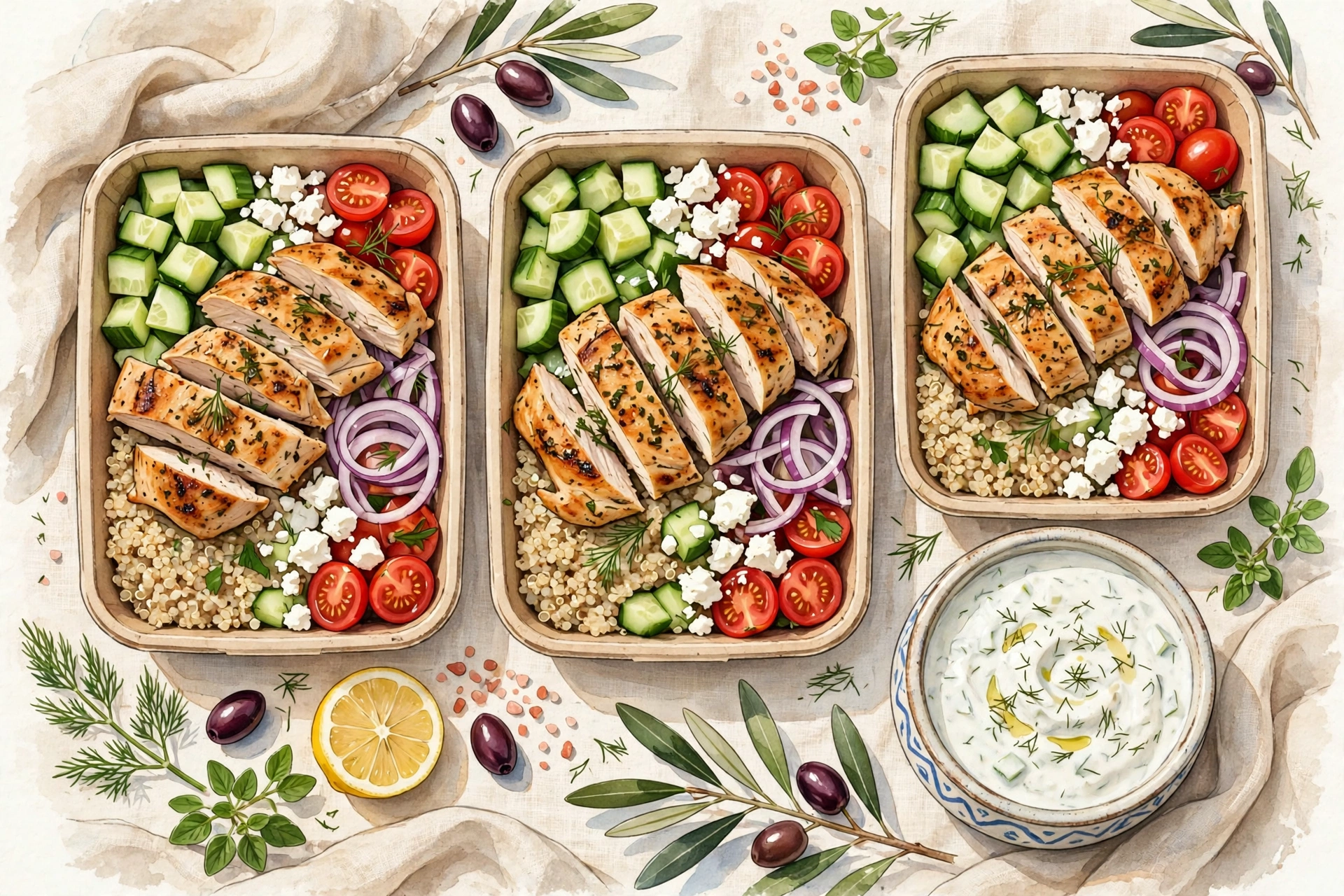
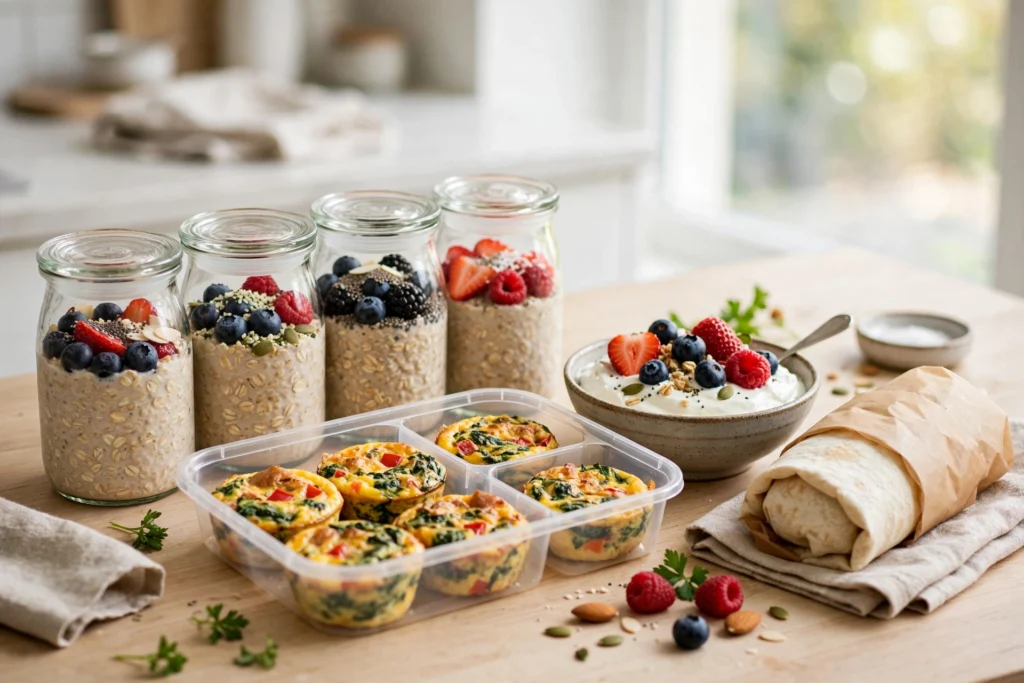
Greek chicken meal prep bowls with quinoa, cucumber, tomatoes and feta

6. Lean Beef and Vegetable Bowls

For the days chicken fatigue sets in — and it always sets in. Beef costs more per gram of protein, and this recipe does not pretend otherwise — it is here because a plan you actually eat beats a cheaper plan you abandon by Thursday.

Ingredients (4 servings):

  • 1¾ lb lean ground beef, 90/10 (800g)
  • 2 large sweet potatoes (600g), cut into cubes
  • 14 oz green beans (400g), trimmed
  • 1 tablespoon olive oil (14g)
  • 1 teaspoon garlic powder
  • 1 teaspoon smoked paprika
  • ½ teaspoon fine salt
  • ½ teaspoon black pepper

Method:

  1. Heat the oven to 425°F (220°C). Toss the sweet potato cubes with half the oil and a pinch of salt; roast 25 minutes, turning once.
  2. Brown the beef in a large pan over medium-high heat, breaking it up, 8 to 10 minutes. Drain off the loose fat, then season with garlic powder, paprika, salt and pepper.
  3. Steam the green beans until just tender, 5 to 6 minutes.
  4. Pack a quarter of each component into 4 containers.

Nutrition per serving: about 44g protein, 540 calories, 37g carbs, 24g fat.

Storage and reheating: fridge up to 4 days; freezes well for 2 to 3 months. Reheat 2 to 3 minutes, stirring halfway.

Variation: ground turkey (93/7) in place of the beef brings the fat down to about 20g and the cost down with it, at about 42g protein per serving.

7. Salmon with Roasted Vegetables

The one recipe here on a shorter clock: cooked fish keeps its quality for about 3 days, not 4, so this is a Monday-to-Wednesday box, not a Friday one. Cook it Sunday, eat it by Wednesday, and let the freezer-friendly recipes carry the end of the week.

Ingredients (4 servings):

  • 1½ lb salmon fillets (700g), 4 pieces
  • 2 medium sweet potatoes (500g), cut into wedges
  • 14 oz broccoli florets (400g)
  • 1 tablespoon olive oil (14g)
  • 1 teaspoon garlic powder
  • Lemon wedges and chopped dill, to serve
  • ½ teaspoon fine salt
  • ½ teaspoon black pepper

Method:

  1. Heat the oven to 425°F (220°C). Toss the sweet potato wedges with half the oil and a pinch of salt; roast 15 minutes.
  2. Add the broccoli and the salmon (skin-side down) to the tray, brush the salmon with the remaining oil, season everything.
  3. Roast 10 to 12 minutes more, until the salmon flakes and reaches 145°F (63°C).
  4. Pack one fillet per container with a quarter of the vegetables; lemon wedges on the side.

Nutrition per serving: about 40g protein, 535 calories, 32g carbs, 27g fat (much of it omega-3 from the salmon).

Storage and reheating: fridge up to 3 days. Reheat gently — 60 to 90 seconds in the microwave at half power, or eat at room temperature. Hard reheating is what makes leftover fish taste like leftover fish.

Variation: the same weight of chicken breast (700g) in place of the salmon cuts the cost sharply and brings the protein to about 45g per serving, with fat down to about 8g and calories to about 380.

8. Chicken Fajita Meal Prep

Slice the chicken before cooking and everything finishes in one pan, fast. The strips pick up more seasoning surface than whole breasts, which is why this box still tastes seasoned on day four.

Ingredients (4 servings):

  • 1½ lb boneless, skinless chicken breast (700g), sliced into strips
  • 3 large bell peppers (450g), mixed colors, sliced
  • 1 large onion (200g), sliced
  • 1 tablespoon olive oil (14g)
  • 1 tablespoon fajita seasoning (or chili powder, cumin, paprika, garlic powder, oregano)
  • 3 cups cooked brown rice (600g)
  • 1 can (15 oz / 425g) black beans, drained and rinsed (about 260g drained)
  • 1 lime, cut into wedges

Method:

  1. Toss the chicken strips with the oil and seasoning. If time allows, rest 20 to 30 minutes.
  2. Sear the chicken in a hot pan 6 to 8 minutes until cooked through (165°F / 74°C). Set aside.
  3. In the same pan, cook the peppers and onion over high heat 5 to 6 minutes, until softened with charred edges.
  4. Warm the beans. Divide rice, chicken, vegetables and beans between 4 containers; lime wedges on top.

Nutrition per serving: about 52g protein, 550 calories, 62g carbs, 10g fat.

Storage and reheating: fridge up to 4 days. Reheat 2 to 3 minutes; a squeeze of the lime after reheating wakes the whole box up.

Variation: serve in warm tortillas on the day instead of over rice — two large whole-wheat tortillas per serving land at roughly the same carbs.

9. Tofu and Edamame Bowls

The plant-based box, with its protein math stated plainly: plants alone do not match meat gram for gram, so this bowl stacks two sources — tofu and edamame — over quinoa, a grain that carries more protein than rice. Pressing the tofu is the step that decides whether it crisps or steams.

Ingredients (4 servings):

  • 1¾ lb extra-firm tofu (800g), pressed 15 minutes and cut into cubes
  • 2⅔ cups shelled edamame (400g), frozen and thawed
  • 3¼ cups cooked quinoa (600g)
  • 2 medium carrots (200g), julienned or grated
  • Sauce: 3 tablespoons soy sauce, 1 tablespoon sesame oil, 1 garlic clove grated, 1 teaspoon grated ginger, 1 teaspoon rice vinegar

Method:

  1. Toss the tofu cubes in half the sauce. Bake at 425°F (220°C) for 20 minutes, turning once, or air-fry until the edges crisp.
  2. Warm the edamame (microwave or a dry pan, 2 to 3 minutes).
  3. Divide the quinoa between 4 containers; top with tofu, edamame and carrots.
  4. Spoon the remaining sauce over at serving time.

Nutrition per serving: about 38g protein, 540 calories, 50g carbs, 20g fat.

Storage and reheating: fridge up to 4 days (sauce stored separately keeps the tofu firmer). Reheat 2 minutes; the carrots can go in raw after reheating if you like the crunch.

Variation: a soft-boiled egg on top adds about 6g protein per bowl for a vegetarian (not vegan) version.

10. Cottage Cheese Egg Bites

The lightest recipe here, on purpose. Not every prepped meal has to be a full dinner box — these are the grab-and-go option for a second breakfast, a pre-training bite, or the days appetite runs low. Blending the cottage cheese smooth is what gives them a café-style texture instead of a curdy one.

Ingredients (4 servings — 12 bites; serving = 3 bites plus the side salad):

  • 10 large eggs
  • 2 cups cottage cheese, 2% (500g)
  • 5 cups loosely packed spinach (150g), roughly chopped
  • 1 large bell pepper (150g), finely diced
  • ½ cup shredded cheddar (50g)
  • ½ teaspoon fine salt
  • ½ teaspoon black pepper
  • ½ teaspoon garlic powder
  • Side per serving: 100g cucumber slices and 100g cherry tomatoes

Method:

  1. Heat the oven to 350°F (175°C) and grease a 12-cup muffin tray well.
  2. Blend the eggs and cottage cheese until smooth. Stir in the spinach, pepper, cheddar, salt, pepper and garlic powder.
  3. Fill the cups to about three-quarters. Bake 20 to 22 minutes, until set in the center.
  4. Cool 5 minutes before lifting out. Serve 3 bites per portion with the cucumber and tomatoes.

Nutrition per serving (3 bites plus side): about 35g protein, 385 calories, 17g carbs, 20g fat.

Storage and reheating: fridge 3 to 4 days; freeze up to 2 months. Reheat 30 to 45 seconds in the microwave, or 5 minutes in a 350°F (175°C) oven for a firmer edge.

Variation: swap the cheddar and pepper for feta and sun-dried tomato, or add 100g diced ham across the batch for about 5g more protein per serving.

How to Portion Meals Across the Day

Total daily protein matters more than any single meal, but distribution still helps: most exercising adults land their protein across three or four eating occasions rather than one giant dinner. Exercise-science guidance commonly puts daily protein for people training to build muscle around 1.4 to 2.0g per kilogram of body weight (ISSN position stand, 2017), which for an 80kg (176 lb) person works out to roughly 112 to 160g a day. That is a range to plan around, not a prescription — appetite, training load and total calories all move the real number.

In practice, with boxes like these:

  • One meal-prep box (35g to 58g protein) covers lunch or dinner.
  • A protein-anchored breakfast — eggs, Greek yogurt, or the egg bites above — covers the morning.
  • The meal nearest training can come straight from the box rotation; for the training-day timing question specifically, see the site’s high protein post workout meals, which is built around that window.

Weigh portions at packing time, not at eating time. It takes two minutes while the food is already out, and it is the only way the per-serving numbers survive contact with real life.

Food Storage and Reheating, Done Safely

The rules are short and they are not optional for a week of prepped food:

  • Cool cooked food and get it into the fridge within 2 hours of cooking.
  • Cooked meat dishes keep 3 to 4 days in the fridge at or below 40°F (4°C) — that is the FoodSafety.gov leftover window every recipe above is written against. Fish is best inside 3 days.
  • Freeze in portion-sized containers with a little headspace. Meatballs and the beef bowls freeze best; rice freezes fine; avocado, tzatziki and raw vegetables do not.
  • Thaw overnight in the fridge, and reheat leftovers until they are steaming and reach 165°F (74°C) all the way through.
  • When a box smells off or has sat past its window, throw it out. No protein target is worth a bad stomach.

A rotation note: recipes that freeze well (the meatballs, the beef bowls, and the site’s high protein chili recipe, which portions and freezes the same way) are what make week two feel different from week one without a second full shopping trip.

Budget-Friendly Protein Sources

Muscle gain on a budget is mostly a shopping problem, not a cooking one. The cheapest protein on this page, per gram:

  • Eggs — about 6g protein each, and the egg bites above stretch them further with cottage cheese.
  • Chicken breast in family packs — the backbone of four recipes here; thighs cost less again.
  • Canned tuna and sardines — about 25g protein per 100g drained for tuna; no cooking at all.
  • Dried and canned beans and lentils — the cheapest protein per dollar there is, and they carry carbs a gain phase needs.
  • Tofu — usually cheaper per pound than any meat in the case.
  • Greek yogurt and cottage cheese in large tubs — far cheaper per gram than single-serve pots; the site’s high protein greek yogurt recipes are built around the tub format.

Frequently Asked Questions

Q: How long does meal prep last in the fridge?

A: Cooked meat and poultry dishes last 3 to 4 days refrigerated, per FoodSafety.gov leftover guidance. Salmon is best within 3 days, and the egg bites hold 3 to 4 days. When in doubt, freeze the boxes for the second half of the week on the day you cook them.

Q: How do I keep meal prep chicken from drying out?

A: Three things decide it. Cook to 165°F (74°C) and no further — a thermometer ends the guesswork. Rest the chicken before slicing so the juices stay in the meat. And reheat gently, covered, with a teaspoon of water over the box; a sauce like the tzatziki in the Greek bowls does the same job with better flavor.

Q: Can I freeze these meals?

A: Most of them, yes. The turkey meatballs and beef bowls freeze for up to 3 months, and the egg bites for up to 2 months. Rice and quinoa freeze and reheat well. Keep avocado, tzatziki, cucumber and other raw vegetables out of the freezer — add those fresh.

Q: How much protein do I need to gain muscle?

A: There is no single number that fits everyone. The ISSN position stand puts the range for exercising people at about 1.4 to 2.0g of protein per kilogram of body weight per day, with total calories and training doing the rest of the work. Use it as a planning range, and treat anything more specific as a question for a professional who knows your situation.

Q: Can I build these boxes without rice or quinoa?

A: Yes. Swap the grains for roasted potato or sweet potato at the same cooked weight and the protein stays almost the same — only the carbs shift. The meatballs and egg bites are already low-carb as written.

References

Ten boxes, honest numbers, and a fridge that answers the “what am I eating” question before it gets asked. That is the whole system — cook once, portion properly, and let the week run on rails.

Leave a Comment

Your email address will not be published. Required fields are marked *