Eat a real meal with protein and carbs in the few hours after training, and you have covered what recovery actually needs. The 10 high protein post workout meals below run from about 27 to 60 grams of protein each, and every one pairs that protein with the carbohydrates that refill what the session burned. There is no strict 30-minute window to panic about — recent research keeps widening it, and your total protein across the whole day matters more than the minute hand. Eat sensibly, drink water, and let the meal do its work.
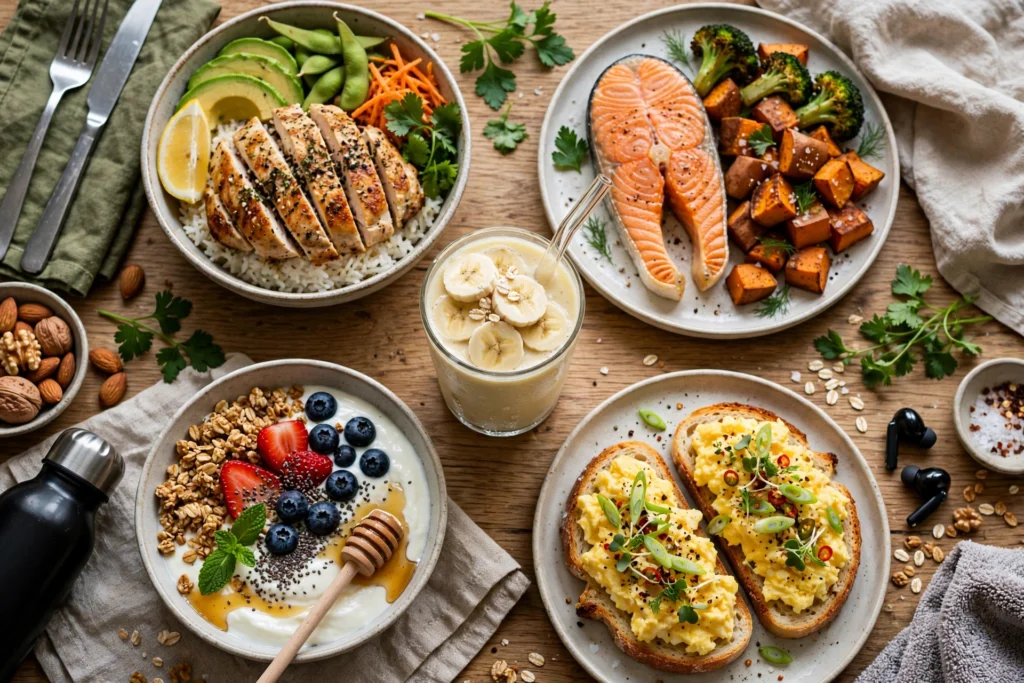
Table of Contents
ToggleWhat to eat after a workout
Training spends two things: glycogen, the stored carbohydrate your muscles burn as fuel, and muscle protein, which breaks down a little under load. A good post-workout meal puts both back. Protein plus carbohydrates is the pairing that does it — protein supplies the building blocks for repair, and carbs restock the tank so the next session does not start on empty.
The old advice said the meal had to land within 30 to 45 minutes or the workout was wasted. That window has not held up. Sports nutrition research now puts the useful window at several hours, especially if you ate a normal meal before training, because that food is still being digested and used. The genuine mistake is drifting most of the day without eating. Guidance from the International Society of Sports Nutrition, reported by Healthline, lands on a practical target: 20 to 40 grams of protein per meal, spaced every 3 to 4 hours across the day. Most of the meals below sit inside that band, and the biggest plates sit above it because they are full dinners.
Fat in the meal is not a problem to engineer away, and neither is eating like a normal person. Bowls, wraps, sandwiches and smoothies all work. Pick the one you will actually eat.
10 high-protein post-workout meals
1. Grilled chicken and rice bowl
The default recovery dinner, and the strongest protein number on this page. Nothing fancy — it works because the portions are honest.
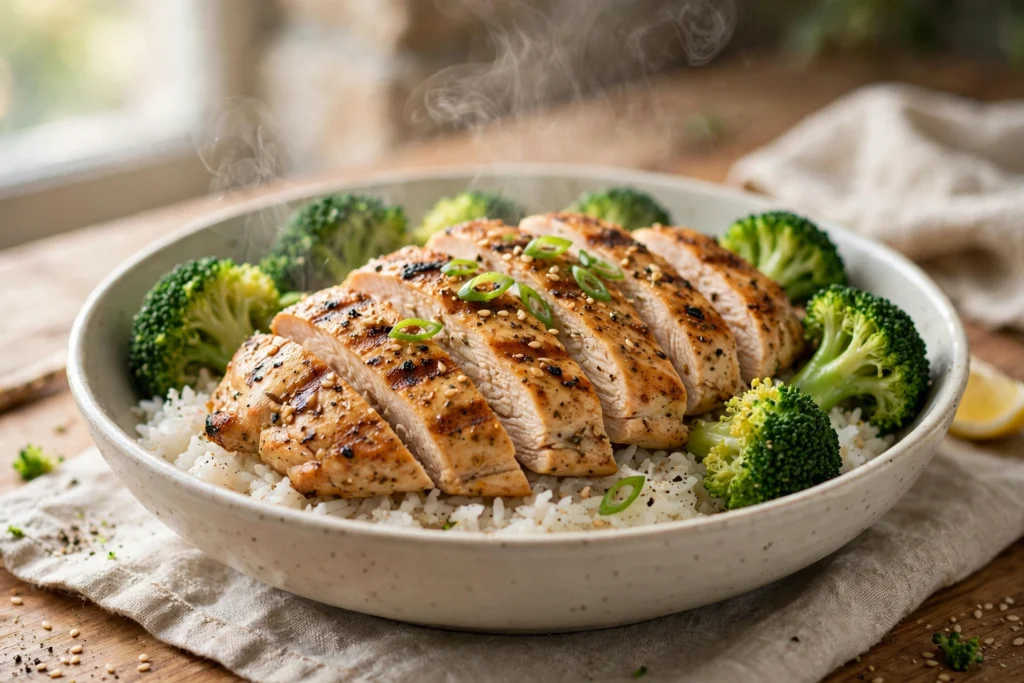
You need: 170g cooked chicken breast (6 oz, from about 200g raw), 185g cooked long-grain rice (about 1 cup), 100g broccoli florets (about 3/4 cup), 1 tsp olive oil, garlic powder, smoked paprika, salt and black pepper.
Steps:
- Season the chicken with the garlic powder, paprika, salt and pepper, then grill or sear it in the olive oil for 6 to 7 minutes per side, until the center hits 165°F (74°C). Rest it 5 minutes and slice.
- Steam the broccoli for about 4 minutes so it stays green and firm.
- Rice in the bowl first, chicken and broccoli over the top.
Prep 10 minutes, cook 20 minutes — or 5 minutes of assembly when the chicken and rice are batch-cooked. Numbers: about 60g protein, 595 calories, 59g carbs, 12g fat per bowl.
Storage: chicken, rice and broccoli keep 3 to 4 days in the fridge in separate containers. Reheat until steaming, with a splash of water over the rice so it softens instead of drying out. Budget variation: a rotisserie chicken with the skin removed, or frozen broccoli in place of fresh — the protein holds because the chicken portion does not change.
2. Greek yogurt protein bowl
For the days when cooking is not happening. Five minutes, no pan, and the oats stirred through the yogurt give it enough substance to count as a meal rather than a snack.
You need: 245g plain 0% Greek yogurt (1 cup), 30g rolled oats (1/3 cup), half a medium banana (60g), sliced, 100g strawberries (about 3/4 cup), hulled and quartered, and 1 tsp honey (7g).
Spoon the yogurt into a bowl, scatter the oats over it, then the banana and strawberries, and finish with the honey. Eat it straight away and the oats keep some bite; leave it 20 minutes and they soften into the yogurt like a no-cook porridge.
Prep 5 minutes, no cooking. Numbers: about 30g protein, 365 calories, 56g carbs, 3g fat per bowl.
Storage: best built fresh. A prepped version keeps 2 days in the fridge — add the banana at serving time so it does not brown. Dairy-free note: coconut and almond yogurts match the flavor job but carry only a gram or two of protein per pot, so on their own they turn this into a light snack. A soy yogurt with a label closer to 5g protein per 100g, or a scoop of plant protein powder stirred in, keeps it a recovery meal.
3. Eggs and whole-grain toast
The morning-session answer. Eggs cook faster than any other protein on this page, and the toast plus fruit bring the carbs that a post-training breakfast needs.
You need: 3 large eggs (150g), 2 slices whole-grain bread (64g), toasted, 1 medium orange (130g) or a small bunch of grapes, 1 tsp olive oil for the pan, salt, black pepper and chilli flakes if you like them.
Scramble the eggs low and slow in the olive oil, or fry them — either way, keep the yolks. The whole egg is the food; whites alone throw away nutrients for no benefit here. Toast alongside, orange after.
Prep 5 minutes, cook 8 minutes. Numbers: about 28g protein, 480 calories, 47g carbs, 22g fat per plate.
Storage: scrambled eggs are a cook-and-eat food, but the boiled version travels — swap the scramble for 3 boiled eggs at the same numbers, and they keep up to a week in the fridge in their shells. This plate is also dairy-free exactly as written, since the eggs cook in olive oil rather than butter.
4. Salmon and sweet potato
The plate that covers the most bases at once: a large protein portion, slow carbs from the sweet potato, and the natural fats of oily fish. Start the potato first and everything lands together.
You need: 170g cooked salmon fillet (6 oz, from about 185g raw), 200g sweet potato (1 medium), 100g green beans (about 1 cup), trimmed, plus lemon, garlic and dill or parsley.
Steps:
- Bake the sweet potato at 400°F (200°C) for 40 to 45 minutes, or microwave it for 8 to 10 minutes, turning once.
- Sear the salmon skin-side down in a hot pan for 6 minutes, flip for 2 more, or bake it for 12 to 15 minutes — it is done when it flakes under a fork.
- Steam the beans for 5 minutes and finish everything with lemon and herbs.
Prep 10 minutes, cook 25 minutes alongside the potato. Numbers: about 48g protein, 565 calories, 48g carbs, 23g fat per plate. The higher fat figure is the salmon being salmon — that is the nature of oily fish, not a flaw in the meal.
Storage: cooked salmon keeps 3 days in the fridge. Reheat it gently at low microwave power so it stays moist; the sweet potato reheats well and is honestly good cold. Budget variation: canned salmon over the same sweet potato — check the label, most brands sit in a similar protein range per 100g, at a lower price per portion.
5. Banana protein smoothie
The fastest route from training to fed, and the one meal here built around protein powder — which is exactly why its numbers come in two versions, both calculated.
You need: 240ml whole milk (1 cup), 1 scoop whey protein powder (30g; the label values used here are 24g protein and 120 calories — check your own tub), 1 medium banana (118g), 20g rolled oats (1/4 cup) and a handful of ice.
Blend everything for 45 to 60 seconds. The oats vanish into the thickness, the banana does the sweetening, and it drinks like a milkshake rather than a supplement.
Prep 5 minutes, no cooking. Numbers with the scoop: about 36g protein, 445 calories, 54g carbs, 11g fat per large smoothie (about 2 cups).
The honest no-powder version: leave the scoop out and the same smoothie drops to about 12g protein and 325 calories — a decent snack, not a recovery meal. The better powder-free build swaps half the milk for 100g of 0% Greek yogurt, which brings it back to about 18g protein at about 315 calories. More blends in this family live in the high protein breakfast smoothie recipes roundup.
Storage: keeps 24 hours in a sealed jar in the fridge; shake hard before drinking, because the oats settle.
6. Turkey and avocado wrap
Portable, no cooking, and built for the train-home-from-the-gym problem. The yogurt spread does the job mayonnaise usually does, with protein instead of just fat.
You need: 1 large whole-wheat tortilla (61g), 115g deli turkey breast slices (4 oz, about 6 slices), 50g avocado (about a third of a medium), mashed, 2 tablespoons 0% Greek yogurt (30g), and a handful of lettuce, tomato and cucumber (about 50g).
Mash the avocado across the tortilla, spread the yogurt over it, fold the turkey down the middle, add the vegetables, roll it tight and cut it in half.
Prep 10 minutes, no cooking. Numbers: about 27g protein, 395 calories, 40g carbs, 13g fat per wrap — the lightest of the ten, which makes it the right size after an easier session or as the first of two smaller meals.
Storage: rolled in foil, it holds 24 hours in the fridge; the yogurt-and-avocado layer slows the browning. For meal prep, store filling and tortillas apart and roll at eating time. When you want the cooked, full-recipe relative of this wrap, that is the high protein chicken wrap. Dairy-free variation: skip the yogurt and spread hummus or extra avocado instead.
7. High-protein tuna sandwich
One can, one bowl, no heat. Tuna is the cheapest high-protein ingredient in most supermarkets, and drained properly it carries this sandwich almost on its own.
You need: 120g canned tuna in water, drained (one 5 oz / 142g can, drained), 1 tablespoon light mayonnaise (15g), 2 slices whole-grain bread (64g), 30g finely chopped celery and red onion, lettuce and tomato (about 40g), a squeeze of lemon and black pepper.
Fork the tuna with the mayonnaise, lemon, celery and onion until it holds together. Pile it onto the bread with the lettuce and tomato.
Prep 10 minutes, no cooking. Numbers: about 38g protein, 350 calories, 34g carbs, 7g fat per sandwich.
Variation, calculated: trade the light mayonnaise for 2 tablespoons of 0% Greek yogurt and the sandwich moves to about 41g protein and about 330 calories, with a fresher, tangier filling.
Storage: the tuna mix keeps 2 days in the fridge in a sealed box, but build the sandwich when you eat it so the bread stays dry. And a plain safety note — a tuna sandwich riding around in a warm gym bag for hours is exactly what the 2-hour rule in the storage section below is about.
8. Turkey and bean burrito bowl
The biggest bowl on the page, built for hard sessions and hungry evenings. Turkey and black beans stack two protein sources in one pan, and the rice underneath makes it a genuine refuel rather than a salad in disguise.
You need: 170g raw ground turkey, 93/7 (6 oz), 150g cooked rice (about 3/4 cup), 120g cooked black beans (about 2/3 cup, from a drained, rinsed can), 60g salsa (1/4 cup), 1 tsp taco seasoning or chilli powder plus cumin, a lime wedge and fresh cilantro if you have it.
Steps:
- Brown the turkey in a dry non-stick pan with the seasoning, crumbling it fine, for 8 to 10 minutes until no pink remains.
- Stir the beans through the pan for 2 minutes so they pick up the seasoning.
- Bowl it over the rice with the salsa and a squeeze of lime on top.
Prep 10 minutes, cook 15 minutes. Numbers: about 49g protein, 665 calories, 75g carbs, 18g fat per large bowl.
Storage: this is the meal-prep bowl — 3 to 4 days in the fridge in portions, up to 3 months in the freezer. Reheat until steaming and add the salsa fresh after reheating. Vegetarian variation: double the beans and add sweetcorn, and accept a lower protein figure — or take the tofu bowl below, which is the stronger plant-based option at about 29 grams.
9. Cottage cheese and fruit bowl
For the gap between training and a proper meal, or the late session when a cooked dinner feels like too much. Cottage cheese is mostly casein protein, which digests slowly — one reason this bowl is a long-standing evening choice.
You need: 225g cottage cheese, 2% low-fat (1 cup), 140g pineapple chunks (about 1 cup), 100g strawberries, quartered, and 1 tsp honey (7g) if you want the drizzle.
Spoon the cottage cheese into a bowl, pile the fruit over it, drizzle the honey. That is the whole method.
Prep 5 minutes, no cooking. Numbers: about 28g protein, 310 calories, 42g carbs, 6g fat per bowl.
Storage: mixed, it keeps 2 days in the fridge; the fruit lets out a little juice, so stir before eating. Budget variation: a store-brand cottage cheese and frozen fruit, thawed, bring the cost down without changing what the bowl is. In season, peach, mango or melon all stand in for the pineapple the same way.
10. Tofu and quinoa bowl
The fully plant-based entry, and it does not apologize for itself: tofu and quinoa stack to a protein figure that stands next to the meat meals, with the carbs a recovery meal needs.
You need: 170g extra-firm tofu (6 oz, about half a standard block), pressed, 185g cooked quinoa (about 1 cup), 100g broccoli florets, 60g carrot (1 medium), cut into sticks, 1 tsp sesame oil, 1 tablespoon soy sauce, and grated ginger and garlic with a squeeze of lime.
Steps:
- Press the tofu for 10 minutes, cube it, and sear it in the sesame oil for 8 to 10 minutes until the edges crisp.
- Simmer the quinoa for 15 minutes, or use a pre-cooked pouch.
- Steam the broccoli and carrot for 4 to 5 minutes, then bowl everything with the soy sauce, ginger, garlic and lime over the top.
Prep 10 minutes plus pressing, cook 20 minutes. Numbers: about 29g protein, 475 calories, 57g carbs, 16g fat per bowl.
Storage: 3 to 4 days in the fridge. The tofu softens a little by day three — reheat the bowl in a pan or air fryer rather than the microwave and the edges come back. Budget variation: swap the quinoa for rice and the protein drops by about 3 grams, calculated from the same baselines, because rice carries less protein per cup than quinoa.
How much protein do you need after a workout?
Less precisely than the internet suggests. Two numbers frame it well enough for most people.
The meal itself: sports nutrition guidance commonly lands on 20 to 40 grams of protein in the post-training meal — the ISSN figure Healthline reports, repeated every 3 to 4 hours across the day. Seven of the ten meals above sit inside that band. The three above it — the salmon plate at about 48 grams and the two big bowls at about 49 and 60 grams — are dinner-sized portions for hard days, not a target to chase at every meal.
The day matters more: people who train regularly are commonly advised a total daily protein intake around 1.4 to 2 grams per kilogram of body weight. For a 75 kg (165 lb) person that is roughly 105 to 150 grams spread across all meals — which is why one ordinary high-protein meal, eaten without clock-watching, does the job. Carbs scale with the session: a 40-minute workout needs a normal meal, while two hours of training earns the bigger bowls.
Treat all of this as general information, not personal advice. Body size, sport, training load and health conditions all move the numbers, and anyone managing a medical condition should take their targets from a doctor or registered dietitian, not a recipe page.
Meal prep and storage basics
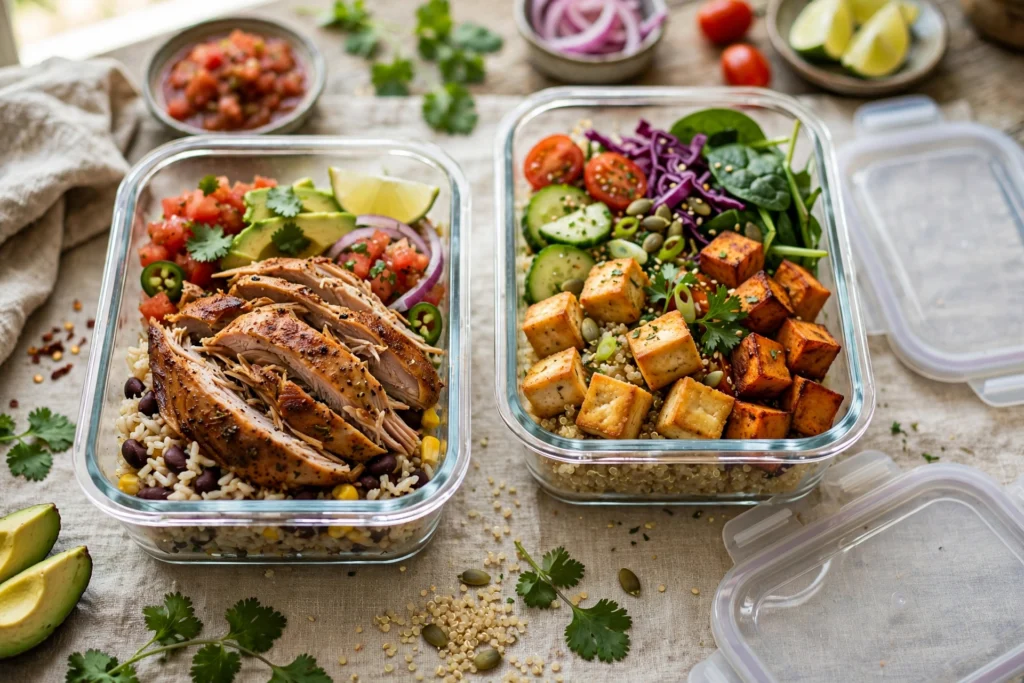
Most of these meals were picked because they survive a fridge. Four rules, drawn from FoodSafety.gov guidance, cover all of them:
- Chill promptly. Cooked food should be refrigerated within 2 hours of cooking — within 1 hour if it has been sitting somewhere hotter than 90°F (32°C), like a car in summer.
- Fridge life is 3 to 4 days for cooked meat, poultry, seafood and mixed dishes like these bowls, kept at or below 40°F (4°C).
- Reheat to steaming. Leftovers should reach 165°F (74°C) all the way through; a splash of water over rice and grains stops them drying out on the way.
- Freeze the extras. Cooked bowls and the burrito bowl filling freeze well for 2 to 3 months at best quality. Thaw overnight in the fridge, not on the counter.
Frequently asked questions
Q: Is there really a 30-minute window after a workout?
A: Not a strict one. The older 30-to-45-minute rule has widened as the research has grown — the useful window now looks like several hours, and eating a proper meal within a couple of hours of finishing covers it for most people. What your whole day of protein adds up to matters more than how fast the first meal lands.
Q: Do I need protein powder after training?
A: No. Powder is convenience, not a requirement — the smoothie above shows both sides of it: about 36 grams of protein with a scoop, about 12 without, and about 18 in the powder-free yogurt build. Chicken, eggs, tuna, yogurt and tofu all reach the same 20-to-40-gram band without a supplement in sight.
Q: What should vegetarians eat after a workout?
A: Start with the tofu and quinoa bowl (about 29g protein) and the Greek yogurt bowl (about 30g), then eggs and cottage cheese if you eat them. Plant proteins vary in their amino acid mix, so variety across the day — tofu, beans, lentils, quinoa, dairy — covers the bases better than any single source.
Q: I train in the evening. Should I still eat a full meal before bed?
A: Yes — eat. A normal dinner after an evening session is fine, and if dinner was hours earlier, the cottage cheese and fruit bowl is the light option built for exactly that gap: about 28 grams of slow-digesting protein that will not sit heavily.
Q: I train first thing, before breakfast. Does timing matter more for me?
A: A little, yes. The wide post-workout window partly exists because a pre-workout meal is still being digested — train fasted and that cushion is gone, so eating within an hour or two of finishing is the smarter move. The smoothie and the Greek yogurt bowl need no cooking at all, and the eggs and toast plate is the fastest cooked option.
References
- Nutrition values used for every calculation: USDA FoodData Central
- Storage and reheating guidance: FoodSafety.gov
- Post-workout timing and protein guidance (ISSN recommendations): Healthline, “Post-Workout Nutrition: What to Eat After a Workout”
The pattern is simpler than the supplement shelf suggests: train, eat a normal meal with real protein and real carbs, repeat. The ten meals above just make the second step easy to get right.