
Protein Granola Bars Recipe: Easy No-Bake Bars

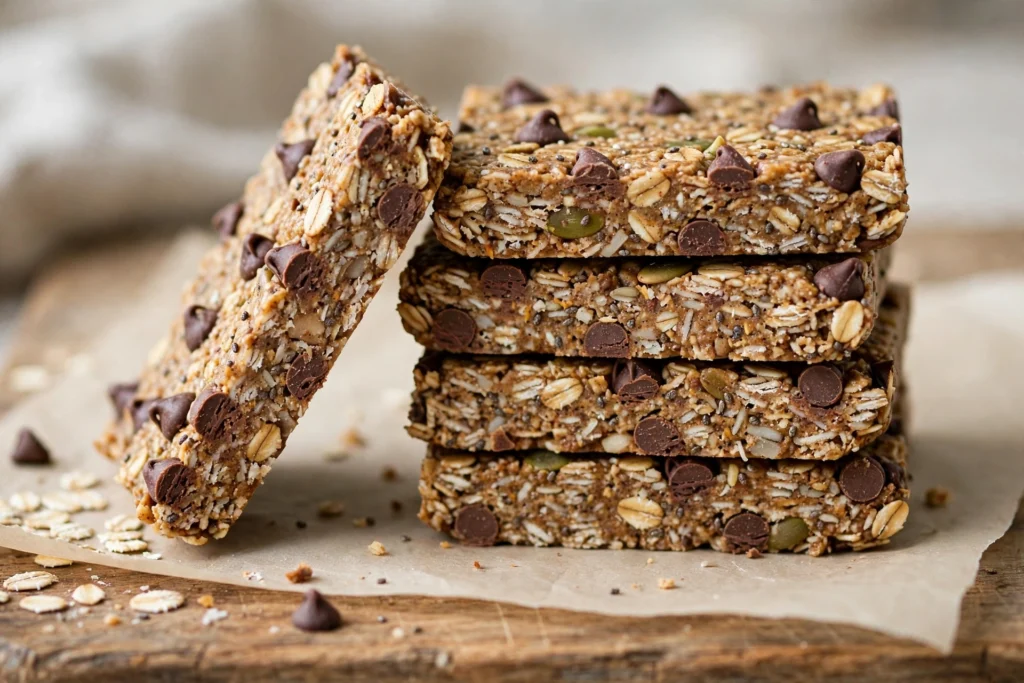
Stack of homemade no-bake protein granola bars with chocolate chips on parchment
Homemade protein granola bars are what you make when you want the convenience of a packaged bar without the packaged-bar ingredient list: rolled oats, peanut butter, honey, and protein powder, stirred together, pressed firmly into a pan, and chilled until they slice into clean, chewy bars. No oven, no baking, about 15 minutes of actual work. Each bar carries about 13g of protein — calculated from the real ingredients below, not wished into existence — and the batch keeps in the fridge all week for lunches, gym bags, and the 3 p.m. question. The whole recipe turns on one skill: getting the mixture to the right consistency before it goes into the pan, because that is the difference between bars that hold together and a pan of expensive granola crumbs. That part gets its own section.
Stack of homemade no-bake protein granola bars with chocolate chips on parchment

They are genuinely no-bake — the refrigerator does the setting, which keeps the texture chewy rather than crisp. The ingredients are ordinary supermarket items, nothing ordered from a specialty store. The bars portion themselves: one pan, ten bars, each one a known quantity instead of a handful of granola eaten standing at the counter. And the base is a template — the chocolate chips can become raisins, the peanut butter can become almond butter, the cinnamon can double — without the structure changing, as long as the dry-to-wet balance stays where the recipe puts it.

Ingredients for Protein Granola Bars

Makes 10 bars in an 8×8-inch pan.

Rolled oats, 2 cups (180g). The granola base and the chew. Rolled (old-fashioned) oats are specified: instant oats turn pasty and make a softer, cake-like bar, and steel-cut oats stay hard and raw-tasting in a no-bake mixture. If you like a slightly finer texture, pulse a third of the oats briefly in a food processor — optional, and it does help binding.

Creamy peanut butter, ⅔ cup (170g). The main binder and the second-largest protein source (about 42g across the batch). This is the ingredient that glues the bars: it coats the oats, fills the gaps, and firms up in the fridge. Use a regular creamy peanut butter you stir once and it stays combined. The very runny, oil-separated natural style can work but makes a softer bar; drippy nut butter is the most common hidden cause of crumbly results.

Honey, ⅓ cup (113g). The second binder and the sweetener. Honey is not here only for flavor — as it chills it stiffens, and that stiffness is part of what holds the slice together. Maple syrup can replace it, but the bars set a little softer; brown rice syrup, if you have it, binds the firmest of the three.

Vanilla whey protein powder, 2 scoops (60g; about 48g protein). The largest single protein contributor. It also drinks up moisture, which is why the recipe carries a small amount of milk to adjust with — and why powders are not interchangeable one-for-one. Whey blends in cleanest. Plant protein powders absorb noticeably more liquid; if you use one, expect to need the full amount of milk and possibly a spoon more, and judge by the squeeze test in the method, not by the clock.

Ground flaxseed, ¼ cup (28g). A quiet binder: ground flax absorbs liquid and gels slightly, helping the bars hold an edge, and it adds fiber. It must be ground — whole flax passes through largely undigested and does none of the binding work.

Mini chocolate chips, ¼ cup (45g). Minis distribute through the bars without creating weak points the way full-size chips do. They are counted in the nutrition; leave them out and each bar drops about 20 calories and 2 to 3g of sugar.

Milk, up to 2 tablespoons, as needed. The adjustment liquid. Some powders and peanut butters make a mixture that needs all of it; some need none. It goes in a spoonful at a time, after the first full mix.

Vanilla extract, 1 teaspoon; ground cinnamon, 1 teaspoon; fine salt, ¼ teaspoon. Warmth and balance. The salt matters more than it looks — it keeps the honey and peanut butter from reading as flat sweetness.

Nut-free substitution: replace the peanut butter with sunflower seed butter, same quantity. The bars bind almost identically, the flavor turns a little more roasted-seed than peanut, and the protein lands at about 12g per bar. Note that sunflower seed butter can tint baked goods green with baking soda — there is no baking soda here, so the color stays normal.

How to Make Protein Granola Bars

1. Line the pan. Line an 8×8-inch pan with parchment, leaving an overhang on two sides. The overhang is the handle you will lift the slab out with; skipping it means digging out the first bar with a knife.

2. Mix the dry ingredients. In a large bowl, stir together the oats, protein powder, ground flaxseed, cinnamon, and salt until the powder is evenly distributed with no white pockets. Dry ingredients mixed evenly now means no chalky bite later.

3. Warm the binders. In a microwave-safe bowl or small saucepan, combine the peanut butter and honey and warm them just until they pour easily — about 30 seconds in the microwave or a minute over low heat. Stir in the vanilla. Warm binder coats every oat; cold peanut butter tears the mixture into clumps instead.

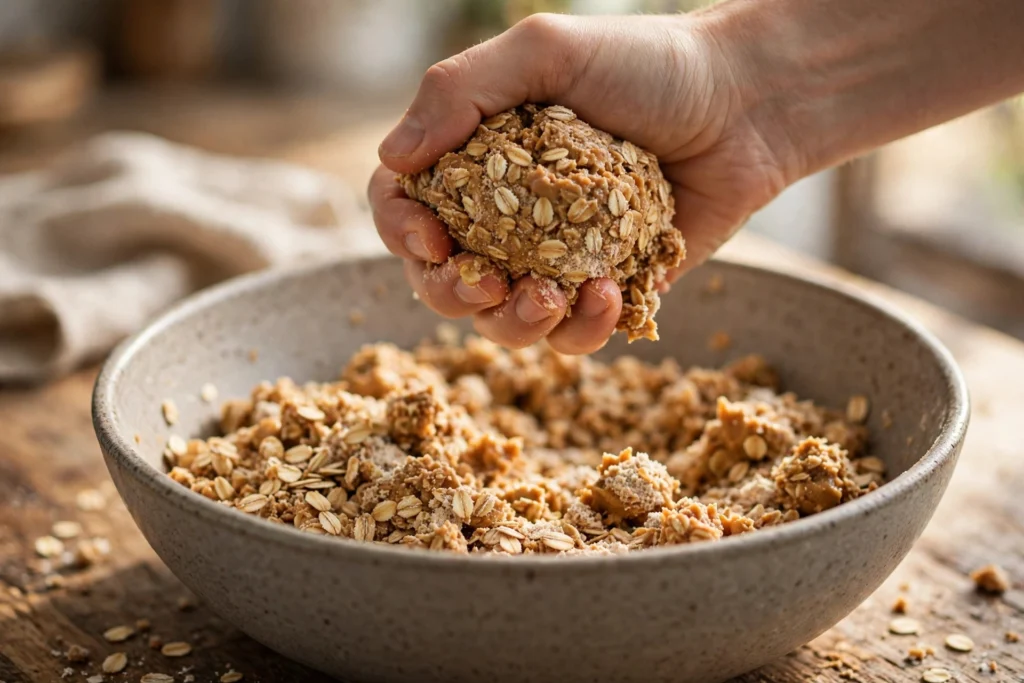
4. Combine, then do the squeeze test. Pour the binder over the dry ingredients and stir with a sturdy spoon until no dry oats remain — this takes a full minute of real stirring, folding from the bottom. Then squeeze a handful of the mixture: it should clump together firmly and hold its shape without crumbling at the edges or oozing. If it crumbles, stir in milk 1 tablespoon at a time and test again. If it is sticky-wet and smears, stir in an extra tablespoon or two of oats. Fold in the chocolate chips last.

Pressing protein granola bar mixture firmly into a parchment-lined pan

5. Press — firmly, evenly, and longer than feels necessary. Tip the mixture into the lined pan and press it down hard with the back of a measuring cup or a flat glass, working into the corners, until the surface is level and compact with no loose layer on top. This pressing is structural, not cosmetic: the bars hold because the mixture was compressed while the binder was warm and pliable.

6. Chill for at least 2 hours, until the slab feels firm all the way through when you press the center. Overnight is better and gives the cleanest cuts, but 2 hours is a working minimum for this binder ratio.

7. Lift out and cut. Use the parchment handles to lift the slab onto a board. Cut with a long, sharp knife in one decisive press per cut — sawing tears the edges — into 10 bars (one cut down the middle, then each half into five). Wipe the knife between cuts if it starts to drag.

How to Keep Homemade Protein Bars From Falling Apart

Hand squeezing protein granola bar mixture to test that it holds together

Hand squeezing protein granola bar mixture to test that it holds togetherCrumbly bars are not bad luck; they are a ratio problem with a short list of causes, and every one of them is fixable either in the bowl or in the next batch.

Too much dry for the binder. Oats and protein powder are the dry mass; peanut butter and honey are the glue. If the mixed bowl still shows loose, dusty oats at the bottom after a full minute of stirring, the ratio is off for your ingredients — most often because a plant protein powder or a very thick peanut butter absorbed more than expected. Fix it in the bowl: add binder, not water, when the mixture truly will not clump — an extra tablespoon of peanut butter or honey, warmed, stirred through, then squeeze-test again.

Dryness added a spoonful too late. The squeeze test is the control point. A handful that holds its shape with firm edges will slice; a handful that sheds crumbs at the edges will become crumbs at the knife, no matter how long it chills. Adjust with milk a tablespoon at a time while you can still stir — small additions, fully mixed, tested again. Overshooting is the opposite failure: a mixture pressed wet turns out sticky and soft, and the only cure is more oats worked in before chilling.

Not pressed hard enough. A loosely spooned mixture chills into a slab with air pockets, and air pockets are where bars break. Press until the surface is unyielding and level, paying attention to the corners, and re-press once after the first pass settles.

Cut too early or with the wrong motion. A slab chilled the full 2 hours (better, overnight) cuts cleanly; a slab cut at 45 minutes smears and splits. Use a long knife, press straight down, and lift the knife out rather than dragging it through.

Warm storage. These bars are held together by peanut butter and honey, both of which soften as they warm. A bar that slices perfectly from the fridge will slump in a hot car or a sunny lunch bag — that is the binder relaxing, not the recipe failing. They travel best cool.
Can You Make Protein Granola Bars Without Protein Powder?

Yes, but not by simply deleting the powder — it is 60g of dry ingredient as well as the protein source, and removing it leaves the mixture too wet and sticky to set firmly. The adjusted version: leave out the whey, increase the oats to 2½ cups (225g), reduce the honey by 1 tablespoon, and skip the milk entirely. Everything else — the warming, the squeeze test, the pressing, the chill — stays the same. That version lands at about 9g of protein and 250 calories per bar, which is honest territory: the oats, peanut butter, and flax still bring protein to the bar, just not the concentrated lift the powder provides.

Easy Ways to Customize Protein Granola Bars

Keep the dry-to-wet skeleton and swap within a category, and the bars keep working:

Cinnamon raisin: replace the chocolate chips with ¼ cup of raisins and double the cinnamon. Slightly chewier, a little less sugar per bar.

Double chocolate: use chocolate protein powder and stir 1 tablespoon of cocoa powder into the dry ingredients along with the chips.

Nut and seed: replace the flaxseed with ¼ cup of finely chopped peanuts or pumpkin seeds. The binding drops a notch — press extra firmly and chill overnight.

Cranberry almond: swap the peanut butter for almond butter and the chips for ¼ cup of dried cranberries, chopped so they spread through the bars instead of landing in clusters.

Each swap moves the numbers somewhat — dried fruit raises sugar, seeds raise fat — and the per-bar figures printed here belong to the base recipe.

Are Homemade Protein Granola Bars Healthy?

They are what their ingredients are, and the calculated numbers let you judge without slogans: about 265 calories per bar, with 13g of protein alongside 29g of carbohydrates, 13g of fat, and 14g of sugar. That is a substantially better protein figure than a standard granola bar (typically 1 to 3g) and roughly comparable to a commercial protein bar — with a shorter ingredient list, and with the sugar coming from honey and chocolate chips in amounts you can see and adjust. What they are not is low-calorie or low-sugar, and a bar built on nut butter and honey could not honestly claim to be. As a planned snack with real staying power, they do their job; as a health food halo, they should not be asked to.

How to Store Protein Granola Bars

Store these bars in the refrigerator. Peanut-butter-and-honey bars keep their firm, chewy set cold, and this recipe is at its best refrigerated in an airtight container with parchment between layers so the bars do not stick to each other — up to 1 week. At room temperature they soften noticeably; a bar packed in a lunchbox in the morning is fine to eat that day, but the counter is not their home, and in a warm kitchen they will slump and turn greasy within a couple of days. For longer storage, freeze them: wrap bars individually or stack them with parchment in a freezer container for up to 3 months. Thaw one in the fridge overnight or on the counter for 20 to 30 minutes — it will be slightly firmer than a fresh bar for the first bite, then settle into the same chew.

Frequently Asked Questions

How much protein is in a homemade protein granola bar?

In this recipe, about 13g per bar — the whey contributes roughly 5g of it, the peanut butter about 4g, and the oats and flax the rest. Bars from other recipes vary widely because the figure depends entirely on the powder amount and the bar size; 10 bars from this pan size is what makes 13g the number here.

Why are my protein granola bars crumbly?

The mixture was too dry for its binder, was not pressed firmly enough, or was cut before it fully set. The squeeze test before pressing — a handful must hold its shape without shedding crumbs — catches the first cause while it is still fixable with a spoonful of milk or warmed binder.

Do homemade protein granola bars need to be refrigerated?

These do, for texture as much as keeping quality: the peanut butter and honey that hold them together soften at room temperature. Refrigerated in an airtight container, they keep well for up to a week. A packed lunch the same day is fine; long counter storage is not.

Can I make protein granola bars without protein powder?

Yes, with the adjusted version above — more oats, slightly less honey, no milk — at about 9g of protein and 250 calories per bar. Simply omitting the powder from the base recipe leaves the mixture too wet to set properly.

Which oats are best for homemade granola bars?

Rolled (old-fashioned) oats. They hold their shape, give the bars their chew, and bind well when pressed. Instant oats make a softer, pastier bar, and steel-cut oats stay hard in a no-bake recipe.

Can protein granola bars be frozen?

Yes — freeze them in a container with parchment between bars, or individually wrapped, for up to 3 months. Thaw in the fridge overnight or on the counter for 20 to 30 minutes.

How do you make protein bars less dry?

Start in the bowl: if the squeeze test crumbles, add milk a tablespoon at a time, or a spoonful of warmed peanut butter for a genuinely dry mixture. In the next batch, check the powder first — plant protein powders absorb far more liquid than whey, and a runny-style nut butter needs less added liquid than a stiff one. Small adjustments, tested by hand, beat guessing by the quarter cup.

References

U.S. Department of Agriculture, Agricultural Research Service. FoodData Central. Nutrient profiles used for the calculations in this recipe: rolled oats, peanut butter, honey, ground flaxseed, and standard whey protein and chocolate chip labels. https://fdc.nal.usda.gov/

U.S. Department of Health and Human Services. FoodSafety.gov — FoodKeeper guidance on refrigerated storage and freezing of snack bars and baked goods. https://www.foodsafety.gov/keep-food-safe/foodkeeper-app

Recipe: No-Bake Protein Granola Bars
Description: Rolled oats, peanut butter, honey, and protein powder pressed into a pan and chilled — chewy bars that hold together, with about 13g of protein each.
Prep time: 15 minutes
Chilling time: At least 2 hours (overnight gives the cleanest cuts)
Total time: About 2 hours 15 minutes (mostly chilling)
Yield: 10 bars
Serving size: 1 bar
Pan: 8×8-inch, lined with parchment
Ingredients:
– 2 cups rolled oats (180g)
– 2 scoops vanilla whey protein powder (60g)
– ¼ cup ground flaxseed (28g)
– 1 teaspoon ground cinnamon
– ¼ teaspoon fine salt
– ⅔ cup creamy peanut butter (170g)
– ⅓ cup honey (113g)
– 1 teaspoon vanilla extract
– Up to 2 tablespoons milk, as needed
– ¼ cup mini chocolate chips (45g)
Instructions:
1. Line an 8×8-inch pan with parchment, leaving an overhang on two sides.
2. Stir the oats, protein powder, flaxseed, cinnamon, and salt together in a large bowl.
3. Warm the peanut butter and honey together until pourable; stir in the vanilla.
4. Pour over the dry ingredients and stir for a full minute, until no dry oats remain. Squeeze-test a handful: it should hold its shape without crumbling. Add milk a tablespoon at a time if it crumbles; fold in the chocolate chips.
5. Press the mixture into the pan firmly and evenly with the bottom of a measuring cup or glass.
6. Refrigerate at least 2 hours, until firm through the center.
7. Lift out by the parchment and cut into 10 bars with a long, sharp knife, pressing straight down.
Storage: Refrigerate in an airtight container with parchment between layers for up to 1 week. Freeze up to 3 months; thaw in the fridge overnight or 20 to 30 minutes on the counter.
Nutrition per bar (calculated from the ingredients above; varies by brand): about 13g protein, 265 calories, 29g carbs, 13g fat, 3g saturated fat, 4g fiber, 14g sugar, about 160mg sodium.

One pan on a Sunday and the week’s snacks are handled — press them hard, chill them properly, and they will behave like bars, not granola in disguise. If you prefer the same flavors in a rounder format, the protein balls are this recipe’s closest relative, and the full snack drawer is organized in the high protein snacks roundup.

Leave a Comment

Your email address will not be published. Required fields are marked *