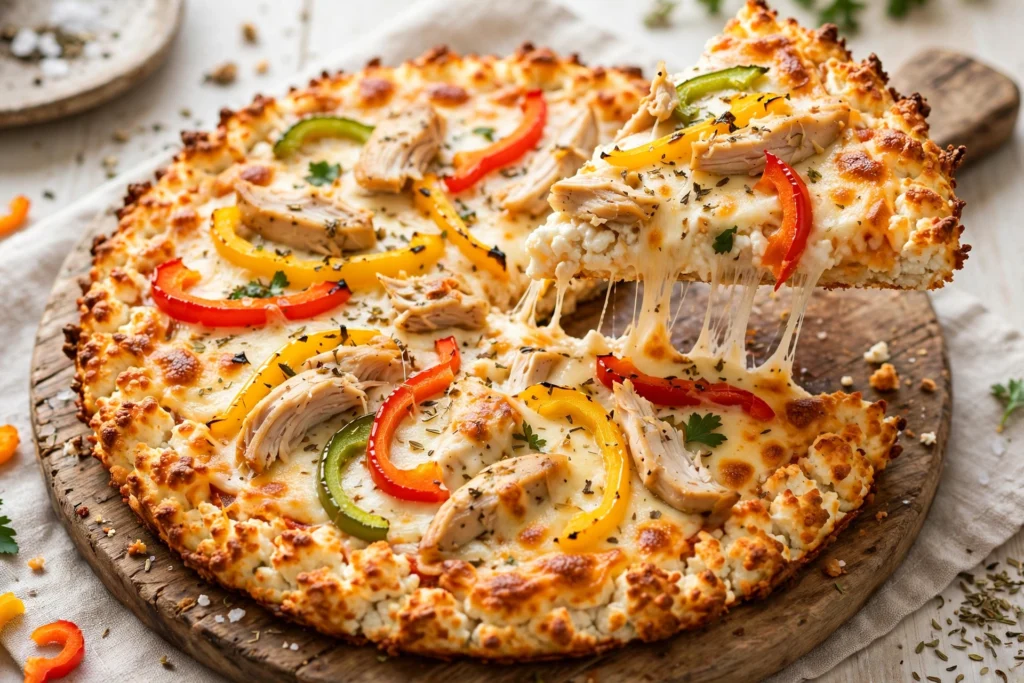
A high protein cottage cheese pizza crust is a real, sliceable pizza base built from blended cottage cheese, flour, and an egg — about 22 grams of protein in half the crust before a single topping lands, against roughly 10 to 13 grams in the same serving of an ordinary pizza crust. This is the full method version of the crust my high protein cottage cheese recipes collection promised its own post: the dough behaviour, the pre-bake that decides whether the centre stays firm, and the fixes for the ways this crust usually goes wrong. Set expectations honestly first. The texture is a firm, golden flatbread style base that holds a slice up — closer to a thin Italian crust than to a puffy takeaway one, with crisp edges and a centre that stays sliceable rather than bready. Prep is about 15 minutes, the baking runs in two stages of roughly 25 minutes together, and nothing about the method is exotic. What this article will not do is call the recipe tested or guaranteed: the times are estimates, and the doneness cues are written so a first bake can be judged on what the crust is doing, not on what a clock says.
Table of Contents
ToggleWhy make pizza crust with cottage cheese?
The cottage cheese does two jobs here. Protein is the obvious one: a cup of it brings about 25 grams into a dough that flour alone would leave at roughly 13, which is how the finished crust reaches its numbers. Moisture is the quieter job — the cheese keeps the crumb from drying out at the high temperature a pizza crust needs, so the base can bake hard without turning into a cracker. One limit, stated the way this site states it on every cottage cheese recipe: the crust’s final protein is not a property of the cheese alone. Flour choice, how much cheese actually goes in, and the serving size all move it, which is why the figures below are calculated from this exact ingredient list and this exact cut — half a crust to a serving — rather than borrowed from the ingredient’s reputation.
Ingredients you'll need
Makes 1 crust of about 25cm (10 inches), cut into 4 slices. Serves 2, at half a crust each.
1 cup (225g) cottage cheese — the protein and the moisture. Blended smooth for this recipe; regular full fat is the version the numbers use.
1 egg — the binder. A cottage cheese dough has less gluten structure than a yeast dough, and the egg is what helps it hold together as a slice.
1 cup (125g) all-purpose flour — the structure. Plain flour gives the firmest, most pizza-like result of the common options for this style of crust.
1 tsp baking powder — the lift. There is no yeast and no rising wait; this is what keeps the base from baking into a board.
½ tsp salt, ½ tsp garlic powder, ½ tsp dried oregano — the seasoning goes IN the crust, because an unseasoned base tastes flat no matter what sits on it.
A little extra flour or oil for your hands — this dough is soft and sticky by design, and shaping it is a floured-hands job.
Crust only, calculated from the list above: the whole crust carries about 44g protein, about 745 kcal, about 100g carbs, and about 16g fat. Per serving (half the crust): about 22g protein, about 370 kcal, about 50g carbs, about 8g fat. Toppings are counted separately, in their own section below, so the two sets of numbers never blur.
How to make a high protein cottage cheese pizza crust
1. Heat the oven to 220°C / 425°F, with a baking tray or pizza stone inside heating with it. A hot surface from the first second is part of how the base firms up.
2. If the tub of cottage cheese is watery, drain it briefly or spoon off the loose liquid. Then blend the cottage cheese until completely smooth, 60 to 90 seconds. Curds left whole melt into wet pockets in the baked crust.
3. Whisk the egg into the blended cheese. Stir the flour, baking powder, salt, and seasonings together in a separate bowl, then fold the dry into the wet until a soft dough forms. It will be sticky — softer than a yeast dough, more like a thick batter that holds its shape. That is correct for this recipe.
4. Rest the dough for 5 to 10 minutes. The flour hydrates and the dough firms enough to shape; skipping the rest is the main cause of a dough that fights back.
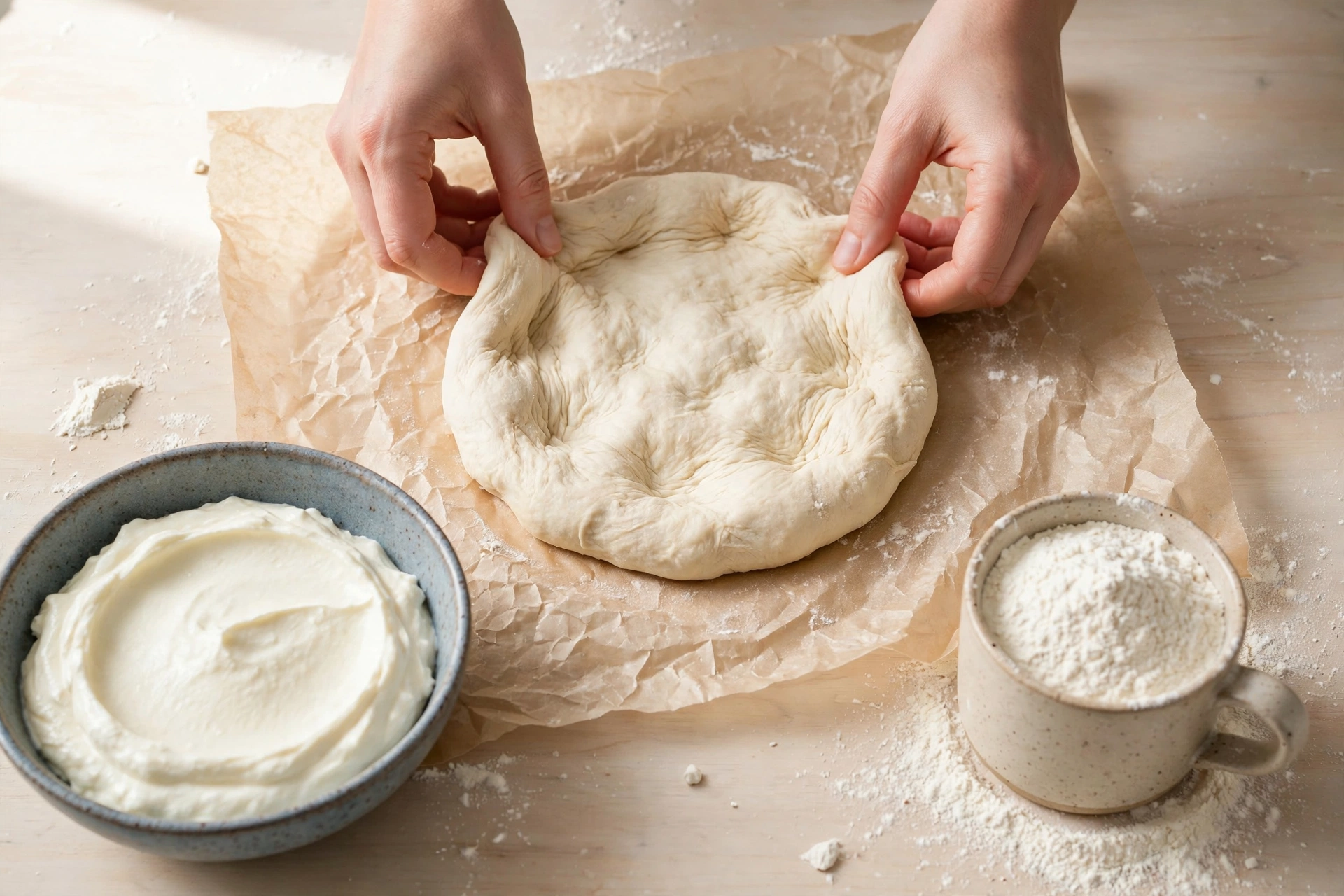
5. Tip the dough onto baking parchment and shape it with floured or oiled hands (or the back of a spoon) into a round of about 25cm, roughly 5mm thick, slightly thicker at the rim. Work from the centre outward and keep the middle even — a thick centre is a soft centre later.
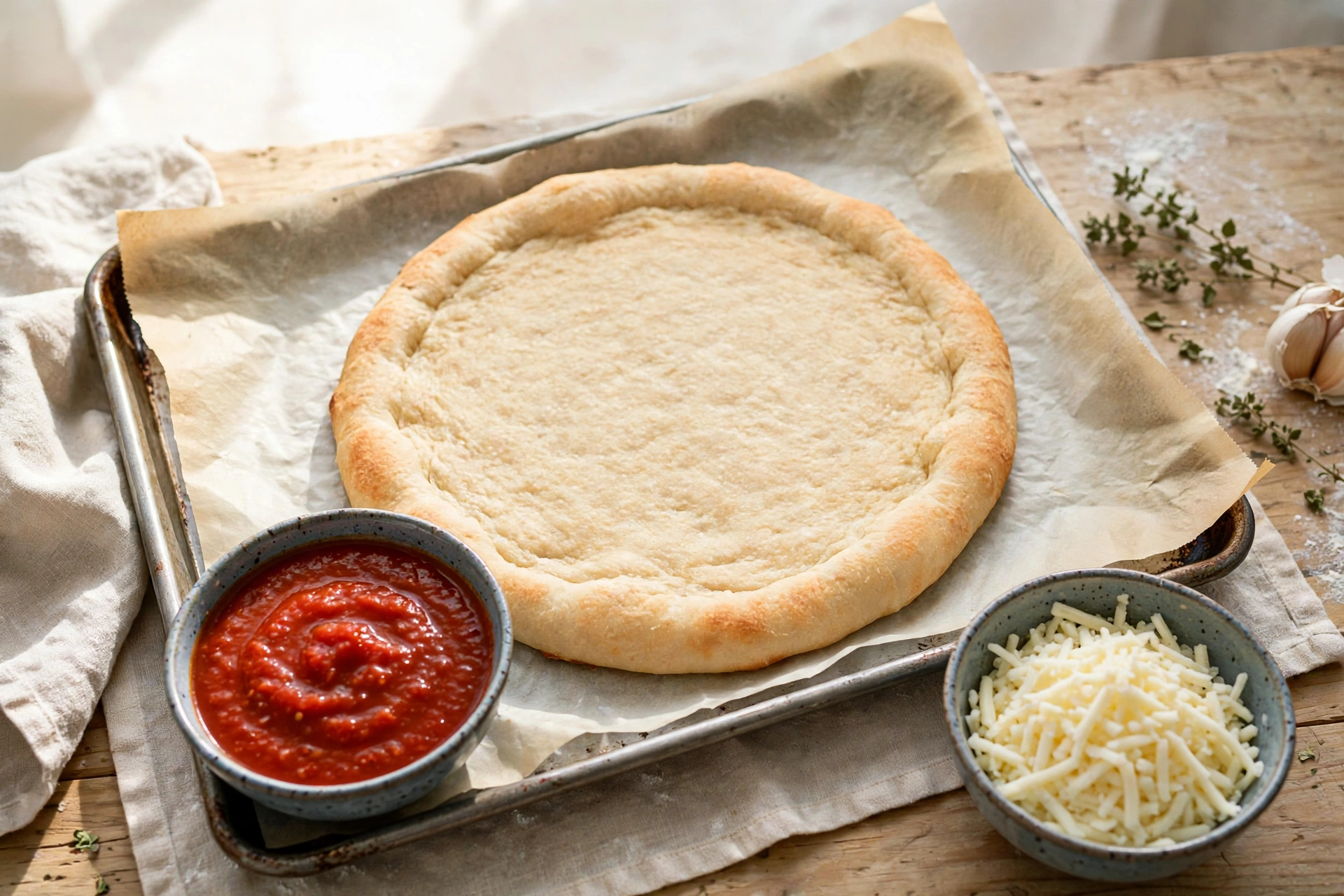
6. Slide the parchment onto the hot tray and pre-bake for 12 to 15 minutes, until the crust is set, the edges are golden, and the centre feels dry to a fingertip. For the firmest base, peel the crust off the parchment, flip it, and give it 2 to 3 minutes more.
7. Add the sauce and toppings (quantities in the toppings section). Spread the sauce thinly and leave the rim bare.
8. Bake for 8 to 10 minutes more, until the cheese is melted and bubbling with a few browned spots and the rim has deepened in colour.
9. Rest the pizza for 2 to 3 minutes before slicing. The crust finishes setting as it cools slightly, and a slice cut in the first minute is the one most likely to sag.
How to get a firm, crispy crust
Everything in this section is moisture management, because water is the only real enemy this crust has. The cottage cheese arrives wet, the sauce adds more, and the centre of the pizza is the last place steam can escape from. So: drain a watery tub before blending. Pre-bake until the centre is dry to the touch, not merely until a timer ends — that stage is doing the work the whole recipe depends on, and a pale, soft pre-bake cannot be rescued by the second bake. Keep the crust at an even 5mm; thin spots tear and thick spots stay soft, and both failures get blamed on the recipe instead of the shaping. Use the full oven heat, and the preheated tray: a cold tray insulates the base exactly where it needs the fiercest heat. Go easy with the sauce — a few spoonfuls spread thin, not a ladle — and put wet vegetables like mushrooms and peppers on top of the cheese rather than under it, so their water evaporates instead of soaking in. None of this is fussy technique. It is one idea applied five times: get water out early, and add as little back as the pizza allows.
Best toppings for protein pizza
The topping set the nutrition below is calculated on: ⅓ cup (80g) tomato passata or crushed tomatoes, ¾ cup (85g) shredded mozzarella, 100g cooked chicken breast in pieces, and a handful of sliced peppers, mushrooms, and red onion. Spread the sauce, scatter the mozzarella, then the chicken and vegetables. Counted honestly, those toppings add about 55g protein and about 455 kcal to the whole pizza, which brings the finished pizza to about 100g protein and about 1,200 kcal in total — about 50g protein and about 600 kcal per half. The swaps that keep the protein high: turkey breast pieces or tuna (drained well, and added after the pre-bake like everything else) stand in for the chicken at similar numbers; a portion of the mozzarella can become grated hard cheese for more flavour per gram. The toppings that quietly undo the point are the fatty processed meats — a pepperoni-style topping spends a lot of calories for very little protein, which is a fair choice made knowingly, not a mistake to discover afterwards.
Common problems and fixes
Wet, sticky dough that will not shape: the tub was watery or the rest was skipped. Work in extra flour one tablespoon at a time, up to about two, and shape with oiled hands on the parchment rather than fighting it on the counter. Soft or soggy centre: the pre-bake ended early, the centre was shaped too thick, or the sauce went on heavy. The fix next time is in the crispy section — and a soft-centred pizza can be partly rescued by returning slices to a dry frying pan over medium heat for two minutes. Crust sticking: it was baked on an unoiled tray or foil instead of parchment, or peeled away while steaming hot. Parchment is not optional equipment for this dough; let the crust sit a minute before moving it. Crust breaking when a slice is lifted: it was shaped very thin while still wet inside, or sliced the moment it left the oven. Give the pre-bake its full time, keep the two-minute rest, and lift the first slice with a spatula rather than by the rim. Pale and flabby overall: the oven was not fully hot or the tray went in cold. Twenty minutes of preheating is part of the recipe, not a suggestion around it.
Storage, reheating, and FAQs
An untopped pre-baked crust keeps in the fridge for up to 2 days, wrapped, and is the best make-ahead form of this recipe. Finished pizza keeps in the fridge for up to 3 days. To freeze, freeze the pre-baked crust on its own — wrapped well, for up to a month — then top and bake it from frozen, adding a few minutes to the second bake; a topped pizza freezes badly, because the vegetables give up their water on thawing. Reheat leftover slices in a dry frying pan over medium heat, or in a hot oven or air fryer, until the base crisps again. The microwave works and softens everything it touches; it is the honest last resort, not the recommendation.
Is a blender necessary for the crust?
It is the reliable route. Blended smooth, the cheese disappears into the dough and the crust bakes evenly. Without one, drain the cheese well and mash it thoroughly with a fork, then mix longer — the crust works, with a slightly less even texture and the odd small curd pocket.
Can I use self-raising flour instead?
Yes. Use the same cup of self-raising flour and leave out the baking powder; keep the salt, since self-raising flour is salted lightly and this crust is seasoned on purpose. The numbers barely change.
Can I make it with oat flour or a gluten-free blend?
Oat flour at the same weight gives a softer, more fragile crust that benefits from the flip in the pre-bake. A 1:1 gluten-free blend behaves differently from brand to brand, so expect to adjust rather than follow the plain flour version blindly: rest the dough the full 10 minutes, and if it will not shape, work in a tablespoon more of the blend; if it feels stiff, a spoonful of the reserved cheese liquid loosens it. Both are workable versions, not identical ones.
Can I skip the egg?
The egg is doing structural work, and this is the swap the recipe pushes back on. Without it the base is noticeably more fragile and tears at the slice lines. A flax egg does not bind a hot crust the same way. If eggs are out entirely, a different style of base will serve you better than this one with its binder missing.
Does the crust taste like cottage cheese?
No. Baked at this heat with the seasoning in the dough and toppings on it, the cheese reads as background richness in a savoury flatbread. The flavour people notice is the garlic and oregano, which is what they are there for.
References
Protein and calorie values for cottage cheese, flour, eggs, mozzarella, and chicken: USDA FoodData Central
Practical protein targets for active people: Bean A, The Complete Guide to Sports Nutrition, 9th edition (Bloomsbury Sport, 2022).
More ways to cook with the same tub: high protein cottage cheese recipes
A crust that holds its slice, carries its protein in the base instead of borrowing it all from the toppings, and asks for nothing stranger than a blender and a hot oven. Get the pre-bake right and the rest of the pizza is just pizza.