Breakfast is where cottage cheese does its best work, because the morning is when most people are furthest behind on protein. These 7 high protein cottage cheese breakfast recipes run from about 18 to 30 grams of protein each — scrambled eggs with the cheese folded in at the right moment, overnight oats that set in the fridge, pancakes, egg muffins built for the week, a wrap that travels. Every recipe is complete: exact quantities, numbered steps with the cooking cues that actually decide the result, and the nutrition calculated from the ingredients as written.
This is the breakfast-only companion to my broader high protein cottage cheese recipes collection, which covers lunches, dinners, snacks, and desserts with the same tub. The basis for every number below: regular (4% fat) cottage cheese at 25 grams of protein and about 220 calories per cup (225g) — check your tub, because brands run from about 24 to 28 grams per cup and the low-fat versions carry similar protein for roughly 160 to 180 calories. These are developed recipes with calculated nutrition and estimated timings, stated plainly rather than dressed up.
Table of Contents
ToggleThe recipes
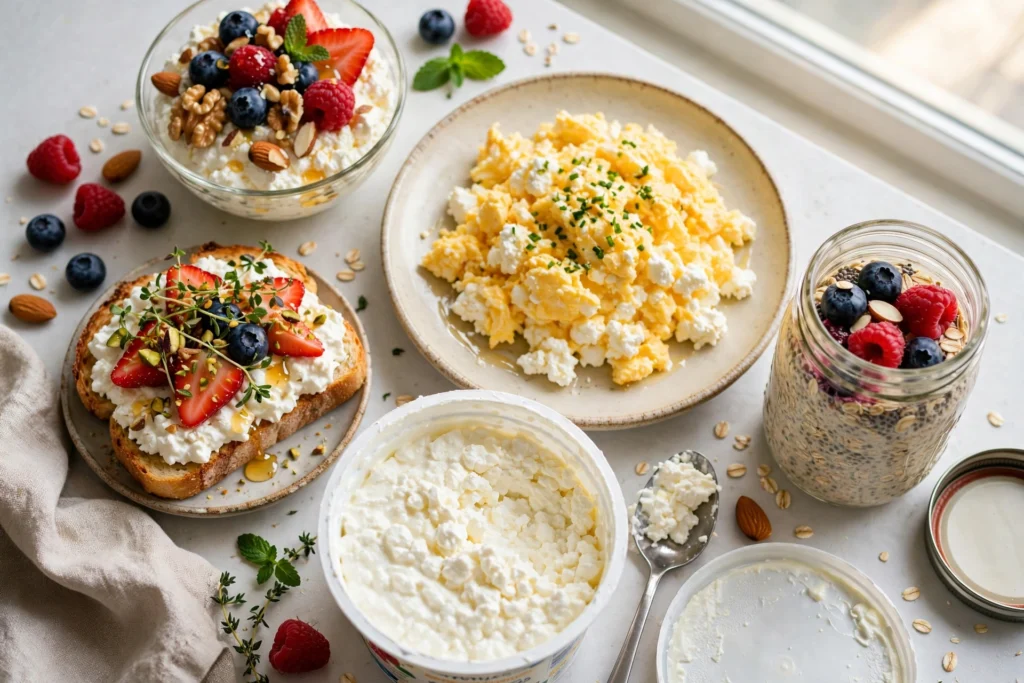
Cottage Cheese Scrambled Eggs
Serves 1 · Prep 5 minutes · Cook about 6 minutes · About 30g protein · About 355 kcal
Ingredients: 3 eggs, ½ cup (115g) cottage cheese, 1 tsp butter, chives, salt and pepper.
1. Whisk the eggs until uniform and season after cooking, not before — early salt draws water out of eggs as they set.
2. Melt the butter in a non-stick pan over medium-low heat. The pan should be warm enough to melt butter without browning it; too hot is the first cause of rubbery, weeping eggs.
3. Add the eggs and stir slowly into soft curds, about 3 to 4 minutes.
4. When the eggs are almost set but still glossy, take the pan off the heat and fold in the cottage cheese for 30 seconds. Off the heat is the whole technique: boiled cottage cheese turns watery and grainy, while residual heat warms it into the eggs.
5. Rest 1 minute in the pan — the curds finish setting and the cheese settles — then serve.
Swap: 2 eggs + 2 whites with the same cheese keeps the protein at about 30g and cuts about 35 kcal. Store: cook fresh; scrambled eggs reheated are a compromise, and this one is a six-minute recipe.
Tip: if the finished scramble weeps liquid on the plate, one of three things happened — the pan was too hot, the cheese went in over direct heat, or the eggs were salted at the start. All three are sequence errors, not ingredient errors.
Sweet Cottage Cheese Breakfast Bowl
Serves 1 · Prep 5 minutes · No cooking · About 23g protein · About 315 kcal
Ingredients: ¾ cup (170g) cottage cheese, ½ cup berries, 1 tbsp chopped walnuts, 2 tbsp granola, cinnamon or vanilla.
1. Spoon the cottage cheese into a bowl — large curd suits this recipe, since the curds are the texture.
2. Add the berries, then the walnuts and granola over the top so the crunch stays dry until the spoon arrives.
3. Finish with cinnamon or a few drops of vanilla.
Portions: this bowl is built to be adjustable. Halve the walnuts and granola and it drops to about 200 kcal at the same 19 grams from the cheese and berries alone; double the cheese to a full cup and it reaches about 29 grams of protein. What I think matters is that the cheese is the constant — the toppings are the dial.
Swap: pumpkin or sunflower seeds for the walnuts at near-identical numbers; frozen berries, thawed, give more juice and a softer bowl. Store: the cheese and berries keep 2 days in the fridge; add nuts and granola at serving time.
Cottage Cheese Overnight Oats
Serves 1 · Prep 5 minutes + at least 6 hours chilling · No cooking · About 23g protein · About 400 kcal (with berries)
Ingredients: ½ cup (40g) rolled oats, ½ cup (115g) cottage cheese, ½ cup skimmed milk, 1 tbsp chia seeds, ½ cup berries, sweetener or honey to taste (honey adds about 20 kcal per teaspoon).
1. Stir the oats, cottage cheese, milk, and chia together in a jar. The working ratio is ½ cup oats to about 1 cup of combined liquid once the cottage cheese’s own moisture counts — drier than that and the oats stay chewy; wetter and it eats like soup.
2. Fold in the berries and sweetener, seal, and chill at least 6 hours or overnight. The chia and the oats both need the full rest.
3. In the morning, stir well and judge the texture: too thick, loosen with milk a tablespoon at a time; too thin, stir in a spoon of oats and give it 10 minutes, or accept it thinner today and cut the milk by 2 tablespoons next time.
Swap: Greek yogurt for half the cottage cheese keeps the protein near the same and sharpens the tang; peanut butter stirred in (1 tbsp) adds about 4g protein and 95 kcal. Store: 3 days in the fridge in the jar; the texture peaks on days one and two.
Tip: blend the cottage cheese before stirring it in if the curds bother you — the oats set around a smooth base and the jar reads as flavoured yogurt oats.
High-Protein Cottage Cheese Pancakes
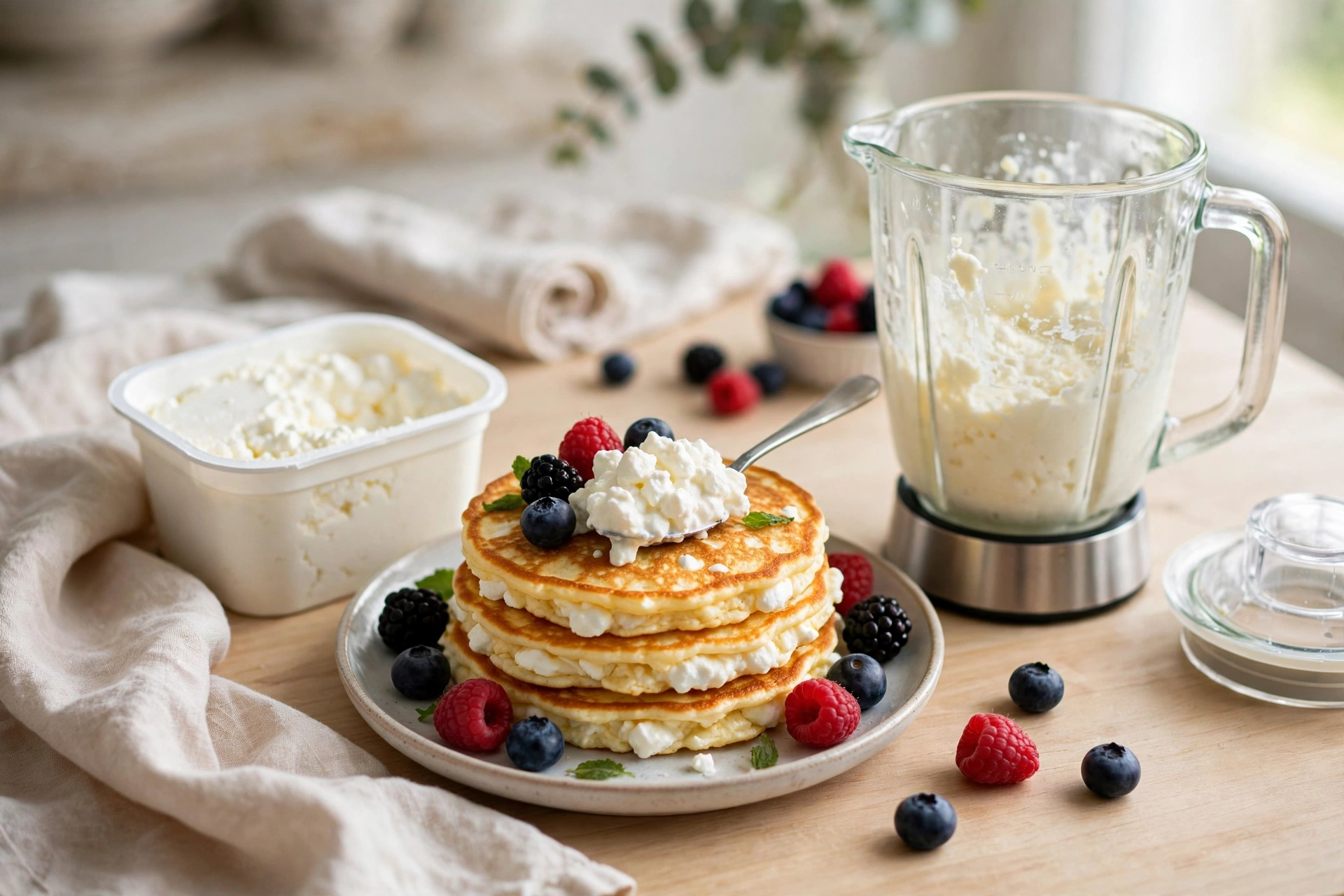
Makes 3 pancakes, serves 1 · Prep 5 minutes · Cook about 10 minutes · About 22g protein · About 290 kcal
Ingredients: ½ cup (115g) cottage cheese, 1 egg, ¼ cup oat flour, ½ tsp baking powder, ½ tsp vanilla, a pinch of salt, oil spray for the pan.
1. Blend the cottage cheese, egg, and vanilla until smooth, then stir in the oat flour, baking powder, and salt. The batter should be thick — it drops from the spoon in a dollop rather than pouring. Thin batter is the first cause of the wet centres this recipe gets asked about.
2. Rest the batter 5 minutes so the oat flour hydrates and the baking powder starts.
3. Cook in a non-stick pan over medium-low heat, about 2 to 3 minutes on the first side. Flip when the edges look set and bubbles on the surface are popping and staying open.
4. Cook 1 to 2 minutes more. A wet centre means the heat was too high — the outside set before the middle cooked — so drop the heat and give the next one a lid for its first minute.
Swap: regular flour at the same measure loses about 1g protein and the fibre; half a scoop of protein powder in place of the oat flour raises the protein to roughly 30g but dries the crumb — add 2 tbsp milk if you go that way. Store: 2 days in the fridge; reheat in a dry pan or toaster to bring the edges back.
Tip: these are more delicate than flour pancakes because the protein is doing the structure work. A wide spatula and a confident single flip, not three nervous ones.
Savory Cottage Cheese Toast
Serves 1 · Prep 5 minutes · No cooking · About 20g protein · About 360 kcal
Ingredients: 1 thick slice sourdough (or wholegrain), ½ cup (115g) cottage cheese, ½ avocado, chilli flakes, 1 tsp mixed seeds, lemon juice, salt.
1. Whip or blend the cottage cheese smooth and season it — a seasoned base means the toppings can stay simple.
2. Toast the bread dark and firm; with a wet topping, the toast is structure.
3. Spread the cheese thickly, add the avocado sliced or smashed with lemon, and finish with chilli and seeds.
Topping combinations: smoked salmon and cucumber ribbons (about +6g protein, +35 kcal over the base cheese toast); roasted peppers and basil; a fried egg and hot sauce (+6g, +90 kcal with its oil). Anti-soggy rules that apply to all of them: salt tomatoes only at serving, pat roasted vegetables dry, and keep wet toppings off the toast until the moment of eating — the cheese layer itself is a moisture barrier, which is half the reason it is spread first.
Swap: rye or wholegrain bread at the same numbers; white beans mashed with the cheese (¼ cup) adds fibre and about 3g protein. Store: the whipped cheese keeps 2 days; build the toast fresh.
Cottage Cheese Egg Muffins
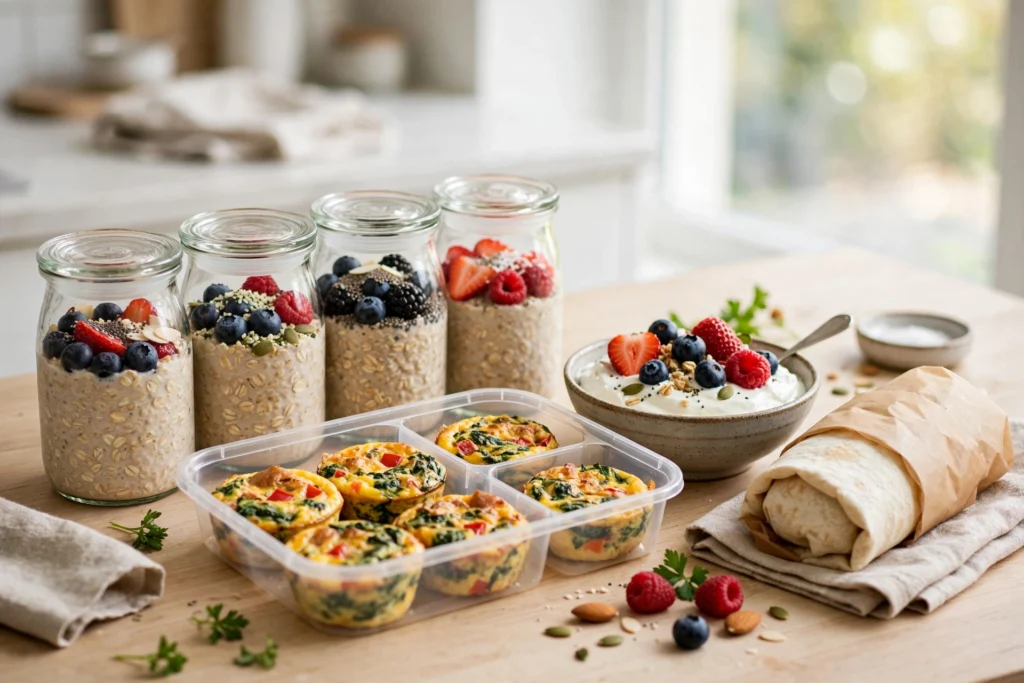
Makes 6 muffins, a serving is 2 · Prep 10 minutes · Bake about 20 to 25 minutes at 180°C / 350°F · About 18g protein · About 210 kcal per serving
Ingredients: 4 eggs, 1 cup (225g) cottage cheese, a handful of spinach (chopped, squeezed), ½ bell pepper finely diced, ¼ cup grated cheddar or mozzarella, salt and pepper.
1. Heat the oven and grease the muffin tin properly — egg mixtures stick; paper liners or a thorough oiling are not optional steps here.
2. Whisk the eggs, stir in the cottage cheese, then the vegetables and most of the grated cheese.
3. Divide between six cups, top with the remaining cheese, and bake until the centres are set and just firm to a fingertip — start checking at 20 minutes. They puff, then settle as they cool; that settling is normal, not a failure.
4. Cool in the tin 5 minutes before turning out.
Swap: diced turkey or chicken (50g) folded in adds about 3g protein per muffin; feta for the cheddar sharpens the flavour at the same numbers. Store: cool fully within 2 hours, then fridge for up to 4 days or freeze for up to 2 months. Reheat from the fridge in the microwave for about a minute or until steaming hot right through; from frozen, thaw overnight first.
Tip: squeeze the spinach properly. Vegetables give up their water in the oven, and a wet muffin is almost always a vegetable that was not dried, not an egg that was overcooked.
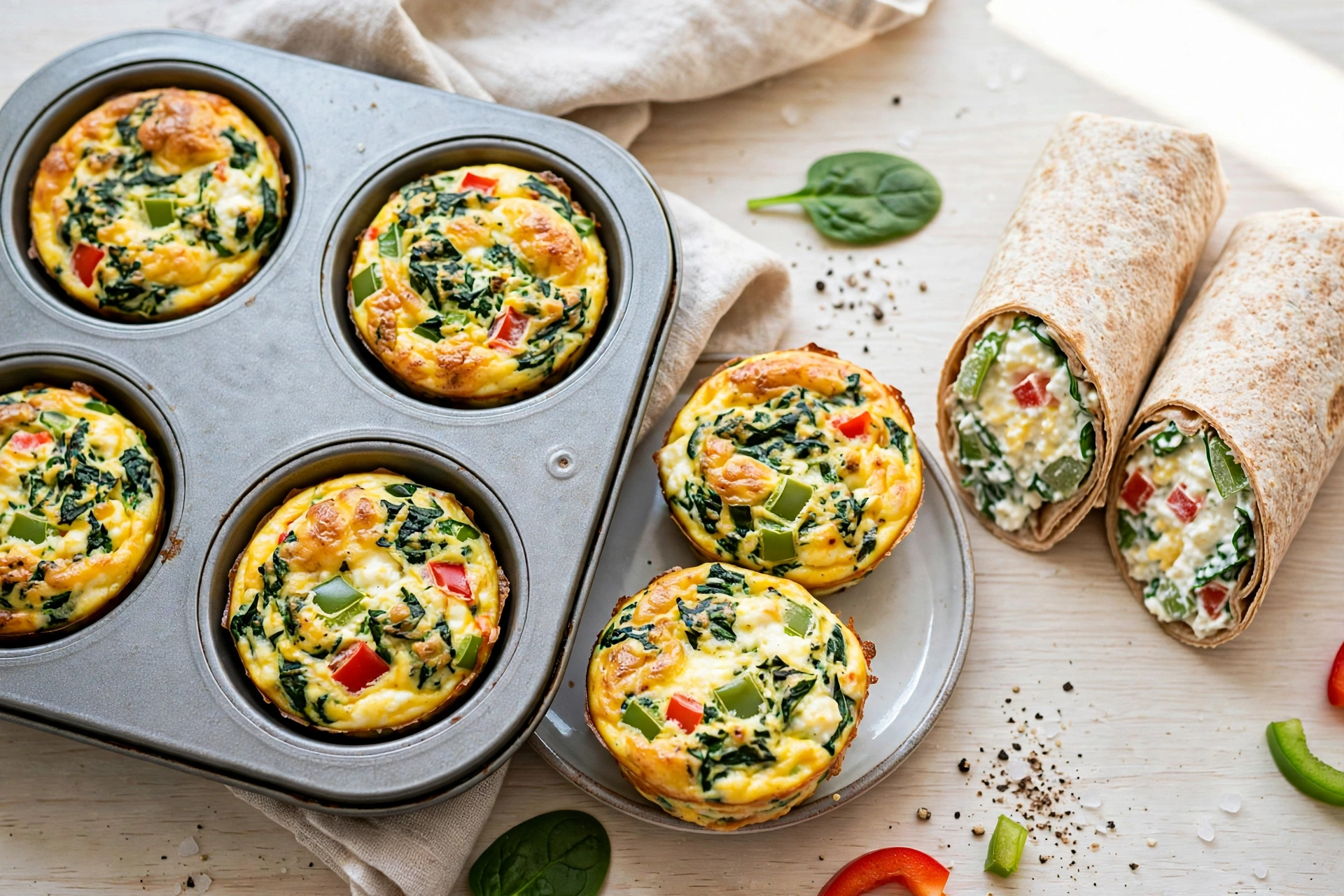
Cottage Cheese Breakfast Wrap
Serves 1 · Prep 10 minutes · Cook about 5 minutes · About 24g protein · About 410 kcal
Ingredients: 1 large wholegrain wrap, 2 eggs, ¼ cup (55g) cottage cheese, a handful of spinach, 2 slices of tomato (seeds scooped out), hot sauce if you like it.
1. Scramble the eggs softly and set them aside to cool for 2 minutes — piping-hot eggs steam the wrap from inside.
2. Spread the cottage cheese over the centre of the wrap first. It acts as the moisture barrier between the eggs and the bread.
3. Layer spinach, the deseeded tomato, then the eggs. Fold the sides in, roll tightly away from you, and toast the wrap seam-side down in a dry pan for 1 minute to seal it.
Swap: a corn tortilla saves about 80 kcal and 2g protein; 30g sliced turkey inside adds about 5g protein and 30 kcal. Store: this is a build-and-go recipe — assembled, it travels in a cool bag with an ice pack and should be eaten the same morning; overnight, the tomato loses no matter what the barrier does. For meal prep, keep the components separate and roll in the morning.
Tip: the deseeded tomato and the 2-minute egg rest are the recipe. Both exist to solve the same problem — a wrap that weeps by the time it is eaten.
Why use cottage cheese for breakfast?
Three reasons, and only one of them is the protein number. The first is that number anyway: 25 grams per cup is more than Greek yogurt gives you. The second is texture range — the same tub eats fresh and curdy in a bowl, disappears blended into pancakes and oats, and sets into muffins, which means one ingredient covers sweet and savoury mornings without a special shop. The third is speed: the bowl, the oats, and the toast are five-minute jobs, the scramble is close behind, and two of them (the oats and the muffins) are made before the morning starts. Higher-protein breakfasts are also the pattern the satiety research keeps pointing at — protein at the first meal is linked with stronger fullness across the morning than a low-protein start at the same calories (Leidy et al., 2015). If dairy at breakfast is the question, my high protein breakfast smoothie recipes cover the drinkable version of the same idea.
Choosing cottage cheese for breakfast
Curd size first: small curd blends fastest and vanishes into eggs and batters; large curd is the one to eat with a spoon in the bowl. Fat level: the protein barely changes across fat-free, low-fat, and regular — roughly 24 to 28 grams per cup — while calories run from about 160 to 220, so choose on calories and how rich you want the dish, not on protein. Sodium is the label line breakfast eaters miss: tubs range widely, roughly 300 to 450 milligrams per half cup, which matters if the rest of the morning includes bacon or cheese; low-sodium tubs exist and behave identically in every recipe here. And a short ingredient list — milk, cream, salt, cultures — cooks more predictably than a long one with gums, because the gums change how the cheese melts and sets.
Can you blend cottage cheese?
Yes — 60 to 90 seconds in a blender with its own tub liquid turns it into a smooth, pourable base, and three of these recipes depend on that version: the pancakes (a curdy batter tears), the toast (a spread has to spread), and the overnight oats if curds in oats bother you. The scramble and the muffins want the curds intact, because there the cheese is meant to melt into pockets rather than disappear. One blender note: a small amount rides up the jug walls, so scrape once halfway. What comes out keeps 2 days in the fridge, so blending a whole tub on Sunday sets up the week’s breakfasts.
Making breakfast ahead
Made the night before, without argument: the overnight oats (they require it), the muffins (they are built for it — bake Sunday, reheat all week), the sweet bowl’s components, and the whipped cheese for toast. Made fresh, and honestly better for it: the scrambled eggs, the pancakes, and the wrap’s final assembly. The wrap’s filling can be cooked ahead, but the rolling is a morning job. That split — two recipes ahead, three fresh, two assembled — is most of a week’s breakfasts from one tub and one short shop.
Questions people ask
Can I use cottage cheese instead of Greek yogurt at breakfast?
Yes, and the numbers favour it slightly: about 25 grams of protein per cup against yogurt’s 23, at similar calories for the low-fat versions. The differences that matter are texture (curds until blended) and tang (cottage cheese is milder and saltier). In oats and pancakes the swap is invisible; eaten plain with fruit, it is a matter of taste.
Is cottage cheese a complete protein?
Yes. It is a milk protein — mostly casein — and it carries all nine essential amino acids in the proportions the body uses. Casein digests slowly, which is part of why cottage cheese breakfasts tend to hold people until lunch; the amino-acid completeness is not in question either way.
Is cottage cheese high in lactose?
Lower than milk, because much of the lactose drains away with the whey and the cultures consume more of it — a half cup typically carries a few grams rather than milk’s 12 or so per cup. Individual tolerance varies a great deal, so treat that as a starting point for your own judgement rather than a guarantee, and lactose-free tubs exist if it matters.
Can I eat these breakfasts every day?
Yes, with two watch-outs rather than a warning. The first is sodium: a cottage-cheese breakfast can carry 300 to 450 milligrams before anything else reaches the plate, which is fine on its own and worth noticing on days when lunch and dinner are also salty. The second is variety — rotate the egg recipes with the oats and the bowl, and the week covers more nutrients than any single recipe, however good its numbers. (If your scramble ever comes out watery, the fix is in the first recipe: off the heat, medium-low pan, salt at the end.)
References
Protein, fullness, and weight management: Leidy HJ et al., “The role of protein in weight loss and maintenance”, American Journal of Clinical Nutrition, 2015 — DOI record
Practical protein targets for active people: Bean A, The Complete Guide to Sports Nutrition, 9th edition (Bloomsbury Sport, 2022).
Protein, calorie, and sodium values for cottage cheese: USDA FoodData Central
Seven breakfasts, one tub, and the morning’s protein mostly handled before the day has had a chance to argue. Start with the oats if you cook at night or the scramble if you cook in the morning — and if the tub is already open in the fridge, the toast is five minutes from now.