Table of Contents
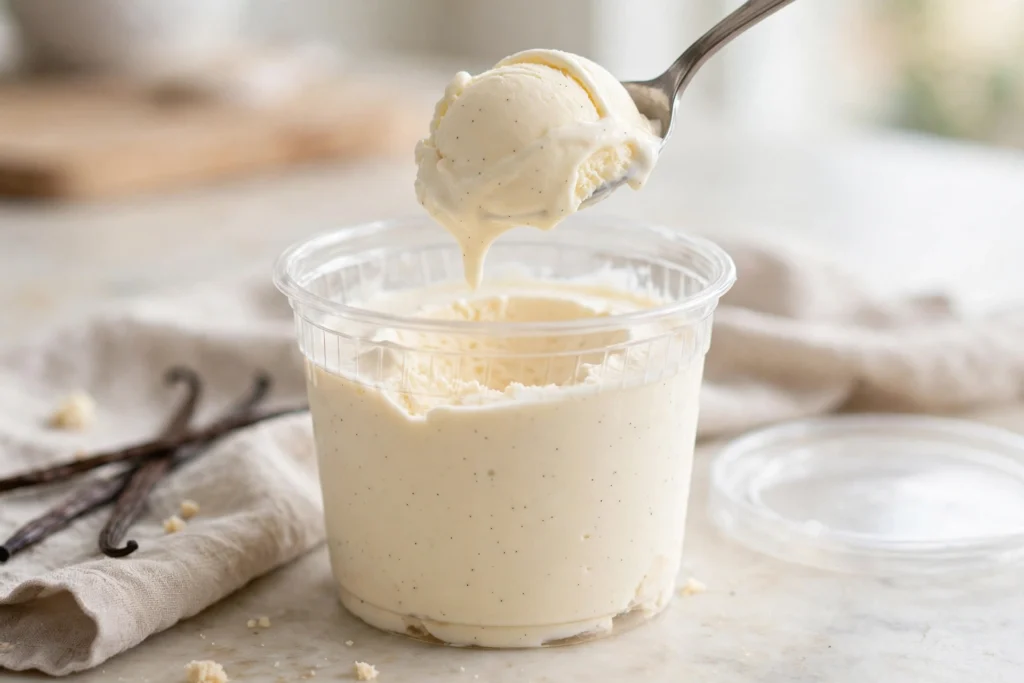
ToggleWhat Is Ninja Creami Protein Ice Cream?
Ingredients for Ninja Creami Protein Ice Cream
The base makes 1 standard pint (2 servings). Every ingredient has a job; nothing is here for decoration.
Whole milk, 1¼ cups (300ml). The liquid body of the base. Whole milk’s fat is doing texture work — it is a meaningful part of why this spins up creamy rather than icy. 2% milk works with a slightly firmer result; skim and most plant milks freeze harder and spin up icier, because there is less fat to interrupt the ice.
Plain non-fat Greek yogurt, ½ cup (120g). About 12g of protein plus body. Yogurt thickens the base before it ever freezes, and that thickness carries through the spin. It also adds a faint tang that keeps the sweetness honest. This recipe skips the instant pudding mix some Creami recipes rely on — the yogurt is already doing that thickening job, without the extra ingredient. If a tub is already open, the high protein Greek yogurt recipes roundup puts the rest of it to work.
Vanilla whey protein powder, 1 scoop (30g). About 24g of protein — half the pint’s total. Whey dissolves cleanly into milk; casein blends come out thicker and a little gummy; plant powders can taste gritty after freezing and often need the base blended longer. Whatever you use, the flavor of the powder is the flavor of the ice cream — there is nowhere for a bad-tasting powder to hide.
Granulated sugar, 2 tablespoons (25g). Sweetness, and also texture: sugar lowers the freezing point of the base, which keeps the frozen block shaveable instead of rock-hard. Granulated sweeteners that measure like sugar can replace it, but expect a firmer block and reach for the LITE ICE CREAM program (see the method). This is the honest trade, stated rather than hidden.
Vanilla extract, 1 teaspoon, and a pinch of salt. The vanilla makes “milk and powder” taste like ice cream; the salt keeps it from tasting flat.
How to Make Ninja Creami Protein Ice Cream
1. Blend the base completely smooth. Milk, yogurt, protein powder, sugar, vanilla, and salt into a blender (or whisk hard in a jug) until no powder streaks remain. Undissolved powder freezes into gritty pockets — this is the step that prevents them.
2. Pour into the Creami pint, to the MAX FILL line at most. The base expands slightly as it freezes and the blade needs clearance. Do not overfill.
3. Freeze 24 hours, lid on, on a level surface. A tilted pint freezes with a slanted top, and the blade is built for a flat one. The manufacturer’s guidance is a full 24 hours; a base that is merely “frozen overnight-ish” spins up soft in the middle and powdery at the edges.
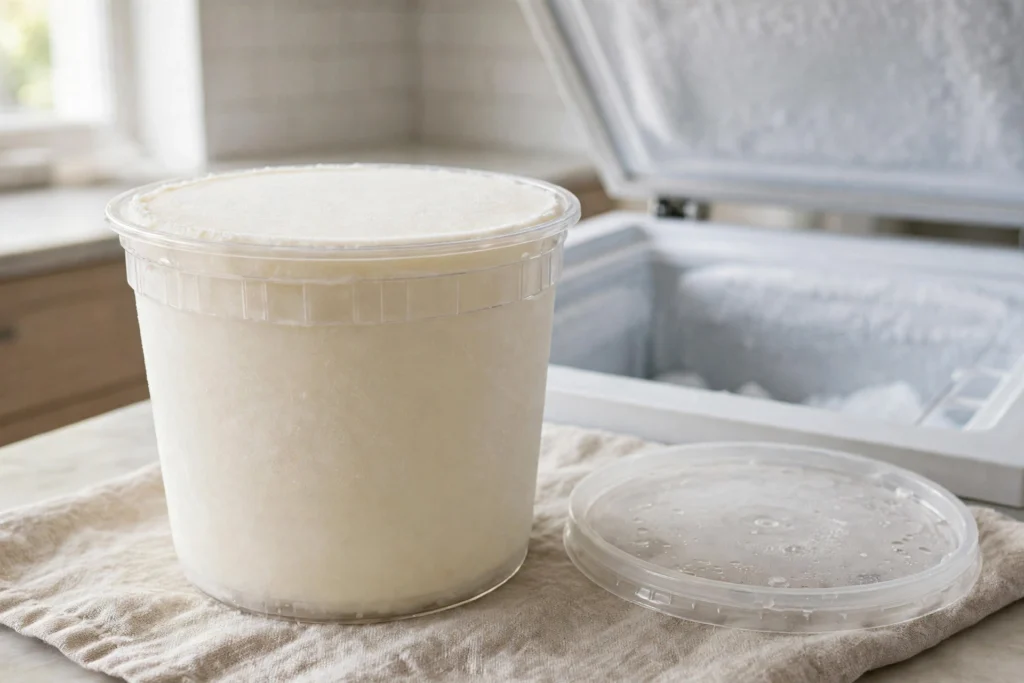
4. Set up the machine. Plug the unit in first — Ninja notes the machine will not run if the outer bowl is installed before the unit is plugged in. Then remove the pint lid, place the pint in the outer bowl, attach the paddle lid, and lock it into the machine, following your model’s assembly order exactly. Check that the frozen base has not frozen at an angle; if it has, do not process it (see the troubleshooting section for the fix).
5. Process. Run the ICE CREAM program for this base as written. This base is leaner than a classic cream-and-sugar ice cream, so treat ICE CREAM as the starting program: if your pint is still powdery after a re-spin, process the next pint on LITE ICE CREAM, the program built for lower-sugar, lower-fat bases. And if you have swapped this base to a sugar-free sweetener or low-fat milk, go straight to LITE ICE CREAM instead.
6. Check the texture. Scoopable and smooth means you are done. Powdery or crumbly after the first cycle is common with protein bases and is not a failed batch — it is step 7, unless this pint is getting mix-ins.
7. Re-spin if needed (pints without mix-ins). If the result looks dry or powdery, return the pint and run RE-SPIN. If it still looks dry, add 1 tablespoon of milk, make a small well in the center, and re-spin once more. Many protein bases need one re-spin. If this pint is getting mix-ins, skip the re-spin entirely and go to step 8 — Ninja’s manual says not to re-spin before the MIX-IN program, and the mix-in cycle does its own further processing.
8. Add mix-ins last (only where a flavor calls for them). Make a well about 1½ inches wide down to the bottom of the pint, add the mix-ins, and run the MIX-IN program. Never add hard mix-ins before the first spin.
5 Ninja Creami Protein Ice Cream Flavors
1. Vanilla Protein Ice Cream
The base recipe exactly as written. This is the pint to make first: it teaches you how your machine handles a protein base, and every other flavor is a variation on its behavior. If your first spin comes out powdery, re-spin once — that is the normal pattern for this base, not a problem. Per serving: about 23g protein, 240 calories, 24g carbs, 6g fat.2. Chocolate Protein Ice Cream
Swap the vanilla powder for chocolate protein powder and whisk 1 tablespoon of unsweetened cocoa powder (5g) into the base before blending. The cocoa deepens the chocolate without adding meaningful sugar, and the base’s sugar stays at 2 tablespoons — chocolate bases taste less sweet frozen, so dropping it is a mistake. Per serving: about 24g protein, 245 calories, 25g carbs, 6g fat, 1g fiber. If the spin comes out a shade icy, the fix is the standard one: 1 tablespoon of milk and a re-spin.3. Strawberry Protein Ice Cream
Blend ¾ cup of fresh strawberries (110g) directly into the base, cut the milk to 1 cup (240ml), and reduce the sugar to 1 tablespoon — ripe berries bring their own sweetness and a lot of water, which is why the milk drops. Before freezing, check the blended total against the MAX FILL line: this is the one flavor that can ride right up to it, and if it sits above the line, pour off a few spoonfuls rather than freezing an overfilled pint. Per serving: about 22g protein, 215 calories, 20g carbs, 5g fat, 1g fiber. The protein dips slightly because fruit has displaced some of the base; that is the honest trade for a strawberry pint that tastes like strawberries. Frozen berries work too — thaw them first so the base blends evenly.4. Peanut Butter Protein Ice Cream
Stir 2 tablespoons of peanut butter powder (12g) into the base before blending. Powder is the deliberate choice here: it brings peanut flavor and about 5g of extra protein per pint for roughly 1.5g of fat, where the same volume of real peanut butter would add around 16g of fat. Per serving: about 26g protein, 270 calories, 26g carbs, 7g fat — the highest-protein flavor in this set. Prefer real peanut butter (2 tablespoons, 32g)? The pint still works and tastes richer, at about 27g protein, 335 calories, and 14g fat per serving — just keep the blended total at or below the MAX FILL line, because this version lands right on it. Both numbers are printed because the choice is a real one.5. Cookies and Cream Protein Ice Cream
Make the vanilla base and process it as usual — with no re-spin first, even if it looks powdery, because the MIX-IN cycle comes next and does its own processing. Then break 2 chocolate sandwich cookies (about 22g, roughly ¼ cup) into coarse pieces — not fine crumbs, because soft mix-ins like cookies break down further during the mix-in cycle, so start with pieces larger than bite-size. Make the 1½-inch well down the center of the spun pint, add the pieces, and run the MIX-IN program. Adding the cookies before the first spin would pulverize them into gray flecks; the mix-in cycle folds them through in visible pieces. Per serving: about 24g protein, 295 calories, 32g carbs, 8g fat.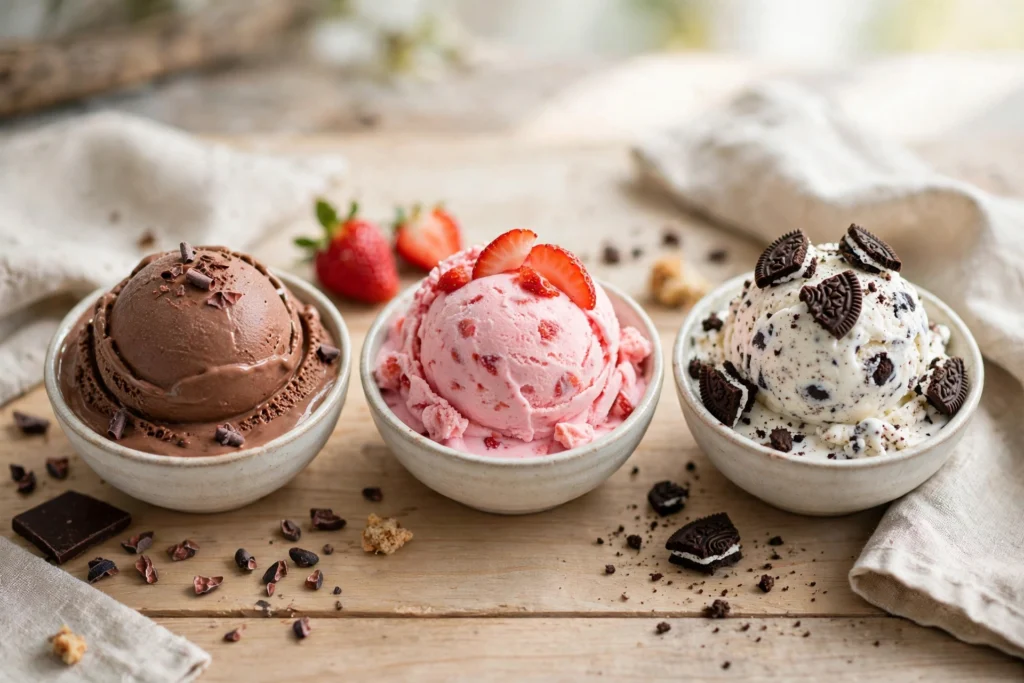
Tips for Creamy Ninja Creami Protein Ice Cream
Blend longer than you think. Protein powder that looks dissolved in a jug can still hold dry pockets. A full 30 to 45 seconds in a blender, until the base pours like a thin milkshake, is the cheapest texture insurance there is.
Respect the fat and sugar floor. Fat and sugar are not just flavor in a frozen base — both interrupt ice formation. Bases stripped of nearly all of both will spin up icy no matter how good the machine is. This base keeps whole milk and a measured 2 tablespoons of sugar for exactly that reason.
Freeze it flat and frozen through. Level surface, full 24 hours. A slanted or half-frozen base is the most common cause of a pint that is soft in the center and powdery at the edges.
Match the program to the base. ICE CREAM for this base as written; LITE ICE CREAM when you have swapped to sugar-free sweetener or low-fat milk — or when a pint of this base keeps coming out powdery on your machine even after its re-spin. Running a lean base on the standard program can under-process it.
Treat the re-spin as part of the recipe. Protein bases commonly need one. Budget for it in your timing and do not judge the pint after the first cycle — unless the pint is headed for mix-ins, in which case the MIX-IN cycle replaces the re-spin.
Why Is My Ninja Creami Protein Ice Cream Powdery or Icy?
Powdery or crumbly after the first spin: the signature texture of a low-fat, high-protein base — and the manufacturer’s own fix applies: run RE-SPIN. Still dry afterward? Add 1 to 2 tablespoons of milk into a small center well and re-spin again. Two re-spins is normal territory for protein pints.
Icy, with visible crystals: the base carried too much water and not enough fat, sugar, or body — skim milk and plant milks are the usual cause, or the sugar was cut without switching programs. Next batch, hold the whole milk and sugar at the recipe’s levels; this batch, a re-spin will improve it but not transform it.
Too hard to scoop even after processing: the pint sat out too long before processing is not the issue — an over-frozen base usually just needs its re-spin. If the texture is dense rather than powdery, it may have been processed on LITE ICE CREAM unnecessarily; use the standard program for this base.
Too soft, like soft-serve that will not firm: the base was not frozen the full 24 hours, or the freezer is running warm. Refreeze the pint flat until solid and process again.
Frozen at an angle: if the pint went into the freezer tilted and the surface set slanted, do not process it — the blade is built for a flat top. Ninja’s own fix: leave the pint in the fridge until the base melts enough to whisk smooth, then refreeze it, level this time, for the full 24 hours.
Gummy or stretchy: too much thickener for the base — most often a casein-heavy powder or an added pudding mix on top of the yogurt. Cut the powder to a level scoop and skip extra thickeners; the yogurt is already doing that job here.
Different every batch: small input changes compound after freezing — a new powder brand, riper fruit, a slightly heaped scoop. Change one variable at a time and the pattern shows itself quickly.
Can You Make Protein Ice Cream Without Protein Powder?
Yes — the protein just has to come from the dairy, and the numbers change honestly when it does. Double the Greek yogurt to a full cup (240g) and keep the milk at 1¼ cups, the sugar at 2 tablespoons, and the vanilla and salt as written. That pint lands at about 17g of protein and 220 calories per serving, against 23g with the powder. The texture stays close — the yogurt was already the base’s main thickener — but claiming the two versions are equivalent would not be true, and the 6g gap is exactly what one scoop was contributing. Cottage cheese, blended completely smooth, is the other workable route; it changes the flavor more than the yogurt does.
How to Store Ninja Creami Protein Ice Cream
Leftovers go back in the same pint. Smooth the surface flat with the back of a spoon — a level top is what the blade needs next time — seal it, and return it to the freezer. When you want more, do not try to scoop it straight from frozen; it will be a solid block again by design. Reprocess the pint on the same program you used originally (ICE CREAM for this base), not on RE-SPIN, and it comes back to texture. One caveat from the manual: if the leftovers contain mix-ins, reprocessing will break those pieces down further, so mix-in pints are at their best the day they are spun. For quality rather than safety, protein pints are at their best within about two weeks of the first spin — the texture slowly icier after that, even though the pint remains frozen throughout. Unprocessed spare bases keep in their pints in the freezer until you are ready to spin them; freeze them flat, as always.
Frequently Asked Questions
Can you put protein powder in a Ninja Creami?
Yes — it is one of the most common Creami bases. Blend it fully into the liquid before freezing; powder added dry or under-mixed freezes into gritty pockets that no amount of re-spinning fully fixes.
Why is my Ninja Creami protein ice cream crumbly?
Because protein bases are low in fat, and fat is part of what makes a spun pint hold together. Run RE-SPIN — that is the manufacturer’s built-in fix. If it is still dry, add 1 tablespoon of milk in a center well and re-spin once more.
Do you have to freeze the base before processing?
Yes, fully — 24 hours on a level surface, per the manufacturer’s instructions. The machine shaves a solid block; a slushy or half-frozen base cannot produce the texture and can process unevenly.
Can you make Ninja Creami protein ice cream without dairy?
You can, with expectations adjusted: plant milks carry less fat and protein, so the pint freezes harder and spins up icier, and the protein per serving drops well below the 23g here unless a plant protein powder makes up the difference. Full-fat coconut milk gives the best texture of the dairy-free options.
Can you use plant-based protein powder?
Yes. Pea and soy blends work in the base; blend them longer than whey, because they dissolve less willingly, and expect a slightly firmer, less creamy spin. The protein per serving stays comparable if the label matches whey’s roughly 24g per scoop.
How much protein is in one serving?
About 23g for the vanilla base, where a serving is half the pint. The five flavors run from about 22g (strawberry) to about 26g (peanut butter) — each flavor’s own figure is printed with it, calculated from its actual ingredients.
Can you add fruit or chocolate chips?
Fruit blended into the base before freezing works well — the strawberry pint above is built that way. Chocolate chips and other hard pieces go in as mix-ins after the first spin, through the center well, on the MIX-IN program; hard pieces should never be in the pint for the first process.
Which Ninja Creami program should you use?
ICE CREAM for this base as written — and if your machine keeps leaving it powdery even after a re-spin, LITE ICE CREAM for the next pint, since this base is leaner than a classic ice cream base. LITE ICE CREAM is also the pick if you swap to a sugar-free sweetener or low-fat milk — that program is designed for low-sugar, low-fat bases. Program names and pint sizes vary between Creami models, so check your own manual’s wording before the first run.
References
U.S. Department of Agriculture, Agricultural Research Service. FoodData Central. Nutrient profiles used for the calculations in this recipe: whole milk, Greek yogurt, granulated sugar, strawberries, and standard whey protein powder and peanut butter powder labels. https://fdc.nal.usda.gov/
SharkNinja Operating LLC. Ninja Creami Ice Cream Maker instruction booklet and recipe guides — freezing time, program selection (ICE CREAM / LITE ICE CREAM), RE-SPIN and MIX-IN operation, and leftover reprocessing guidance. https://www.ninjakitchen.com/
Recipe: Ninja Creami Protein Ice Cream (Vanilla Base)
Description: A milk, Greek yogurt, and protein powder base that freezes solid and spins into scoopable ice cream at about 23g of protein per serving — the foundation for all five flavors above.
Prep time: 10 minutes
Freezing time: 24 hours
Processing time: 1 program cycle (about 1½ to 2½ minutes on NC300-series models), plus a RE-SPIN if needed; cycle times vary by model
Total time: 24 hours 15 minutes
Yield: 1 pint (16 oz)
Serving size: ½ pint
Ingredients:
– 1¼ cups whole milk (300ml)
– ½ cup plain non-fat Greek yogurt (120g)
– 1 scoop vanilla whey protein powder (30g; about 24g protein per scoop)
– 2 tablespoons granulated sugar (25g)
– 1 teaspoon vanilla extract
– Pinch of fine salt
Instructions:
1. Blend all ingredients 30 to 45 seconds, until completely smooth with no powder streaks.
2. Pour into a Ninja Creami pint, at or below the MAX FILL line. Seal.
3. Freeze 24 hours on a level surface.
4. Plug the unit in first, then assemble the pint in the machine per your model’s instructions and run the ICE CREAM program (LITE ICE CREAM for sugar-free or low-fat swaps, or if this base stays powdery on your machine).
5. If the result is powdery and the pint is being served without mix-ins, run RE-SPIN; if still dry, add 1 tablespoon of milk in a center well and re-spin once more.
6. For mix-in flavors, skip the re-spin: add mix-ins through a 1½-inch center well and run the MIX-IN program.
Nutrition per serving (calculated from the ingredients above; varies by brand): about 23g protein, 240 calories, 24g carbs, 6g fat, 0g fiber.
The pint in the freezer is doing the slow part for you — blend tonight, spin tomorrow, and dessert carries 23g of protein without tasting like it is trying to. Start with vanilla, learn your machine’s one re-spin habit, then work through the flavors. For the non-frozen side of the dessert drawer, the high protein dessert recipes roundup covers the rest — including a banana-based protein ice cream made without a machine, a different method entirely from this one.