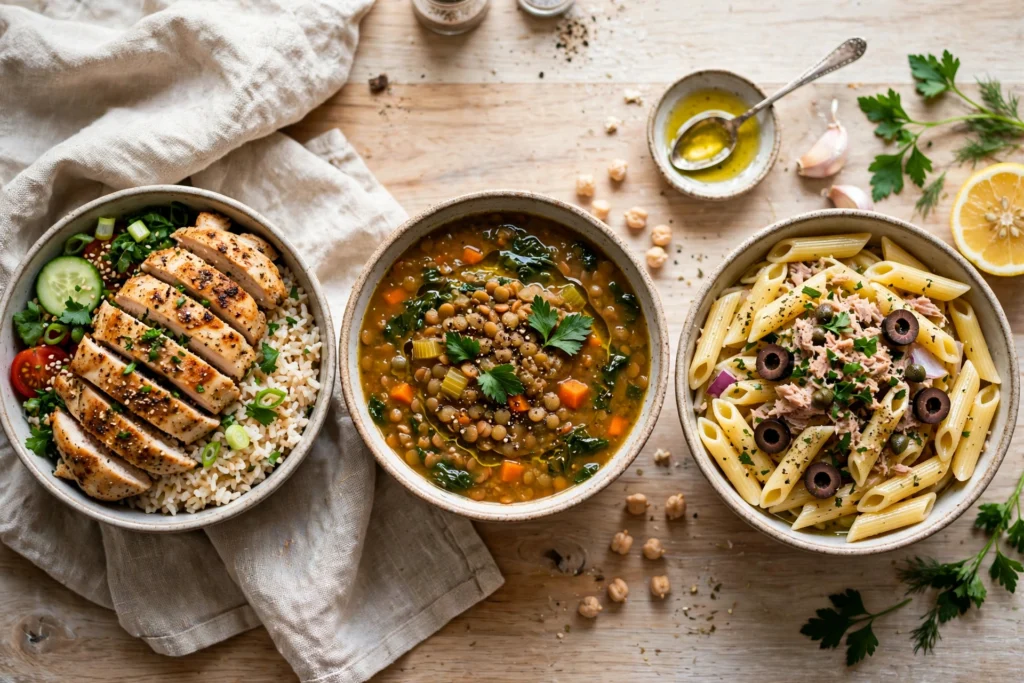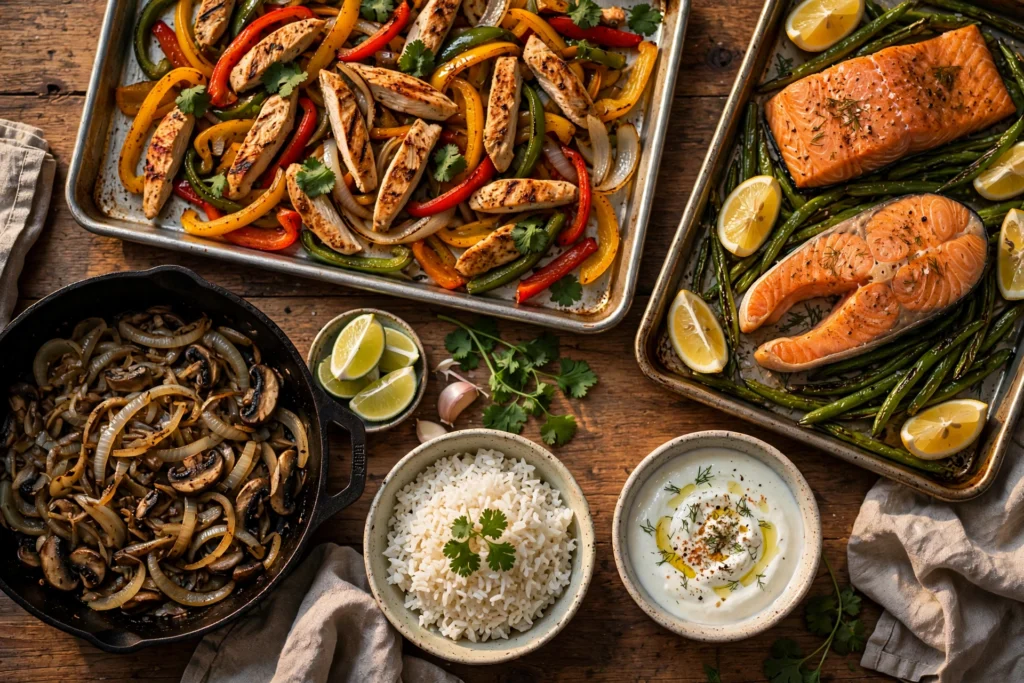

Yes — a pressure cooker can absolutely carry a high-protein dinner, and it does the hands-off part better than almost any other appliance. These 8 high protein Instant Pot recipes cover shredded chicken, chicken and rice, two chilis, a beef and bean stew, a lentil soup, taco bowls, and a turkey meatball penne, and every one of them comes with its protein worked out per serving: about 17g to 45g, with most landing above 30g. Each recipe lists exact quantities, the pressure time and release method for its main ingredient, and full nutrition. Chicken shows up four times because it pressure-cooks so well, but turkey, beef, beans, and lentils all get their turn.
If you prefer set-and-forget cooking over speed, the same style of meals lives in our high protein slow cooker recipes. This page is the fast lane of that cluster.
Table of Contents
ToggleWhat Makes an Instant Pot Meal High in Protein?
Protein per serving is just arithmetic: the protein in the pot, divided by how many servings come out of it. A meal earns the label when a normal portion delivers a solid amount — most of the dinners here land between 30g and 45g, which means the protein source is the main event, not a garnish.
Four ingredient groups do the heavy lifting:
- Chicken and turkey. Boneless chicken breast is the leanest reliable option at roughly 22–23g of protein per 100g raw. Ground turkey (93% lean) is close behind and browns well on the Sauté setting before the lid goes on.
- Beef. Stew cuts like chuck are exactly what pressure cooking was built for. An hour of braising compresses into about 20 minutes at pressure, and the meat comes out fork-tender instead of chewy.
- Beans and lentils. A cup of drained canned beans adds about 13g of protein to a pot, and dry lentils carry about 25g per 100g before cooking. They also bring the fiber that meat-only dinners tend to miss.
- Dairy added at the end. Neufchâtel, Greek yogurt, and cheese stirred in after the pressure releases add a few grams each and fix texture. Dairy goes in late for a practical reason: it can split or trigger a burn warning under pressure.
Notice what is missing from that list: protein powder. Savory pressure-cooker meals do not need it. The protein here comes from food, in portions a person would actually eat.
8 High Protein Instant Pot Recipes
Every recipe below is written for a 6-quart electric pressure cooker. Times are given as pressure time plus release, and the total time includes roughly 10–15 minutes for the pot to come up to pressure — that build time is real, and recipes that hide it are lying to you about dinner.
1. Instant Pot Shredded Chicken
The meal-prep workhorse. One batch of seasoned chicken breast becomes burrito bowls on Monday, salads on Tuesday, and sandwiches whenever the week runs out of ideas.
Why it is high in protein: chicken breast is almost pure protein, and a serving is a full breast’s worth of meat, not a few strips on top of something else.
Key ingredients: boneless skinless chicken breast, low-sodium chicken broth, smoked paprika, garlic and onion powder.
- 1½ lb (680g) boneless, skinless chicken breasts
- 1½ cups (360g) low-sodium chicken broth
- 1 teaspoon garlic powder
- 1 teaspoon onion powder
- 1 teaspoon smoked paprika
- ½ teaspoon fine salt
Servings: 4 (about 1 cup shredded chicken each)
Pressure time: 12 minutes at high pressure + 10 minutes natural release, then quick release — Instant Pot’s published chart puts boneless breasts at 6–8 minutes for plain cooking; 12 minutes is the standard adjustment that gets them to shred cleanly instead of slicing.
Total time: about 40 minutes, including pressure build and release.
Method: Pour the broth into the insert and stir in the spices and salt. Add the breasts in a single layer. Lock the lid, set the valve to Sealing, and cook at high pressure for 12 minutes. Let the pressure release naturally for 10 minutes, then vent the rest. Check the thickest breast with a thermometer — it must read 165°F. Move the chicken to a board, shred with two forks, and stir a few spoonfuls of the cooking liquid back through the meat so it stays moist. The rest of the broth drains away, which is why it is not counted in the nutrition below.
Nutrition per serving: about 210 kcal · 39g protein · 1g carbs · 5g fat · 1g saturated fat · 0g fiber · 0g sugar · about 370mg sodium
Nutrition math (whole pot): chicken breast 680g = 816 kcal, 153.0g protein, 17.7g fat, 4.8g saturated fat, 306mg sodium; mixed spices 8g = 25 kcal, 1.0g protein, 4.8g carbs, 0.4g fat, 1.2g fiber, 1.2g sugar; salt ½ tsp = 1,163mg sodium. Broth not counted — it is drained, and the few spoonfuls stirred back into the shredded meat are negligible. Pot totals: 841 kcal, 154.0g protein, 4.8g carbs, 18.1g fat, 4.8g saturated fat, 1.2g fiber, 1.2g sugar, 1,474mg sodium. ÷ 4 servings = 210 kcal, 38.5g protein, 1.2g carbs, 4.5g fat, 369mg sodium.

2. Instant Pot Chicken and Rice
A complete one-pot dinner: chicken, rice, and vegetables cooked together, with no side dishes to juggle. The trick is order — the chicken gets a head start on Sauté so a short rice-timed pressure cook finishes everything at once.
Why it is high in protein: a full serving carries about 4 ounces of chicken breast (raw weight) alongside the rice, which works out to roughly 31g of protein in the bowl.
Key ingredients: chicken breast cut into cubes, long-grain white rice, frozen mixed vegetables, chicken broth.
- 1½ lb (680g) boneless, skinless chicken breasts, cut into 1-inch cubes
- 1 tablespoon olive oil
- 1 medium onion (150g), diced
- 1½ cups (285g) long-grain white rice, rinsed
- 1½ cups (360g) low-sodium chicken broth
- 10½ oz (300g) frozen mixed vegetables
- 1 teaspoon garlic powder
- 1 teaspoon smoked paprika
- ½ teaspoon fine salt
Servings: 6 (about 1½ cups each)
Pressure time: 4 minutes at high pressure + 10 minutes natural release — the 4 minutes is straight from Instant Pot’s published table for long-grain white rice; the natural release is part of the cooking, so do not vent early or the rice stays chalky.
Total time: about 35 minutes, including the sauté and pressure build.
Method: Heat the oil on Sauté. Add the chicken cubes and onion and cook 3–4 minutes, stirring, until the chicken is opaque on the outside — it finishes under pressure, so do not brown it to death here. Pour in a splash of the broth and scrape the bottom of the pot clean; stuck bits under rice are a classic trigger for the burn warning. Scatter the rinsed rice over the top, pour in the rest of the broth, and spread the frozen vegetables over everything. Do not stir; layering keeps the rice in the liquid where it belongs. Lock the lid and cook at high pressure for 4 minutes, then let the pressure release naturally for 10 minutes before venting. Fluff with a fork. Spot-check a large chicken cube for 165°F before serving.
Nutrition per serving: about 380 kcal · 31g protein · 48g carbs · 6g fat · 1g saturated fat · 3g fiber · 3g sugar · about 355mg sodium
Nutrition math (whole pot): chicken 680g = 816 kcal, 153.0g protein, 17.7g fat, 306mg sodium; white rice 285g = 1,040 kcal, 20.2g protein, 228.0g carbs, 2.0g fat, 3.7g fiber; broth 360g = 18 kcal, 2.9g protein, 540mg sodium; mixed vegetables 300g = 195 kcal, 8.7g protein, 39.0g carbs, 12.0g fiber, 9.9g sugar, 105mg sodium; onion 150g = 60 kcal, 1.7g protein, 14.0g carbs, 2.6g fiber, 6.3g sugar; olive oil 13.5g = 119 kcal, 13.5g fat; spices 7g = 22 kcal, 0.9g protein, 4.2g carbs; salt = 1,163mg sodium. Pot totals: 2,270 kcal, 187.4g protein, 286.3g carbs, 35.6g fat, 7.3g saturated fat, 19.3g fiber, 17.5g sugar, 2,138mg sodium. ÷ 6 servings = 378 kcal, 31.2g protein, 47.7g carbs, 5.9g fat, 356mg sodium.
3. Instant Pot Turkey Chili
A weeknight chili that tastes like it simmered all afternoon. Ground turkey browns in the pot, two kinds of beans go in, and pressure does the melding in 12 minutes.
Why it is high in protein: turkey and beans stack. Neither one carries the bowl alone — together they put about 31g of protein in a serving, with 8g of fiber riding along.
Key ingredients: lean ground turkey, kidney beans, black beans, crushed tomato base, chili powder and cumin.
- 1½ lb (680g) ground turkey, 93% lean
- 1 tablespoon olive oil
- 1 medium onion (150g), diced
- 1 green bell pepper (120g), diced
- 1 can (15 oz) kidney beans, drained and rinsed (about 260g drained)
- 1 can (15 oz) black beans, drained and rinsed (about 260g drained)
- 1 can (14 oz / 400g) diced tomatoes, with their juices
- 1 cup (245g) canned tomato sauce
- 1 cup (240g) low-sodium chicken broth
- 2 tablespoons chili powder
- 2 teaspoons ground cumin
- 1 teaspoon smoked paprika
- 1 teaspoon garlic powder
- ½ teaspoon fine salt
Servings: 6 (about 1½ cups each)
Pressure time: 12 minutes at high pressure + 10 minutes natural release — canned beans are already cooked, so this time is about tenderness and flavor melding, not bean safety; the natural release keeps the tomato base from sputtering through the valve.
Total time: about 45 minutes, including browning and pressure build.
Method: Heat the oil on Sauté and brown the turkey, breaking it into crumbles, until no pink remains. Stir in the onion and pepper for 2 minutes. Add everything else, stir once, and lock the lid. Cook at high pressure for 12 minutes, release naturally for 10, then vent. The chili thickens as it stands for a few minutes; if it is thinner than you like, run Sauté for 2–3 minutes uncovered. Serve it plain or over rice — toppings and rice are extra and are not in the nutrition below.
Nutrition per serving: about 355 kcal · 31g protein · 26g carbs · 15g fat · 3g saturated fat · 8g fiber · 5g sugar · about 815mg sodium
Nutrition math (whole pot): ground turkey 680g = 1,156 kcal, 135.3g protein, 68.0g fat, 17.7g saturated fat, 490mg sodium; kidney beans 260g = 273 kcal, 17.7g protein, 48.4g carbs, 13.8g fiber, 624mg sodium; black beans 260g = 286 kcal, 18.2g protein, 50.7g carbs, 14.3g fiber, 624mg sodium; diced tomatoes 400g = 80 kcal, 3.6g protein, 16.0g carbs, 10.4g sugar, 760mg sodium; tomato sauce 245g = 59 kcal, 2.9g protein, 13.0g carbs, 784mg sodium; broth 240g = 12 kcal, 1.9g protein, 360mg sodium; onion 150g = 60 kcal; bell pepper 120g = 24 kcal; olive oil = 119 kcal, 13.5g fat; spices 25g = 70 kcal, 3.2g protein, 11.0g carbs, 6.0g fiber; salt = 1,163mg sodium. Pot totals: 2,139 kcal, 185.6g protein, 157.3g carbs, 89.2g fat, 19.9g saturated fat, 46.8g fiber, 32.6g sugar, 4,875mg sodium. ÷ 6 servings = 357 kcal, 30.9g protein, 26.2g carbs, 14.9g fat, 813mg sodium. Sodium note: most of it comes from the canned tomatoes, sauce, and beans — no-salt-added tomatoes and sauce cut it sharply.
4. Instant Pot Beef and Bean Stew
The recipe that justifies owning a pressure cooker. Chuck, which needs hours in an oven, turns tender in 20 minutes — and the beans go in at the end so they stay whole instead of blowing apart.
Why it is high in protein: beef and kidney beans together reach about 30g per serving, in the kind of bowl that genuinely ends hunger.
Key ingredients: beef chuck stew meat, kidney beans, carrots, celery, tomato paste for depth.
- 1½ lb (680g) beef chuck stew meat, cut into 1½-inch cubes
- 1 tablespoon olive oil
- 1 medium onion (150g), diced
- 3 medium carrots (300g), cut into thick chunks
- 2 celery stalks (100g), sliced
- 1 can (14 oz / 400g) diced tomatoes, with their juices
- 1½ cups (360g) low-sodium beef or chicken broth
- 2 tablespoons (32g) tomato paste
- 1 teaspoon smoked paprika
- 1 teaspoon garlic powder
- 1 teaspoon dried thyme
- 1 bay leaf
- ½ teaspoon fine salt
- 1 can (15 oz) kidney beans, drained and rinsed (about 260g drained)
Servings: 6 (about 1½ cups each)
Pressure time: 20 minutes at high pressure + 15 minutes natural release — Instant Pot’s published table puts beef stew chunks at 15–20 minutes; 20 is the right end of the range for 1½-inch chuck pieces, and the long natural release is what keeps the meat tender instead of seized.
Total time: about 1 hour 10 minutes, including searing and pressure build.
Method: Pat the beef dry and sear it in the oil on Sauté in two batches until browned on at least two sides; set aside. Soften the onion, carrots, and celery in the drippings for 3 minutes, then stir in the tomato paste for 30 seconds. Pour in the broth and scrape the bottom thoroughly — stuck bits are the main cause of a burn warning. Return the beef, add the tomatoes, spices, and bay leaf. Lock the lid and cook at high pressure for 20 minutes; release naturally for 15, then vent. Fish out the bay leaf, stir in the kidney beans, and run Sauté for 3–4 minutes until the beans are hot through. The beef should pull apart with a fork; if a piece resists, give the pot 5 more minutes at pressure.
Nutrition per serving: about 340 kcal · 30g protein · 20g carbs · 15g fat · 5g saturated fat · 6g fiber · 6g sugar · about 650mg sodium
Nutrition math (whole pot): beef chuck 680g = 1,292 kcal, 145.5g protein, 74.8g fat, 29.9g saturated fat, 490mg sodium; kidney beans 260g = 273 kcal, 17.7g protein, 48.4g carbs, 13.8g fiber, 624mg sodium; carrots 300g = 123 kcal, 2.7g protein, 28.8g carbs, 8.4g fiber, 14.1g sugar, 207mg sodium; tomatoes 400g = 80 kcal, 3.6g protein, 16.0g carbs, 760mg sodium; broth 360g = 18 kcal, 2.9g protein, 540mg sodium; onion 150g = 60 kcal; celery 100g = 14 kcal; tomato paste 32g = 26 kcal, 1.4g protein, 6.0g carbs; olive oil = 119 kcal, 13.5g fat; spices 8g = 24 kcal; salt = 1,163mg sodium. Pot totals: 2,029 kcal, 177.3g protein, 121.3g carbs, 91.9g fat, 31.8g saturated fat, 33.6g fiber, 38.4g sugar, 3,899mg sodium. ÷ 6 servings = 338 kcal, 29.6g protein, 20.2g carbs, 15.3g fat, 650mg sodium.
5. Instant Pot Lentil Soup
The plant-based entry, and the cheapest protein on this page by a wide margin. Dry lentils need no soaking, cook straight from the bag, and come out of the pot tasting like they simmered for hours.
Why it is high in protein: lentils are one of the strongest plant protein sources at about 25g per 100g dry. This soup lands at about 17g per serving — lower than the meat recipes, because plants are simply less protein-dense, and the honest number is the one printed here.
Key ingredients: dry brown or green lentils, carrots, celery, tomatoes, cumin and smoked paprika.
- 1¾ cups (340g) dry brown or green lentils, rinsed and picked over
- 1 tablespoon olive oil
- 1 medium onion (150g), diced
- 2 medium carrots (200g), diced
- 2 celery stalks (100g), diced
- 1 can (14 oz / 400g) diced tomatoes, with their juices
- 5¼ cups (1,250g) low-sodium vegetable or chicken broth
- 2 teaspoons ground cumin
- 1 teaspoon smoked paprika
- 1 teaspoon garlic powder
- 1 teaspoon dried thyme
- ½ teaspoon fine salt
- Lemon wedges, for serving (optional, not in the nutrition)
Servings: 6 (about 1¾ cups each)
Pressure time: 12 minutes at high pressure + 10 minutes natural release — Instant Pot’s table gives dry lentils 8–10 minutes for a firm texture; 12 minutes is the soup adjustment, so the lentils soften and start to thicken the broth.
Total time: about 45 minutes, including pressure build.
Method: Soften the onion, carrots, and celery in the oil on Sauté for 4 minutes. Stir in the spices for 30 seconds, then add the lentils, tomatoes, and broth and stir well. Lock the lid and cook at high pressure for 12 minutes; release naturally for 10 minutes, then vent. The soup thickens noticeably as it sits. If you want it thicker, mash a ladleful of lentils against the side of the pot and stir them back in. A squeeze of lemon at the table wakes the whole bowl up.
Nutrition per serving: about 275 kcal · 17g protein · 46g carbs · 3g fat · 0g saturated fat · 9g fiber · 6g sugar · about 675mg sodium
Nutrition math (whole pot): dry lentils 340g = 1,197 kcal, 83.7g protein, 215.4g carbs, 3.6g fat, 36.4g fiber, 6.9g sugar, 20mg sodium; broth 1,250g = 63 kcal, 10.0g protein, 3.8g carbs, 1,875mg sodium; carrots 200g = 82 kcal, 1.8g protein, 19.2g carbs, 5.6g fiber, 9.4g sugar, 138mg sodium; tomatoes 400g = 80 kcal, 3.6g protein, 16.0g carbs, 760mg sodium; onion 150g = 60 kcal; celery 100g = 14 kcal; olive oil = 119 kcal, 13.5g fat; spices 8g = 24 kcal; salt = 1,163mg sodium. Pot totals: 1,639 kcal, 102.6g protein, 275.4g carbs, 20.0g fat, 2.5g saturated fat, 52.1g fiber, 35.1g sugar, 4,052mg sodium. ÷ 6 servings = 273 kcal, 17.1g protein, 45.9g carbs, 3.3g fat, 675mg sodium.
6. Instant Pot Chicken Taco Bowls
The highest-protein recipe on this page. Chicken cooks in salsa and taco spices, gets shredded, and lands on beans and corn — scoop it over rice, into tortillas, or straight into meal-prep containers.
Why it is high in protein: about 45g per serving. The chicken does most of it, the black beans stack a second protein source underneath, and nothing in the bowl is filler.
Key ingredients: chicken breast, jarred salsa as the cooking liquid, black beans, frozen corn, taco spices.
- 1½ lb (680g) boneless, skinless chicken breasts
- 1 cup (245g) jarred salsa
- ½ cup (120g) low-sodium chicken broth
- 1 can (15 oz) black beans, drained and rinsed (about 260g drained)
- 1 cup (150g) frozen corn kernels
- 1 tablespoon chili powder
- 2 teaspoons ground cumin
- 1 teaspoon smoked paprika
- 1 teaspoon garlic powder
- ½ teaspoon fine salt
Servings: 4 (about 1¼ cups of the chicken mixture each)
Pressure time: 12 minutes at high pressure + 10 minutes natural release — same chicken parameter as Recipe 1; the salsa and broth together give the pot the liquid it needs to reach pressure.
Total time: about 40 minutes, including pressure build.
Method: Stir the salsa, broth, and spices together in the insert. Nestle the chicken breasts into the sauce and spoon some over the top. Lock the lid and cook at high pressure for 12 minutes; release naturally for 10, then vent. Confirm the thickest breast reads 165°F, then shred the chicken directly in the pot. Stir in the black beans and corn and let everything sit on Keep Warm for 5 minutes so the beans heat through and the corn thaws into the sauce. The nutrition below covers the chicken mixture only — rice, tortillas, cheese, and avocado are serving choices, not part of this recipe’s numbers.
Nutrition per serving: about 335 kcal · 45g protein · 25g carbs · 6g fat · 1g saturated fat · 6g fiber · 4g sugar · about 940mg sodium
Nutrition math (whole pot): chicken 680g = 816 kcal, 153.0g protein, 17.7g fat, 306mg sodium; black beans 260g = 286 kcal, 18.2g protein, 50.7g carbs, 14.3g fiber, 624mg sodium; salsa 245g = 74 kcal, 3.7g protein, 15.9g carbs, 9.3g sugar, 1,470mg sodium; corn 150g = 129 kcal, 4.5g protein, 28.5g carbs, 3.3g fiber, 5.3g sugar; broth 120g = 6 kcal, 1.0g protein, 180mg sodium; spices 12g = 34 kcal, 1.5g protein, 6.0g carbs; salt = 1,163mg sodium. Pot totals: 1,345 kcal, 181.9g protein, 101.5g carbs, 22.4g fat, 5.1g saturated fat, 24.5g fiber, 16.7g sugar, 3,769mg sodium. ÷ 4 servings = 336 kcal, 45.5g protein, 25.4g carbs, 5.6g fat, 942mg sodium. Sodium note: the salsa is the main source — a low-sodium salsa brings this down a lot.
7. Instant Pot White Chicken Chili
The creamy one. White beans and chicken cook in broth with green chiles, and the Neufchâtel goes in after the pressure drops — that sequencing is the whole secret to a smooth chili instead of a curdled one.
Why it is high in protein: three protein sources in one bowl — chicken, two cans of white beans, and the Neufchâtel — add up to about 36g per serving.
Key ingredients: chicken breast, Great Northern beans, diced green chiles, corn, Neufchâtel cheese.
- 1½ lb (680g) boneless, skinless chicken breasts
- 2 cans (15 oz each) Great Northern beans, drained and rinsed (about 520g drained)
- 3 cups (720g) low-sodium chicken broth
- 1 medium onion (150g), diced
- 1 can (4 oz / 113g) diced green chiles
- 1 cup (150g) frozen corn kernels
- 2 teaspoons ground cumin
- 1 teaspoon dried oregano
- 1 teaspoon garlic powder
- ½ teaspoon chili powder
- ½ teaspoon fine salt
- 4 oz (113g) Neufchâtel cheese, cut into cubes
Servings: 6 (about 1½ cups each)
Pressure time: 12 minutes at high pressure + 10 minutes natural release.
Total time: about 45 minutes, including pressure build and the finishing step.
Method: Add the chicken, beans, broth, onion, green chiles, corn, spices, and salt to the insert. Lock the lid and cook at high pressure for 12 minutes; release naturally for 10, then vent. Check the chicken for 165°F, move it to a board, and shred it. Set the pot to Sauté on Low, stir in the cubed Neufchâtel until it melts smooth, then return the chicken. For a thicker chili, mash some of the beans against the side of the pot before the cheese goes in. Toppings like shredded cheese, avocado, or sour cream are extras and are not in the nutrition below.
Nutrition per serving: about 325 kcal · 36g protein · 27g carbs · 8g fat · 3g saturated fat · 6g fiber · 3g sugar · about 775mg sodium
Nutrition math (whole pot): chicken 680g = 816 kcal, 153.0g protein, 17.7g fat, 306mg sodium; Great Northern beans 520g = 572 kcal, 37.4g protein, 103.0g carbs, 2.6g fat, 29.1g fiber, 1,248mg sodium; broth 720g = 36 kcal, 5.8g protein, 1,080mg sodium; Neufchâtel 113g = 286 kcal, 9.7g protein, 3.6g carbs, 25.7g fat, 14.7g saturated fat, 373mg sodium; corn 150g = 129 kcal, 4.5g protein, 28.5g carbs; onion 150g = 60 kcal; green chiles 113g = 23 kcal, 452mg sodium; spices 10g = 28 kcal; salt = 1,163mg sodium. Pot totals: 1,950 kcal, 214.3g protein, 160.3g carbs, 49.8g fat, 20.0g saturated fat, 38.1g fiber, 20.8g sugar, 4,649mg sodium. ÷ 6 servings = 325 kcal, 35.7g protein, 26.7g carbs, 8.3g fat, 775mg sodium. Sodium note: the canned beans and broth do most of this — rinsing the beans well and choosing a lower-sodium broth bring it down.
8. Instant Pot Turkey Meatball Penne
Pasta night, handled entirely by the pressure cooker — meatballs, penne, and sauce in one pot, with no separate boiling and no colander. Two rules make it work: keep the pasta mostly covered with liquid, and do not stir before the lid goes on.
Why it is high in protein: turkey meatballs plus protein that hides in plain sight — the penne itself contributes about 7g per serving, which surprises people.
Key ingredients: ground turkey meatballs with breadcrumbs and Parmesan, dry penne, jarred marinara, water.
- 1½ lb (680g) ground turkey, 93% lean
- ⅓ cup (36g) plain dry breadcrumbs
- 1 large egg (50g)
- 2 tablespoons (20g) grated Parmesan
- 1 teaspoon garlic powder
- 1 teaspoon Italian seasoning
- 1 tablespoon olive oil
- 12 oz (340g) dry penne
- 1 jar (24 oz / 680g) marinara sauce
- 3 cups (720g) water
- ½ teaspoon fine salt
Servings: 6 (about 1⅔ cups pasta with 4 meatballs each)
Pressure time: 6 minutes at high pressure + quick release — the established rule for pressure-cooker pasta is roughly half the package’s stovetop time; standard penne runs 11–12 minutes on the stove, so 6 minutes at pressure is the figure, with a controlled quick release so it stops cooking on time.
Total time: about 45 minutes, including rolling and searing the meatballs and pressure build.
Method: Mix the turkey, breadcrumbs, egg, Parmesan, garlic powder, Italian seasoning, and salt with your hands until just combined — overmixing makes dense meatballs. Roll into 24 small meatballs, about 1 inch each; size matters here, because small meatballs cook through in pasta time. Brown them in the oil on Sauté in two batches until crusted on the outside, then set aside. Pour the water into the pot and scrape the bottom clean. Add the penne and push it down so it is mostly submerged, pour the marinara over the top without stirring, and arrange the meatballs on top. Lock the lid and cook at high pressure for 6 minutes, then quick release carefully — pasta pots can sputter, so use a long spoon on the valve. Stir well, check one meatball for 165°F, and rest 3–4 minutes; the sauce thickens as it stands. If a meatball is under temperature, close the lid and let the residual heat work for 2 more minutes, or run Sauté briefly.
Nutrition per serving: about 545 kcal · 35g protein · 56g carbs · 19g fat · 5g saturated fat · 4g fiber · 8g sugar · about 870mg sodium
Nutrition math (whole pot): ground turkey 680g = 1,156 kcal, 135.3g protein, 68.0g fat, 17.7g saturated fat, 490mg sodium; penne 340g = 1,261 kcal, 44.2g protein, 252.3g carbs, 5.1g fat, 10.9g fiber, 9.2g sugar; marinara 680g = 408 kcal, 10.9g protein, 54.4g carbs, 15.0g fat, 10.9g fiber, 34.0g sugar, 2,856mg sodium; breadcrumbs 36g = 142 kcal, 4.8g protein, 25.9g carbs, 264mg sodium; egg 50g = 72 kcal, 6.3g protein, 4.8g fat, 71mg sodium; Parmesan 20g = 84 kcal, 5.8g protein, 5.6g fat, 339mg sodium; olive oil = 119 kcal, 13.5g fat; spices and salt = 15 kcal, 1,163mg sodium. Pot totals: 3,257 kcal, 207.9g protein, 336.1g carbs, 113.9g fat, 28.1g saturated fat, 24.6g fiber, 45.2g sugar, 5,208mg sodium. ÷ 6 servings = 543 kcal, 34.7g protein, 56.0g carbs, 19.0g fat, 868mg sodium. Sodium note: the marinara does most of it — a low-sodium jar is the single easiest swap.
Best Protein Sources for Instant Pot Meals
Not every protein behaves the same way under pressure. What separates the good candidates from the frustrating ones is how they handle moisture and time.
Chicken breast is the leanest option and the least forgiving. It shines in short cooks and anything shredded, but an extra 5 minutes nobody planned for turns it stringy. Breasts of similar thickness, cooked together, come out even; a bag of random sizes does not.
Chicken thighs trade a little leanness for a lot of margin. They stay juicy through longer cooks and natural releases, which makes them the better pick for stews and anything reheated all week. Any recipe on this page built on breast works with boneless thighs at the same pressure time.
Lean ground turkey needs the Sauté step. Browned first, it tastes like chili or meatballs; skipped, it tastes boiled. Breaking it into small crumbles before the lid goes on also stops it clumping into one solid slab under pressure.
Beef stew cuts — chuck above all — are the pressure cooker’s home turf. Connective tissue that takes three hours in an oven gives way in about 20 minutes at pressure. Lean steak cuts are the opposite story: they have nothing to melt, so they just dry out.
Lentils are the set-and-forget protein. No soak, no pre-cook, tolerant of timing, and they thicken the pot as they go. Red lentils dissolve almost completely; brown and green lentils hold their shape, which is why the soup above uses them.
Beans split into two camps. Canned beans are already cooked, so they need only a few minutes — or, as in the stew, a stir-in at the end. Dry beans are cheaper and work well, but they need their own longer cook times from Instant Pot’s bean table, so they belong in recipes written specifically for dry beans rather than swapped into canned-bean recipes blind.
Dairy is a finisher, not a pressure ingredient. Yogurt, Neufchâtel, and cheese go in after the release, where they add protein and body without splitting.
Tips for Cooking High-Protein Meals in an Instant Pot
Respect the minimum liquid. Instant Pot’s stated minimum for a 6-quart is 1½ cups (375 mL) of thin liquid — and remember that chicken and vegetables release more liquid as they cook, which is part of how the wetter recipes here get there. Tomato sauce, salsa, and marinara are borderline on their own — the recipes here pair them with broth or water for a reason.
Mind the fill line. Two-thirds full is the working limit, and halfway is the limit for foods that foam or expand, like beans and grains. A pot that is too full spits starch through the valve and cooks unevenly.
Scrape the bottom. Browned bits stuck to the insert are the number one cause of the burn warning. Deglaze with broth or water and scrape with a wooden spoon before the lid goes on, every time.
Match the release to the food. Meats want natural release — venting a pot of chicken the second the timer ends can pull moisture out of it and leave it tough. Pasta wants the opposite: a quick release, because it keeps cooking in the residual heat and goes mushy while it waits.
Brown when it pays. Chili, stew, and meatballs all gain real flavor from the Sauté step. Plain shredded chicken does not need it. Spend the minutes where they show up in the bowl.
Add dairy after pressure. Cheese, yogurt, and cream go in at the end, off pressure. Under pressure they can split, curdle, or settle and burn.
Treat frozen meat as its own method. Frozen chicken breasts can be cooked from frozen, but the pot takes longer to pressurize and the pressure time goes up by roughly half — and the pieces must be separated, not frozen into one solid block, or the center lags behind. When in doubt, thaw.
Use a thermometer. Color lies and timers are estimates. Chicken and turkey are done at 165°F, and checking takes ten seconds.
Prefer slower cooking when time is not the problem? The high protein slow cooker recipes in our appliance cluster cover the same high-protein ground with an all-day method instead of a fast one.
Instant Pot Meal Prep Tips
Pressure cooking and meal prep are natural partners: the recipes scale, the pot does the work, and most of these dishes taste better on day two anyway.
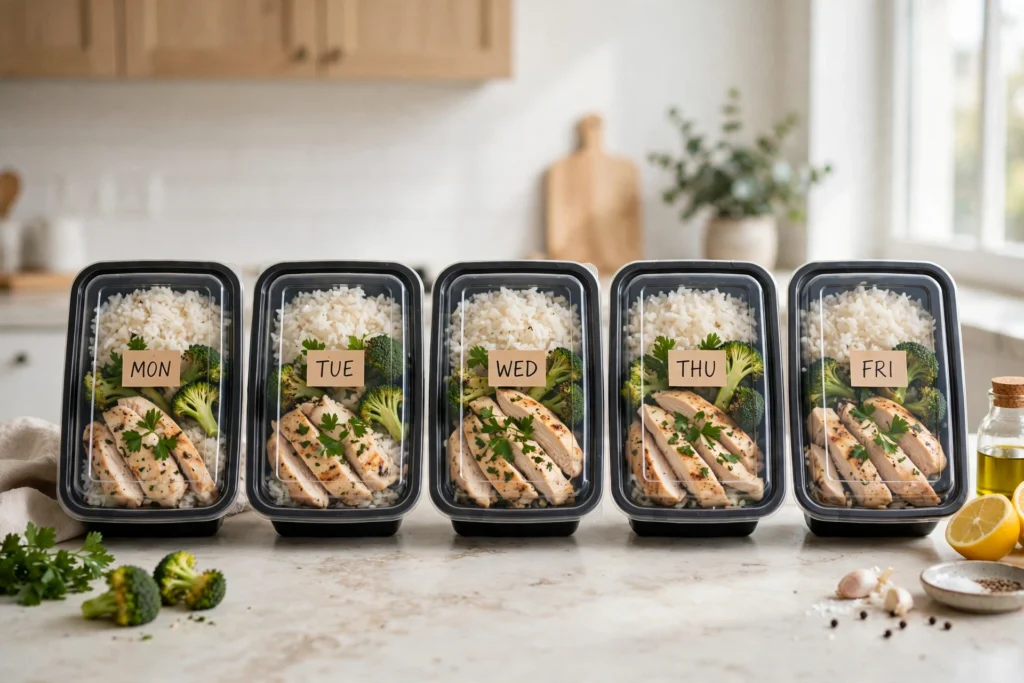
Portion while the food is warm. Shredded chicken, taco filling, and chilis divide cleanly right after cooking. Portioning first also means the protein per container is the protein on the label — no guessing at lunch.
Store by the food-safety clock. Cooked meat dishes keep 3–4 days in the fridge at 40°F or below, per FoodSafety.gov. Cook on Sunday, and Thursday is the last comfortable day. Anything meant for Friday belongs in the freezer.
Freeze the right recipes. The turkey chili, beef stew, lentil soup, and white chicken chili all freeze well for up to 2–3 months. Freeze the chicken and rice and the meatball penne too, knowing the rice and pasta come back a little softer. Freeze in single portions so a serving thaws overnight in the fridge instead of needing an archaeological dig.
Keep the fresh parts separate. Cheese, avocado, sour cream, lime, and crunchy toppings go on at serving time. They do not survive storage, and they make a reheated bowl taste freshly made.
Reheat with moisture. A splash of broth or water before microwaving keeps shredded chicken and turkey from drying at the edges. Reheat until steaming hot throughout.
Label with the number that matters. A strip of tape with the dish name, the date, and the protein per portion turns a freezer shelf into a menu you can actually plan around.
Frequently Asked Questions
What Instant Pot meals have the most protein?
On this page, the chicken taco bowls lead at about 45g per serving, followed by the shredded chicken at about 39g and the white chicken chili at about 36g. The pattern is consistent: lean poultry as the base, a second protein source stacked underneath it, and a portion size that treats the protein as the main course.
Can you cook chicken breast in an Instant Pot?
Yes — it is one of the most common pressure-cooker jobs there is. Whole boneless breasts take about 8–12 minutes at high pressure depending on thickness and whether they will be sliced or shredded, followed by at least a short natural release. The two failure modes are random breast sizes in one batch and skipping the thermometer. Done means 165°F in the thickest part.
Are beans and lentils good protein sources for pressure-cooker meals?
Yes, and they are well suited to the appliance. Lentils carry about 25g of protein per 100g dry and need no soaking. Beans bring about 13–15g of protein per cooked cup, depending on the bean, plus serious fiber. Their per-serving totals land lower than meat — the lentil soup here is 17g — but they cost a fraction as much and pair well with a small amount of meat or dairy in the same pot.
Can you meal prep high-protein Instant Pot recipes?
That is arguably their best use. Chilis, stews, soups, and shredded meats portion well, reheat well, and hold 3–4 days in the fridge or 2–3 months in the freezer. Cook once, portion into single servings, and keep toppings separate until the day you eat them.
Can you freeze Instant Pot chicken meals?
Yes. Shredded chicken, taco filling, and white chicken chili all freeze well in airtight containers or freezer bags for up to 2–3 months, thawed overnight in the fridge. Lay bags flat to freeze and they stack like books and thaw faster. Chicken and rice freezes too, with the understanding that the rice softens a little on reheating.
How much protein should a high-protein dinner contain?
There is no official cutoff with a stamp on it. As a practical kitchen benchmark, a dinner built around a protein source usually lands somewhere between 25g and 45g per serving — which is where most of this page sits. What matters more than any single number is that the figure comes from the actual ingredients and portion, the way each recipe here shows its math.
Can you cook frozen chicken in an Instant Pot?
Yes, with adjustments. Separate the pieces first — a solid frozen block cooks unevenly — expect a longer pressure build, and add roughly half again to the pressure time for breasts of normal thickness. The thermometer check matters even more here: 165°F at the center of the thickest piece, no exceptions.
Is an Instant Pot the same as a pressure cooker?
An Instant Pot is a brand of electric multi-cooker whose main job is pressure cooking, so for these recipes the terms overlap almost completely. Any comparable electric pressure cooker (Ninja Foodi, Crockpot Express, and similar) can run the same times and methods. Stovetop pressure cookers run at slightly higher pressure, so their times usually come down a little.
References
- Instant Brands — Instant Pot official cooking time charts (ingredient-by-ingredient pressure times and release guidance): https://instantpot.com/blogs/blog/cooking-time-tables
- USDA FoodData Central — nutrient values for chicken breast, ground turkey, beef chuck, beans, lentils, grains, and dairy used in the calculations: https://fdc.nal.usda.gov/
- USDA FSIS — safe minimum internal temperatures (poultry 165°F): https://www.fsis.usda.gov/food-safety/safe-food-handling-and-preparation/food-safety-basics/safe-temperature-chart
- FoodSafety.gov — cold storage and leftover guidelines (cooked meals 3–4 days refrigerated; freezing guidance): https://www.foodsafety.gov/food-safety-charts/cold-food-storage-charts