Protein Bagels With Greek Yogurt (Easy, No Yeast)

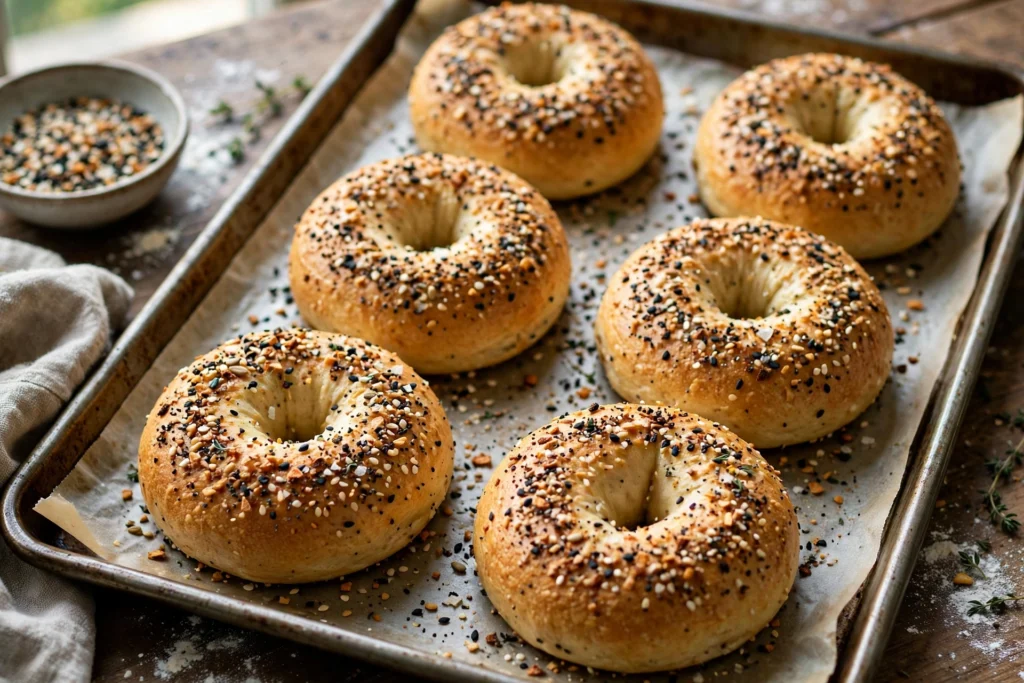
Protein bagels with Greek yogurt topped with everything seasoning on a baking tray

These protein bagels with Greek yogurt skip the yeast, the proofing, and the boiling pot entirely: four ingredients, one bowl, and a dough that goes from mixing to oven in about twenty minutes — and each bagel carries about 10 grams of protein at about 190 calories, because a full cup and a half of Greek yogurt is worked into the dough instead of water. Set expectations honestly and the recipe delivers: the crumb is soft and tender, closer to a good bakery roll than to the dense chew of a boiled New York bagel, and that trade is exactly what makes a same-morning batch realistic. Slice, toast, fill — breakfast is handled.

Protein bagels with Greek yogurt topped with everything seasoning on a baking tray

Why you’ll love these Greek yogurt protein bagels

The list is short because the recipe is. No yeast and no rising time — baking powder does the lifting, so the clock is measured in minutes, not hours. Greek yogurt is not a garnish here; it is the liquid and the protein source at once, which is how a bagel ends up at 10 grams without any protein powder. The ingredients are the ordinary kind: flour, baking powder, salt, yogurt, and whatever topping is already in the cupboard. And the format travels — a batch of six covers weekday breakfasts, sandwich duty at lunch, and the freezer, all from one twenty-minute dough.

Ingredients for protein bagels with Greek yogurt

Makes 6 bagels, about 105g of dough each. Weigh the flour and yogurt if you can; this dough is a ratio, and the ratio is the recipe.

  • Plain non-fat Greek yogurt, 1½ cups (360g) — the protein source and the liquid in one ingredient. It must be the thick, strained Greek style: regular yogurt carries far more water and will give you a batter, not a dough. Non-fat is what the nutrition is calculated on; 2% works with the same method and a slightly richer crumb.
  • All-purpose flour, 2 cups (250g), plus a little extra for dusting — the structure. Plain flour plus separate baking powder is the combination the recipe is built on, because it puts the leavening under your control (the self-rising swap is below).
  • Baking powder, 1 tablespoon — the lift. With no yeast in the dough, this is what puffs the bagels in the oven, so check the tin is in date; old baking powder is the quiet reason flat bagels happen.
  • Fine salt, ¾ teaspoon — flavor, and it firms the dough slightly. Unsalted bagels taste unfinished no matter what goes on them.
  • Optional: 1 beaten egg (or egg white) for a wash, and toppings such as everything bagel seasoning, sesame seeds, or poppy seeds — for shine and for toppings that actually stick. The wash and toppings are NOT included in the nutrition figures.

The self-rising flour swap: use 2 cups (250g) self-rising flour instead of the all-purpose flour and baking powder, and leave the baking powder out entirely — it is already in the flour. Self-rising flour also contains salt, so drop the added salt to a small pinch or omit it; adding the full ¾ teaspoon on top makes the batch noticeably salty, and the sodium per bagel lands in a similar range either way.

What Greek yogurt is best for bagels?

Plain, unsweetened, and thick enough to hold a spoon upright — that is the whole specification. Greek yogurt is strained, which removes much of the whey (the watery liquid), and that strained thickness is what lets a 1½-cup measure hydrate 2 cups of flour into a kneadable dough instead of a sticky soup. Regular yogurt, drinkable yogurt, and the runny top layer of an unstirred tub all carry extra water the recipe has not budgeted for; if the tub has liquid pooled on top, pour it off rather than stirring it in.

Fat level is a texture dial, not a deal-breaker. This recipe is calculated on non-fat Greek yogurt, which gives the leanest numbers and a clean, slightly tangy flavor. A 2% yogurt makes the same dough with a marginally softer, richer crumb. Full-fat works too and tastes the most like a bakery roll — it also adds roughly 20–25 calories a bagel and about 3 grams of fat, which is a fair trade if that is the tub you have. What does not transfer between brands is exact moisture: two non-fat yogurts can differ enough that one dough is tacky and the next is sticky, which is why the method below adjusts by the teaspoon rather than pretending every tub is identical. For the wider set of ways this site cooks with the ingredient, see the high-protein Greek yogurt recipes — this bagel page is the dedicated dough, not one entry in that list.

How to make protein bagels with Greek yogurt

  1. Heat the oven to 375°F (190°C) and line a baking sheet with parchment paper. Baking powder starts working the moment it meets the yogurt’s moisture, so the oven should be ready before the dough is.
  2. Whisk the flour, baking powder, and salt together in a large bowl. Thirty seconds of whisking distributes the baking powder evenly — clumps of it bake into bitter spots.
  3. Add all the Greek yogurt. Stir with a sturdy spoon or a fork until the mixture forms a rough, shaggy dough with no dry flour pockets left at the bottom of the bowl. It will look scruffy. That is correct.
  4. Tip the dough onto a lightly floured surface and knead gently for 3 to 5 minutes, until it turns smooth, soft, and only slightly tacky — it should feel like an earlobe with a little resistance behind it. Yogurt dough announces its state honestly: if it sticks to your fingers in ribbons, knead in flour a teaspoon at a time; if it cracks and tears at the edges, wet your hands and knead the moisture in.
  5. Rest the dough, covered with the upturned bowl or a cloth, for 10 minutes. This is hydration and relaxation, not rising — the flour finishes absorbing the yogurt and the dough stops springing back when you shape it.
  6. Divide the dough into 6 equal pieces, about 105g each if you are weighing (eyeballing works, but even pieces bake evenly and odd ones do not).
  7. Roll each piece into a smooth ball. Push your thumb through the centre, then work two fingers around inside the hole, gently stretching and rotating until the hole is about 1½ inches (4cm) across. Shape the hole bigger than you want the finished one to be — the dough puffs in the oven and the hole closes in by roughly a third.
  8. Arrange the rings on the prepared sheet with space between them; they expand sideways as they bake.
  9. If using the wash, brush each bagel lightly with the beaten egg. If skipping it, a brush of yogurt or milk gives toppings something to hold on to, with a paler finish.
  10. Sprinkle toppings on now, while the surface is damp — everything seasoning, sesame, or poppy seeds all go on before baking, not after.
  11. Bake for 22 to 25 minutes, until the bagels are a deep golden brown, the bottoms are firm and golden, and a bagel feels light for its size when lifted. A thermometer pushed into the crumb should read about 190°F (88°C). Pale bagels at minute 22 are underdone bagels; give them the extra minutes.
  12. Cool on the sheet or a rack for at least 15 to 20 minutes before slicing. The interior is still setting as it cools, and a knife through a hot bagel gums the crumb into a paste. Sliced after the rest, the crumb is clean and soft.
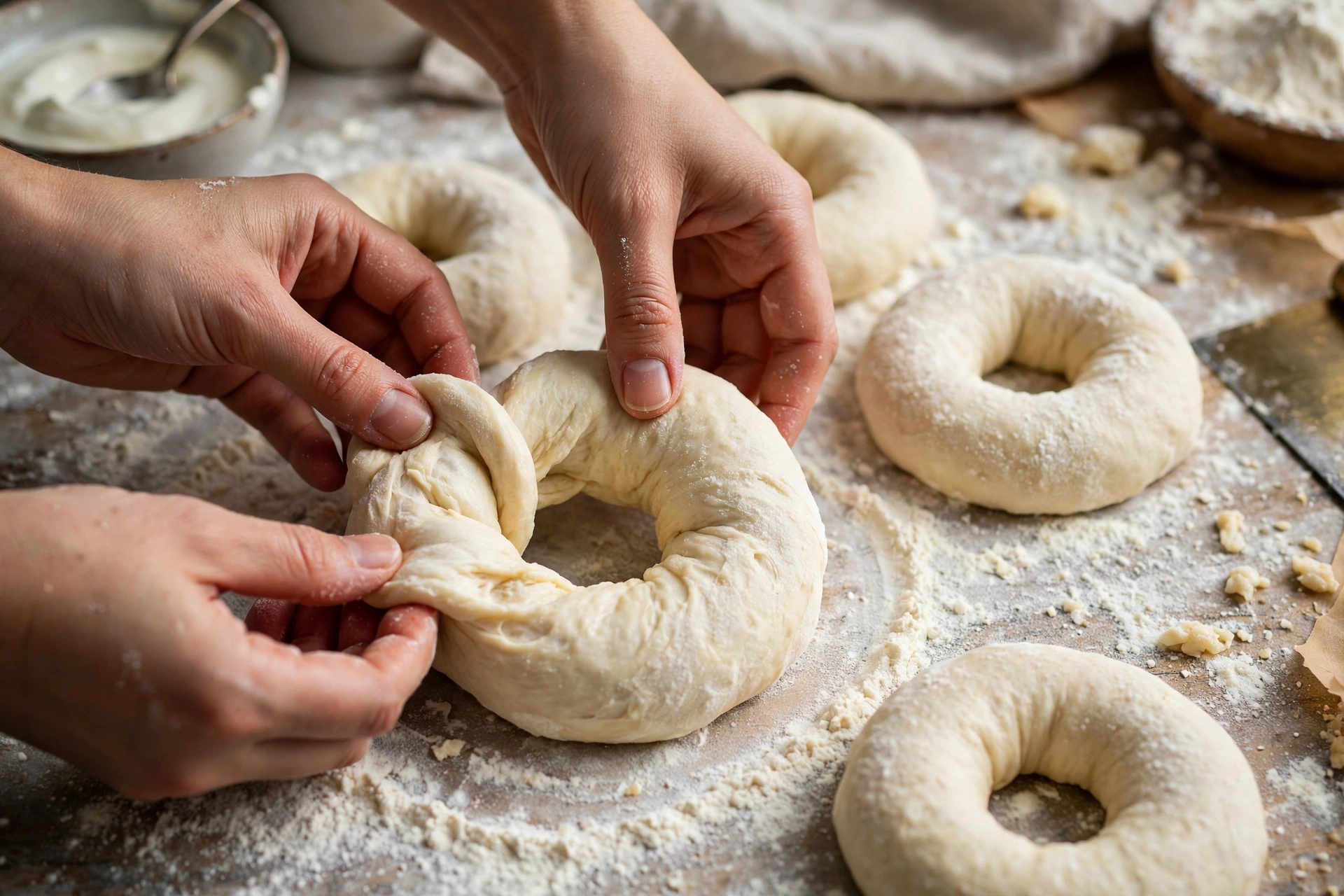
Shaping Greek yogurt bagel dough into rings with a wide center hole

How to get the best bagel texture

Sticky dough is the first problem most people meet, and it is usually a yogurt problem, not a you problem. Brands differ in moisture, and a wet batch of yogurt can push this dough past tacky into unmanageable. The fix is restraint: knead in flour one teaspoon at a time and give each addition a full minute of kneading before judging, because yogurt dough absorbs flour slowly and yesterday’s “hopelessly sticky” batch is often just an impatient one. What not to do is dump in a quarter cup at once — that is how a soft dough becomes a dense one.

Dry or tough bagels have the opposite biography. Too much flour worked in during kneading and shaping is the main cause, with overbaking a close second: these bagels go from golden to hard quickly past the 25-minute mark, because there is very little fat in the dough to protect them. Aggressive kneading plays a part too — this dough needs 3 to 5 gentle minutes to come together, not a ten-minute workout; the longer you work it, the tighter and tougher the crumb sets.

Bagels that lose their shape — holes closed to dimples, rings baked into blobs — come from a soft dough shaped too small. If the hole is under an inch when it goes into the oven, it will not exist when it comes out; 1½ inches is the size that survives. Uneven portions bake unevenly for the same reason any bread does: the small ring overbakes while the large one is still pale. Weighing the six pieces takes thirty seconds and removes the guesswork.
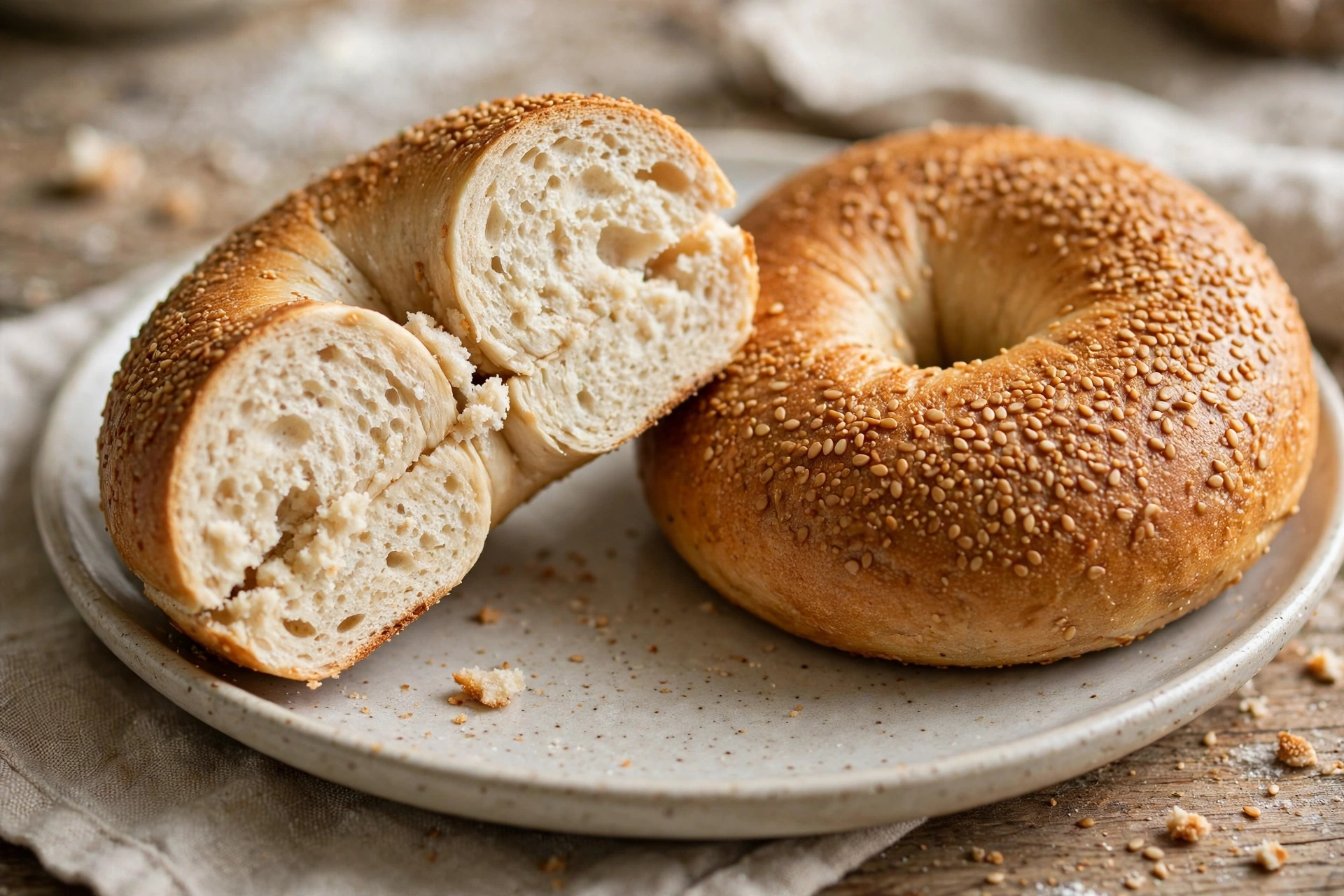
Sliced protein bagel showing the soft interior crumb next to a whole bagel

Do Greek yogurt bagels need yeast?

No — and that is the entire point of the recipe. The lift comes from baking powder (or from the leavening already blended into self-rising flour, if you use the swap), which reacts in the oven and puffs the dough without any activation, proofing, or waiting around. From bowl to baked takes under an hour.

Honesty about what that trade buys and costs: a traditional bagel is yeast-raised, proofed, and boiled before baking, and the boiling is what sets its shiny, deeply chewy crust. This dough is never boiled and never proofed, so the result is softer and more tender, with a thinner, gentler crust — recognizably a bagel in shape and role, closer to a good bakery roll in the bite. Readers who want the full boiled chew need a yeast recipe; readers who want bagels on the table this morning, with the protein the yogurt brings, are in the right place.

Are Greek yogurt bagels high in protein?

Here is the number, calculated from the ingredient list rather than the title: about 10 grams of protein per bagel (10.4 calculated), at about 190 calories, 35 grams of carbs, and about half a gram of fat. The split matters. Of those 10 grams, roughly 6 come from the Greek yogurt and 4 from the flour — swap the yogurt for water and the same dough drops to about 4–5 grams a bagel, which is plain-bread territory. Against a standard shop bagel, the honest comparison is per calorie: a regular bagel needs roughly 270 calories to reach 10–11 grams of protein, while this one delivers about the same protein at 190.

So yes, the title is earned — however you phrase the search, protein bagels with Greek yogurt or protein bagels Greek yogurt style, the math is the same: about double the protein of an equivalent plain dough, at moderate calories. Keep the claim in proportion, though. Ten grams is a meaningful contribution from a bread — it turns a bagel from a carb with a filling into part of the protein plan — but it is not a shake, a chicken breast, or a protein bar. What you fill it with still does most of the work, and the serving section below is built with that in mind. One label warning: Greek yogurts range from about 9 to 11 grams of protein per 100g, so a runnier, lower-protein brand lands closer to 9½ grams a bagel and a thick, high-protein one closer to 11. The method and the headline survive that range; a tight tracker should read their own tub.

Easy bagel topping ideas

All of these go on before baking, pressed lightly onto the washed surface so they stay put:

  • Everything bagel seasoning — the default for a reason; garlic, onion, sesame, poppy, and salt in one shake.
  • Sesame seeds — mild, nutty, and the best partner for smoked salmon later.
  • Poppy seeds — classic look, faint crunch; they scatter, so apply over the tray.
  • Cinnamon sugar — a teaspoon of sugar with a pinch of cinnamon per bagel, for the sweet direction; slice and fill with peanut butter.
  • Shredded cheese — a tablespoon of finely grated cheddar or mozzarella over the wash melts into a lacy top; add it in the last 10 minutes if your oven browns fast.

Toppings are excluded from the base nutrition. Seeds and seasoning change the numbers by almost nothing; cheese adds roughly 25–30 calories and a gram or two of fat per tablespoon, and cinnamon sugar adds about 4 grams of sugar per teaspoon of sugar used. Seasoning blends also carry salt — another reason the dough’s salt is measured, not freehanded.

How to serve Greek yogurt protein bagels

Toasted is the default state — toasting firms the crumb and crisps the crust in a way that makes the tender interior read as bagel, not roll. Fillings that pull the protein further: cream cheese for the classic (about 2 grams of protein per 2 tablespoons — it is there for flavor, not numbers), cottage cheese whipped with herbs when the protein is the point, eggs scrambled or fried for the breakfast sandwich, smoked salmon with a smear of yogurt in place of cream cheese, turkey or chicken slices with mustard for lunch, and peanut butter with banana for the sweet version. Egg-averse households are covered elsewhere on the site: the high protein breakfast without eggs roundup pairs with a toasted bagel half as the base. A bagel and a filling together should land a breakfast in the 20-plus gram range without any single element pretending to do it alone.

How to store and freeze Greek yogurt bagels

Cool the bagels completely before storing — bagging warm bread traps steam and turns the crust leathery. Room temperature: airtight container or sealed bag, up to 2 days; a 10-second microwave warm-up or a minute in the toaster brings back the softness. Fridge: up to 5 days in a sealed bag; the crumb firms in the cold, so always toast or warm before eating. Freezer: slice the bagels in half first, then freeze in a sealed bag with the air pressed out for up to 3 months — sliced is the whole trick, because a frozen half goes straight into the toaster with no thawing and no wrestling a knife through a frozen ring. Thawed at room temperature for 20 minutes, they also eat well untoasted. Bagels stored past these windows are a texture problem before they are a safety one, but the usual rule applies: mold or an off smell means the bin, not the toaster.

Frequently asked questions

Are Greek yogurt bagels high in protein?

For a bread, yes: about 10 grams per bagel at about 190 calories, roughly double an equivalent flour-and-water dough and more than a standard bagel gives you at the same calories. The protein comes from the yogurt (about 6 grams of it) plus the flour (about 4). It is a solid contribution, not a protein supplement — what you fill the bagel with still matters.

Can I make Greek yogurt bagels without yeast?

That is exactly what this recipe is. Baking powder provides the lift, so there is no yeast to activate, no dough to proof, and no boiling step. Bowl to baked in under an hour.

Can I use regular yogurt instead of Greek yogurt?

Not in equal quantities. Regular yogurt carries much more water; the same 1½ cups turns this dough into something closer to a batter, and adding enough flour to rescue it changes the recipe into a larger, denser batch. If regular yogurt is all you have, strain it in a cloth-lined sieve for a few hours until it thickens to a Greek-style consistency, then measure. Or keep it for smoothies and buy the Greek tub for baking.

Can I use self-rising flour?

Yes — swap the all-purpose flour and baking powder for 2 cups (250g) self-rising flour, leave the baking powder out, and drop the added salt to a pinch or none, because self-rising flour already contains both leavening and salt. Everything else in the method is unchanged.

Why is my Greek yogurt bagel dough sticky?

Usually a wetter-than-average yogurt, occasionally an under-measured flour. Knead in flour a teaspoon at a time, giving each addition a minute of kneading before adding more — the dough absorbs it slowly and often comes right with less extra flour than it first seems to need. A dough that is merely tacky, leaving a fingerprint but not a lump, is correct and will bake up softer than a dry one.

Can I use whole wheat flour?

Yes, for part of the flour: swap up to half the all-purpose flour for whole wheat (125g each). Whole wheat drinks more liquid, so expect to knead in an extra spoonful or two of yogurt, and the crumb will be a little denser and nuttier, with closer to 3 grams of fiber per bagel instead of about 1. A full whole-wheat batch is possible but noticeably heavier and is better treated as its own recipe.

Do Greek yogurt bagels taste like regular bagels?

Similar role, different bite. These are softer and more tender, with a thinner crust and a faint yogurt tang, because they are neither proofed nor boiled. Toasted and filled, most people read them as bagels without thinking about it; eaten plain next to a boiled New York bagel, the chew difference is obvious. The recipe trades that chew for a same-morning, no-yeast method and the yogurt’s protein.

Can I freeze homemade Greek yogurt bagels?

Yes — slice them first, bag them with the air pressed out, and freeze for up to 3 months. Frozen halves go straight into the toaster, which is the best reheating method this recipe has.

How much protein is in one Greek yogurt bagel?

About 10 grams, calculated from the full ingredient list: roughly 6 grams from the Greek yogurt and 4 from the flour, in a batch of six. Brands move it a little — about 9½ grams with a lower-protein yogurt, closer to 11 with a thick, high-protein one. Toppings and the optional egg wash are not included in that figure.

References

  • USDA FoodData Central — nutrient profiles for wheat flour, white, all-purpose, and for plain non-fat Greek yogurt; the basis for every figure in the recipe card. https://fdc.nal.usda.gov/
  • USDA FoodData Central — “Bagels, plain, enriched” entry, used for the standard-bagel comparison in the protein section. https://fdc.nal.usda.gov/
  • FoodSafety.gov — general storage guidance for breads and baked goods (room-temperature, refrigerator, and freezer windows). https://www.foodsafety.gov/food-safety-charts/food-storage-chart

Recipe: Protein Bagels With Greek Yogurt

A four-ingredient, no-yeast bagel dough built on Greek yogurt and flour — soft, tender bagels at about 10g protein each, mixed and baked in under an hour.

  • Prep time: about 20 minutes (mixing, kneading, resting, shaping)
  • Cook time: 22–25 minutes
  • Total time: about 1 hour, including at least 15–20 minutes of cooling before slicing
  • Yield: 6 bagels
  • Serving size: 1 bagel (about 105g of dough)
  • Oven temperature: 375°F (190°C)

Ingredients

  • Plain non-fat Greek yogurt — 1½ cups (360g)
  • All-purpose flour — 2 cups (250g), plus extra for dusting
  • Baking powder — 1 tablespoon
  • Fine salt — ¾ teaspoon
  • Optional: 1 beaten egg or egg white, for the wash; toppings of choice (not included in the nutrition)

Instructions

  1. Heat the oven to 375°F (190°C); line a baking sheet with parchment.
  2. Whisk the flour, baking powder, and salt in a large bowl.
  3. Add the yogurt and stir to a rough, shaggy dough with no dry flour left.
  4. Knead on a lightly floured surface for 3–5 minutes, until smooth, soft, and slightly tacky, adding flour only a teaspoon at a time if the dough sticks in ribbons.
  5. Rest the covered dough for 10 minutes.
  6. Divide into 6 pieces of about 105g each; roll each into a ball.
  7. Push a thumb through the centre of each ball and stretch the hole to about 1½ inches (4cm), rotating as you go.
  8. Place on the sheet, brush with egg wash (or a little yogurt or milk), and add toppings.
  9. Bake 22–25 minutes, until deep golden with firm, golden bottoms — the crumb should read about 190°F (88°C) on a thermometer.
  10. Cool at least 15–20 minutes before slicing. Toast to serve.

Storage: Airtight at room temperature up to 2 days, or refrigerated up to 5 days (toast before eating). Freeze sliced, in a sealed bag, for up to 3 months; toast from frozen.

Nutrition per bagel (calculated, base recipe, no wash or toppings): about 190 kcal · protein about 10g · carbs about 35g · fat about 0.5g · saturated fat about 0g · fiber about 1g · sugar about 2g (naturally occurring, from the yogurt — no added sugar in the dough) · sodium about 550mg.

Leave a Comment

Your email address will not be published. Required fields are marked *