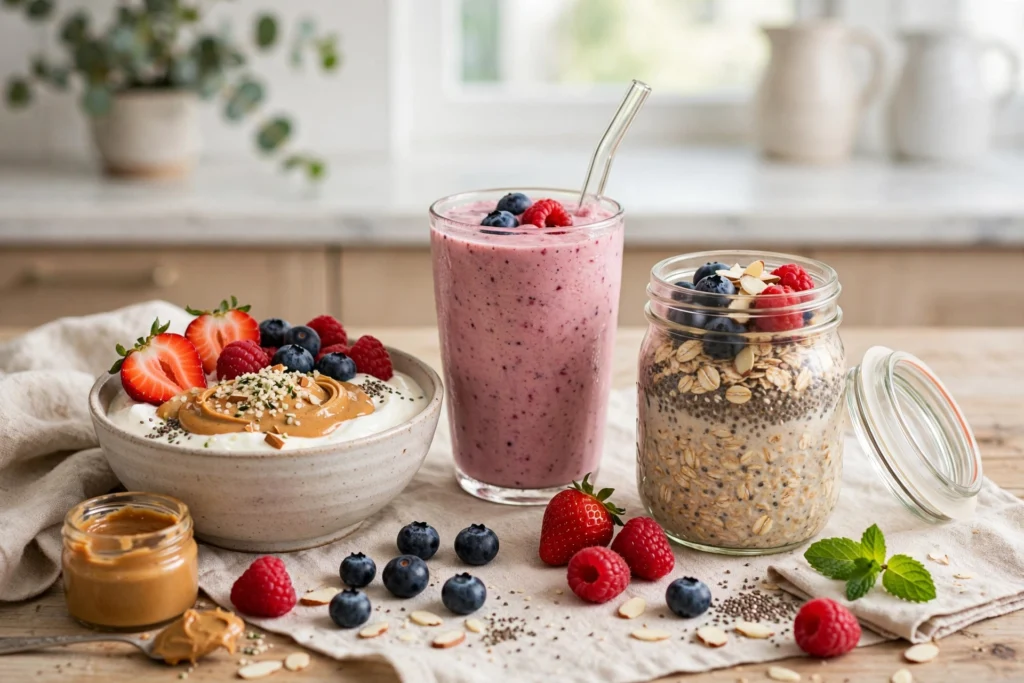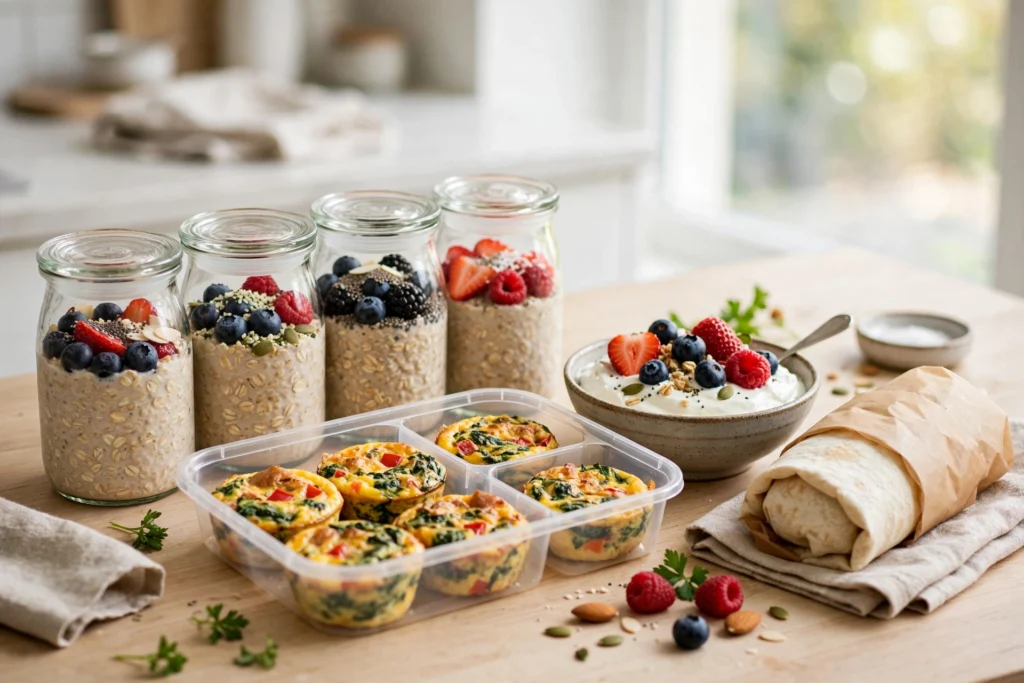

A high protein breakfast smoothie is the fastest route to a real breakfast: everything into the blender, about 90 seconds of blending, and the glass holds 23 to 35 grams of protein. The seven high protein breakfast smoothie recipes below are each built on a proper protein base — Greek yogurt, cottage cheese, kefir, tofu, or a scoop of powder — and each one is designed to be ready in about five minutes.
Straight with you before the recipes, because it shapes how they are written: these are developed recipes, not lab work. The protein and calorie figures are calculated from the ingredients as written, using the standard values in the note under this intro, and the timings are realistic estimates for a standard jug blender. What is published evidence is labelled as evidence, with the studies linked where the claims appear; the rest is kitchen reasoning, and it is written that way on purpose.
One finding genuinely changes how a smoothie should be built. Liquid calories fill you less than solid food: in a 2000 study in the International Journal of Obesity, people given the same carbohydrate as a drink did not cut back later in the day the way the solid-food group did (DiMeglio & Mattes, 2000). That is the likely reason thin café smoothies leave people hungry by ten. These blends are built against that problem three ways: a proper protein dose, fibre from oats, chia, and whole fruit, and enough thickness that they are drunk slowly rather than knocked back. On mornings that allow chewing instead, the high protein breakfast without eggs list covers the solid options.
How the numbers were calculated: every recipe serves 1. Protein is counted from these standard values — Greek yogurt 17g per ¾ cup (170g), cottage cheese 25g per cup, whole milk 8g per cup, soy milk 7g per cup, kefir 11g per cup, peanut butter 8g per 2 tablespoons, rolled oats 5g per ½ cup dry, chia seeds 2g per tablespoon, hemp seeds 3g per tablespoon, silken tofu about 5g per 100g, fruit and spinach about 1g per serving. Protein powder varies most by brand: the calculations use 24g per scoop; yours may give 20 to 25, so check the tub. Treat every total as a solid estimate, not a lab result — brands differ, and the label on your yogurt is the final word.
Table of Contents
ToggleThe seven at a glance
1. Greek Yogurt Berry Blast · About 29g protein · About 430 kcal · 5 minutes
2. Peanut Butter Banana Oat · About 35g protein · About 650 kcal · 5 minutes
3. Green Mango Tofu · About 23g protein · About 400 kcal · 5 minutes (fully plant-based)
4. Mocha Coffee Smoothie · About 34g protein · About 340 kcal · 5 minutes
5. Cottage Cheese Peach · About 35g protein · About 360 kcal · 5 minutes
6. Chocolate Cherry · About 29g protein · About 410 kcal · 5 minutes
7. Tropical Kefir · About 28g protein · About 365 kcal · 5 minutes
The recipes
2. Peanut Butter Banana Oat
Serves 1 · Prep 5 minutes · Blend about 90 seconds · About 35g protein · About 650 kcal
Ingredients: ½ cup rolled oats, 2 tbsp peanut butter, ¾ cup Greek yogurt, 1 banana, ½ cup whole milk, 3 to 4 ice cubes, a pinch of cinnamon.
Method: oats and milk in first, left to sit two minutes if time allows — softened oats blend smooth instead of gritty — then everything else for a full 90 seconds. This is the highest-protein blend on the list and a full meal by any measure: at roughly 650 calories with the oats and peanut butter, it is built for long mornings, not light ones. Swap: almond butter works; halving it drops the protein by about 4 grams.
3. Green Mango Tofu
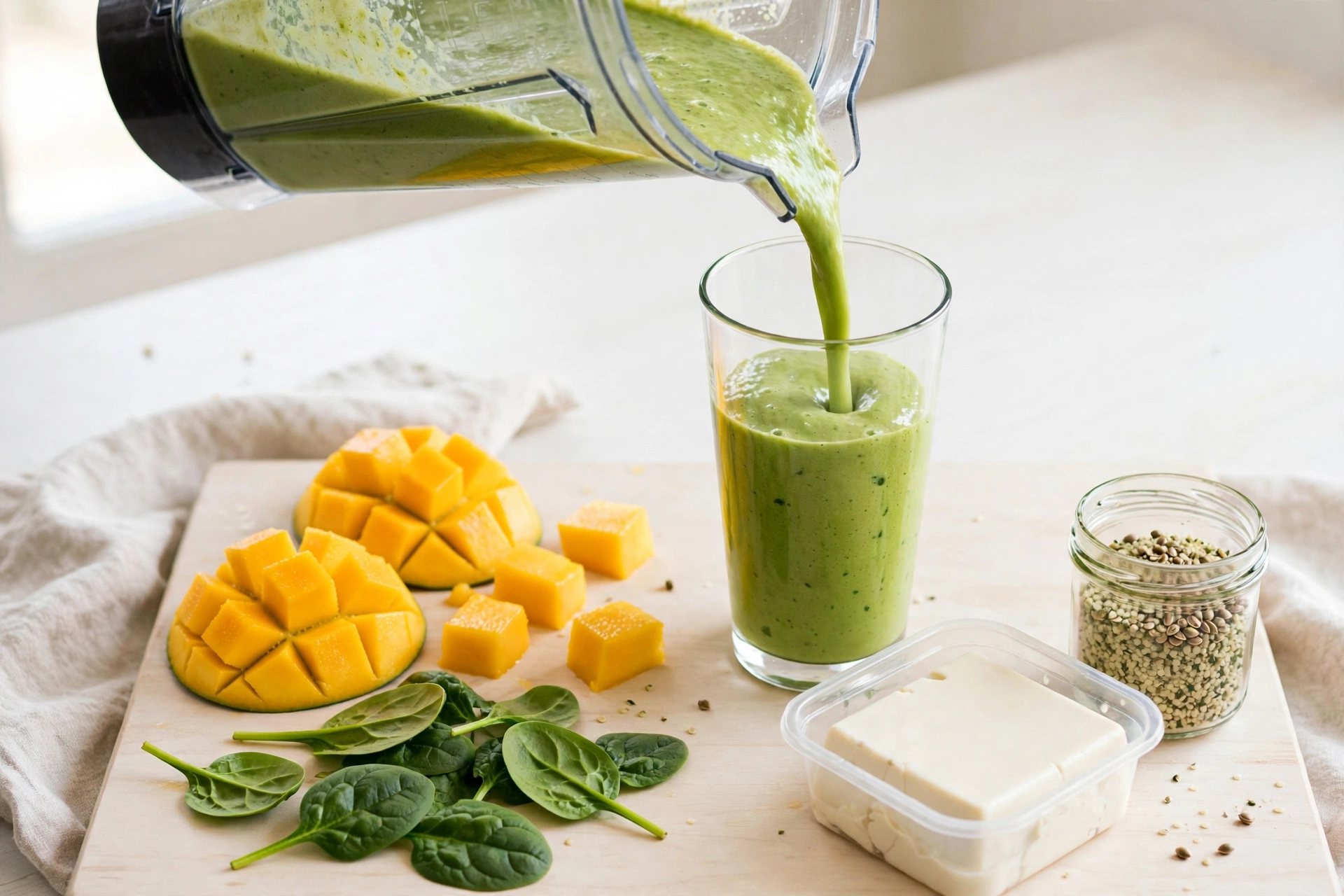
Serves 1 · Prep 5 minutes · Blend about 80 seconds · About 23g protein · About 400 kcal
Ingredients: 150g silken tofu, 1 cup soy milk, 2 tbsp hemp seeds, 1 cup frozen mango chunks, a big handful of spinach (about 30g), juice of ½ lime.
Method: tofu and soy milk first, 20 seconds to a smooth base, then the rest for another minute. Silken tofu is the quiet ingredient here: it blends completely invisible behind mango and lime, and it is how this blend stays fully plant-based while still clearing 20 grams. The spinach changes the colour and nothing else. Swap: Greek yogurt instead of the tofu, if dairy is fine, takes it to about 32 grams.
4. Mocha Coffee Smoothie
Serves 1 · Prep 5 minutes · Blend about 60 seconds · About 34g protein · About 340 kcal
Ingredients: 1 scoop chocolate protein powder (about 24g protein), 1 cup whole milk, 1 shot of espresso or 60ml strong coffee, cooled, 1 tbsp cocoa powder, ½ frozen banana, a handful of ice.
Method: coffee and milk in first, so the powder does not weld itself to the jug wall, then everything else. Breakfast and coffee in one glass, with the frozen banana giving it a coffee-shop texture. On the coffee: brew it fresh or use yesterday’s from the fridge — do not leave it sitting out at room temperature. Swap: decaf works identically; skip the banana and add 2 extra ice cubes for a less sweet version, protein unchanged.
5. Cottage Cheese Peach
Serves 1 · Prep 5 minutes · Blend a full 90 seconds · About 35g protein · About 360 kcal
Ingredients: ¾ cup cottage cheese, ½ cup Greek yogurt, 1 ripe peach (or 1 cup tinned peaches in juice, drained), ½ cup whole milk, ¼ tsp cinnamon, 2 to 3 ice cubes.
Method: blend the full 90 seconds — cottage cheese needs the time to go completely smooth, and at 60 seconds curds can remain. What most people miss is that blended cottage cheese turns into something closer to a cheesecake filling than a diet food, and this recipe is the clearest proof on the list: ¾ cup cottage cheese at 25g a cup, plus the yogurt and milk, is exactly where the 35 grams come from. In winter, tinned peaches lose nothing. Swap: nectarines or mango both work; ricotta instead of cottage cheese drops the protein by about 8 grams.
6. Chocolate Cherry
Serves 1 · Prep 5 minutes · Blend about 90 seconds · About 29g protein · About 410 kcal
Ingredients: ¾ cup Greek yogurt, 1 cup whole milk, 1 cup frozen cherries, 1 tbsp cocoa powder, 1 tbsp chia seeds, ½ tsp vanilla.
Method: everything in, blend until smooth. Frozen cherries are the whole trick — fresh ones make it thin and polite; frozen make it taste like a black forest dessert that happens to carry 29 grams of protein. Swap: frozen raspberries for the cherries, slightly tarter, protein the same; a scoop of chocolate protein powder instead of the cocoa takes it past 50 grams on a training day.
7. Tropical Kefir
Serves 1 · Prep 5 minutes · Blend 60–90 seconds · About 28g protein · About 365 kcal
Ingredients: 1 cup kefir, ½ cup cottage cheese, ½ cup frozen mango, ½ cup frozen pineapple, 1 tbsp hemp seeds.
Method: blend until the cottage cheese disappears. Kefir brings a tang yogurt does not have, and against mango and pineapple it reads as a holiday drink — the cottage cheese hides inside it completely while doing the protein heavy lifting. Swap: Greek yogurt thinned with ¼ cup milk replaces the kefir at the same protein, with less tang.
How to push any high protein breakfast smoothie higher
The base decides everything. Water or juice as the liquid adds zero protein; a cup of whole milk adds 8 grams, soy milk about 7. On top of the base, the ladder runs smallest first: 1 tbsp chia or hemp seeds, about 2 to 3 grams. Half a cup of Greek yogurt blended into any recipe, about 11 grams. Half a cup of cottage cheese, about 12 grams — blend longer and it vanishes. A scoop of protein powder, 20 to 25 grams depending on the brand, is the biggest single jump; it is also the most expensive per gram, which is a fair reason to save it for training days. Two of these stacked turns a low-twenties smoothie into a 40-gram one, and the maths sits on the tub and the cup, not in hope.
Too thick, too thin: the standard fixes
Too thick to drink: the frozen fruit ratio is usually the cause. Add milk two tablespoons at a time and blend five seconds between adds — pouring in half a cup at once overshoots and there is no way back. Too thin: a handful of frozen fruit, 2 tbsp oats, or 1 tbsp chia left to stand five minutes will pull it back; chia thickens as it sits. Gritty: the oats or powder went in dry on top — liquids first, dry goods second, frozen last, and blend longer than feels necessary. Separated after standing: normal for real ingredients, not a sign of spoilage; a ten-second re-blend or a hard stir fixes it.
Make-ahead and storage, stated plainly
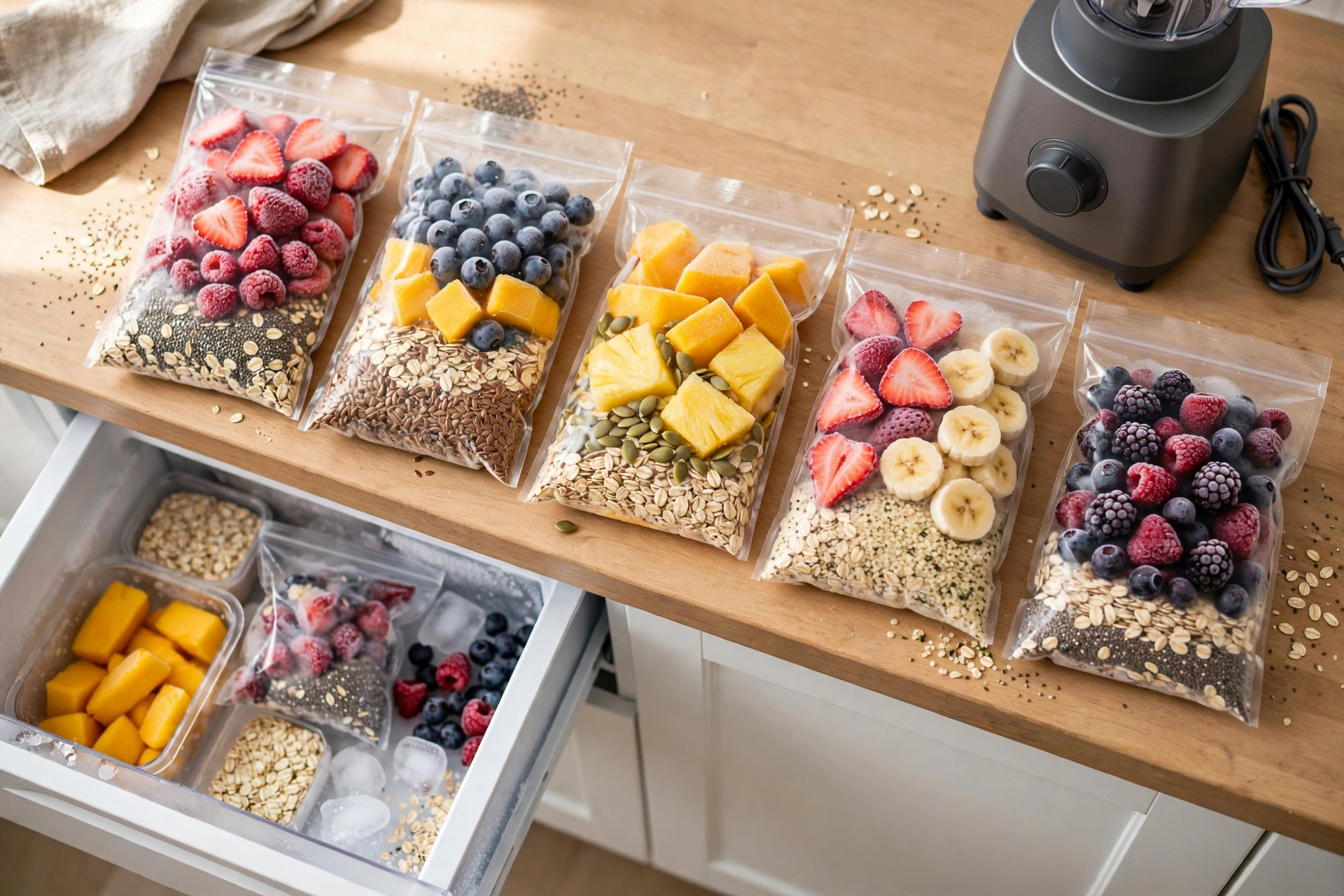
A blended smoothie is at its best inside the hour. Kept in a sealed jar in the fridge, filled to the top so there is less air, it stays safe and drinkable the next morning — but the texture thins, the colour dulls, and the top oxidises slightly. The rules that matter: drink within 24 hours, keep the fridge at 4°C / 40°F or below, and bin anything that smells off or sat out at room temperature; protein-rich drinks are not the place to gamble. What genuinely works for prep is the freezer pack: every ingredient except the liquid, yogurt, and powder goes into a bag or tub per smoothie — fruit, oats, seeds, spinach — frozen for up to 3 months. In the morning the pack goes in the blender with the wet ingredients and the five-minute timing survives. It is the same prep logic as the breakfast meal prep list.
Swaps and substitutions
Dairy-free: soy milk and soy yogurt are the only swaps that keep the protein honest — almond and oat drinks carry about 1 gram a cup, and a smoothie built on them needs the tofu route from recipe 3 or a scoop of powder to stay in the twenties. Nut-free: sunflower seed butter matches peanut butter at about 8 grams per two tablespoons, or add ¼ cup more Greek yogurt instead. No protein powder: recipes 1, 2, 3, 5, 6, and 7 never needed it — only the mocha leans on a scoop, and Greek yogurt with an extra spoon of cocoa gets that one to about 27 grams without. Sweeter without sugar: ripe banana, mango, and tinned peaches in juice all sweeten for free; honey adds about 60 calories a tablespoon and no protein.
Questions people ask
Will a smoothie actually keep me full until lunch?
A thin one probably will not — that is the liquid-calorie finding linked in the intro. These are built thick, with protein and fibre, because the evidence points that way: a 2015 review of higher-protein diets found greater fullness and better weight outcomes at roughly 25 to 30 grams of protein per meal (Leidy et al., 2015). Expect three to four hours from the bigger blends; on a very long morning, pair one with a boiled egg.
Can I use these for weight loss?
They fit the same maths as any breakfast — calories in against the day. The mocha, peach, and kefir blends sit near 340 to 365 calories at 28 to 35 grams of protein, which is a strong ratio; the peanut butter oat blend, at about 650, is a meal replacement, not a light option. The weight loss meal ideas list uses this style of breakfast as its morning slot.
Do I need a powerful blender?
No. These recipes are written for a standard jug blender: frozen fruit in smaller chunks, liquids first, and 90 seconds of patience. A high-speed blender shortens that to about 40 seconds and handles oats more smoothly — nice, not required.
Can kids drink these?
The berry, banana oat, and peach blends are ordinary food in a glass, in a half portion for small children — and the coffee one is adults only, obviously. Protein powder stays out of children’s glasses as a general rule here: their protein needs per meal are much lower than an adult’s, and normal meals cover them without supplements.
References
Liquid calories and fullness (the drink-vs-solid study): DiMeglio DP & Mattes RD, “Liquid versus solid carbohydrate: effects on food intake and body weight”, International Journal of Obesity, 2000 — DOI record
Protein, fullness, and weight management: Leidy HJ et al., “The role of protein in weight loss and maintenance”, American Journal of Clinical Nutrition, 2015 — DOI record
Spreading protein across the day: Mamerow MM et al., “Dietary protein distribution positively influences 24-h muscle protein synthesis in healthy adults”, The Journal of Nutrition, 2014 — PubMed record
Practical protein targets for active people: Bean A, The Complete Guide to Sports Nutrition, 9th edition (Bloomsbury Sport, 2022).
Protein values for yogurt, cottage cheese, kefir, tofu, oats, and peanut butter: USDA FoodData Central
Start with the berry blast and a shelf of freezer packs. A high protein breakfast smoothie is not a health kick; it is the breakfast format that survives a busy morning — five minutes, no pan to wash, and enough protein that lunch can look after itself.