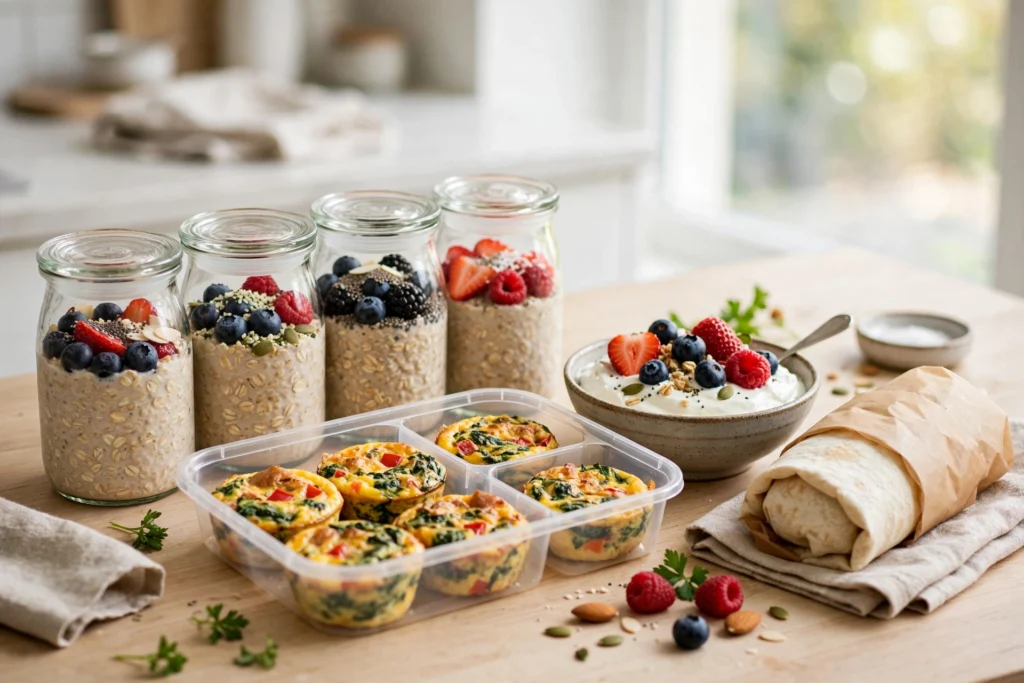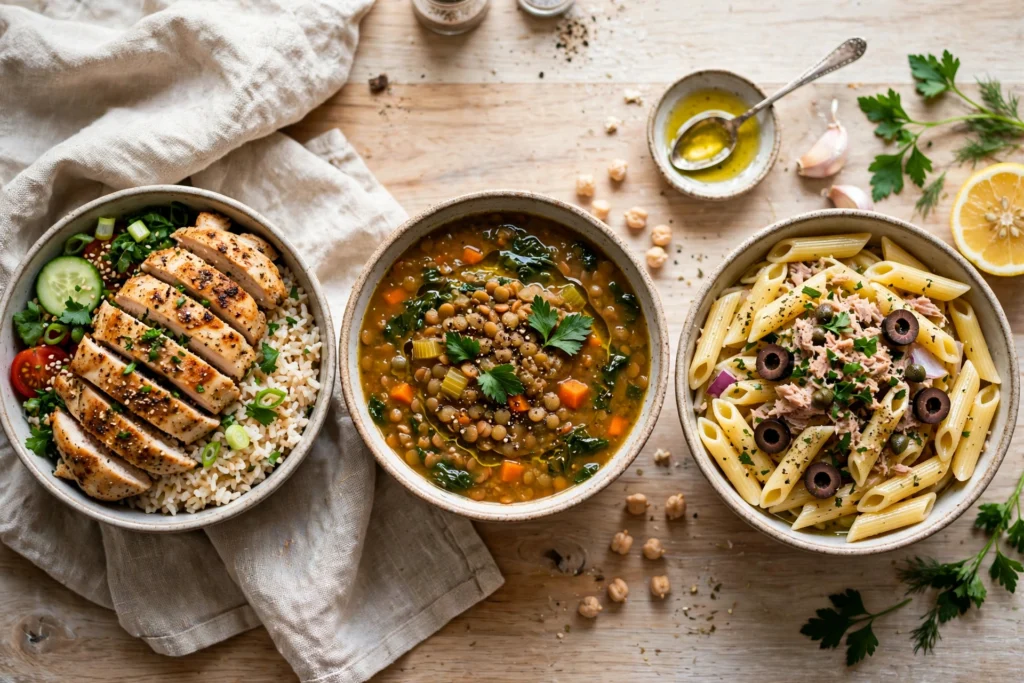
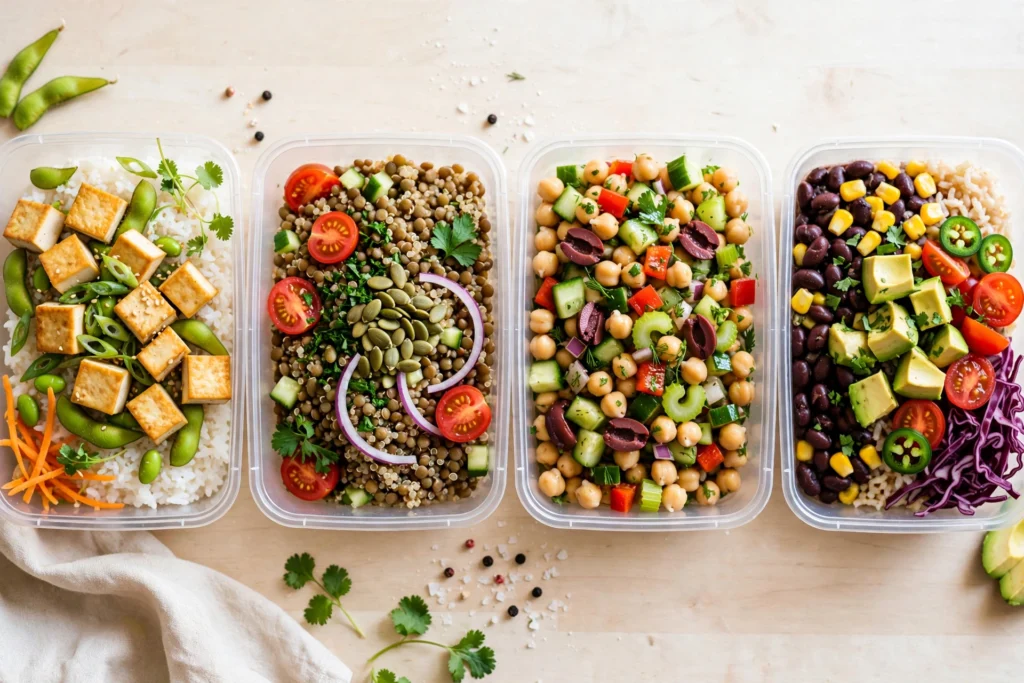
I prep vegetarian lunches and dinners on Sunday, and the question I had to solve was not flavour — it was protein that survives four days in a box. This high protein vegetarian meal prep list is my working answer: seven recipes, each between 21 and 34 grams of protein per serving, with the exact quantities I use, how long each one keeps, and how I reheat it so day four tastes like food and not like a chore.
I do the whole session in about ninety minutes, and most of it is the oven and the rice cooker working while I chop. Two of these are cold boxes that never see heat again. Five reheat properly. I think that mix matters — a week of identical reheated trays is where meal prep goes to die.
How I checked the numbers: every protein figure below is built from the ingredients as written, using standard food data — extra-firm tofu at about 12g per 100g, cooked lentils 18g a cup, cooked black beans 15g a cup, cooked chickpeas about 14g a cup, cottage cheese about 25g a cup, Greek yogurt about 17g per three-quarter cup, cooked quinoa 8g a cup, cooked pasta about 7g a cup. Add a recipe’s parts, divide by four servings, and you land where I landed. Brands shift a gram or two; the structure holds.
Table of Contents
ToggleWhat makes high protein vegetarian meal prep work (and stay safe)
Two things I had to learn. First, anchors that travel: tofu, lentils, beans, chickpeas, cottage cheese, and eggs hold their texture and their protein in a fridge in a way that a leafy grain bowl never will. The research backs the approach — a 2019 review in Nutrients found that legumes, nuts, and seeds are sufficient for full protein adequacy in adults on vegetarian diets, and the Academy of Nutrition and Dietetics position paper says appropriately planned vegetarian diets are nutritionally adequate, athletes included. Second, the clock: cooked meals keep 3 to 4 days in the fridge at 4°C / 40°F or below — that is the food-safety guidance I follow, and it is why my prep week runs Sunday to Thursday, with Friday as a freezer or fresh day. I do not stretch leftovers past day four, ever, whatever they cost.
1. Tofu and Edamame Rice Bowls · About 34g protein · Makes 4 boxes
Ingredients: 2 blocks extra-firm tofu (700g total), 2 cups shelled edamame (frozen is fine), 3 cups cooked rice (from about 1¼ cups dry), 2 tbsp soy sauce, 1 tbsp sesame oil, 1 tsp garlic powder, 1 tbsp sesame seeds, 2 spring onions. Optional: 1 avocado, added fresh on the day.
Press the tofu for 10 minutes, cube it, and crisp it in a hot pan or air fryer until the edges go golden — about 12 minutes. Microwave the edamame, cook the rice, then build: rice first, tofu and edamame side by side, soy and sesame oil shaken over, seeds and spring onions on top. The protein maths: tofu 175g ≈ 21g, edamame ½ cup ≈ 8.5g, rice ≈ 3.5g, seeds ≈ 1g. Storage: 4 days in the fridge, sauce already on is fine here. Reheat: microwave 2 minutes; the tofu softens a little but the sesame carries it. I add the avocado fresh, never prepped — brown avocado is where good boxes go to feel sad.
2. Lentil and Quinoa Bowls · About 25g protein · Makes 4 bowls
Ingredients: 1½ cups dry green or brown lentils (about 3½ cups cooked), 1 cup dry quinoa (about 3 cups cooked), 1 cucumber, 2 cups cherry tomatoes, ½ red onion, 100g feta. Dressing: 3 tbsp olive oil, juice of 1 lemon, 1 tsp ground cumin, salt, a handful of chopped parsley.
Simmer the lentils 20 minutes — no soak, which is exactly why I love them — and cook the quinoa alongside. Chop the vegetables, whisk the dressing, and combine everything while the grains are still slightly warm so they drink the lemon. Per serving: lentils ≈ 16g, quinoa ≈ 6g, feta ≈ 3.5g. Storage: 4 to 5 days; this is the longest keeper on the list. Reheat: I eat it cold or at room temperature. If you want it warm, 90 seconds in the microwave, feta and all — it behaves.
3. Chickpea and Cottage Cheese Salad Boxes · About 24g protein · Makes 4 boxes
Ingredients: 2 cans chickpeas, drained (about 3 cups), 2 cups cottage cheese, 1 cucumber, 1 red pepper, ½ red onion, 2 tbsp olive oil, juice of ½ lemon, 1 tsp smoked paprika, and a handful of spinach per box.
Chop, drain, stir. That is the whole method, and I am not embarrassed — the cottage cheese is the dressing and the protein in one move. Per box: chickpeas ¾ cup ≈ 11g, cottage cheese ½ cup ≈ 12.5g. Storage: 3 to 4 days; keep the spinach separate and add it when you eat, or it wilts into the cheese by Wednesday. Reheat: none. It is a cold box and proud of it.
4. Black Bean Burrito Bowls · About 21g protein · Makes 4 bowls
Ingredients: 2 cans black beans, drained (about 3 cups), 1 cup dry rice (about 3 cups cooked), 1 cup corn (frozen, thawed), 1 cup salsa, ½ cup Greek yogurt, ½ cup shredded cheese, 1 tsp cumin, 1 tsp chilli powder, 1 lime. Avocado fresh on the day if you like.
Warm the beans with the cumin and chilli powder and a splash of their liquid. Rice in the base, beans over, corn and salsa in their corners, yogurt where sour cream would go. Per serving: beans ≈ 11g, rice ≈ 3.5g, cheese ≈ 3.5g, yogurt ≈ 2g, corn ≈ 1.5g. Storage: components keep 4 days; I box rice and beans together and keep salsa and yogurt in small pots. Reheat: the rice-and-bean base gets 2 minutes in the microwave, then the cold toppings go on. Reheating salsa and yogurt with the base is the one mistake I made so you do not have to.
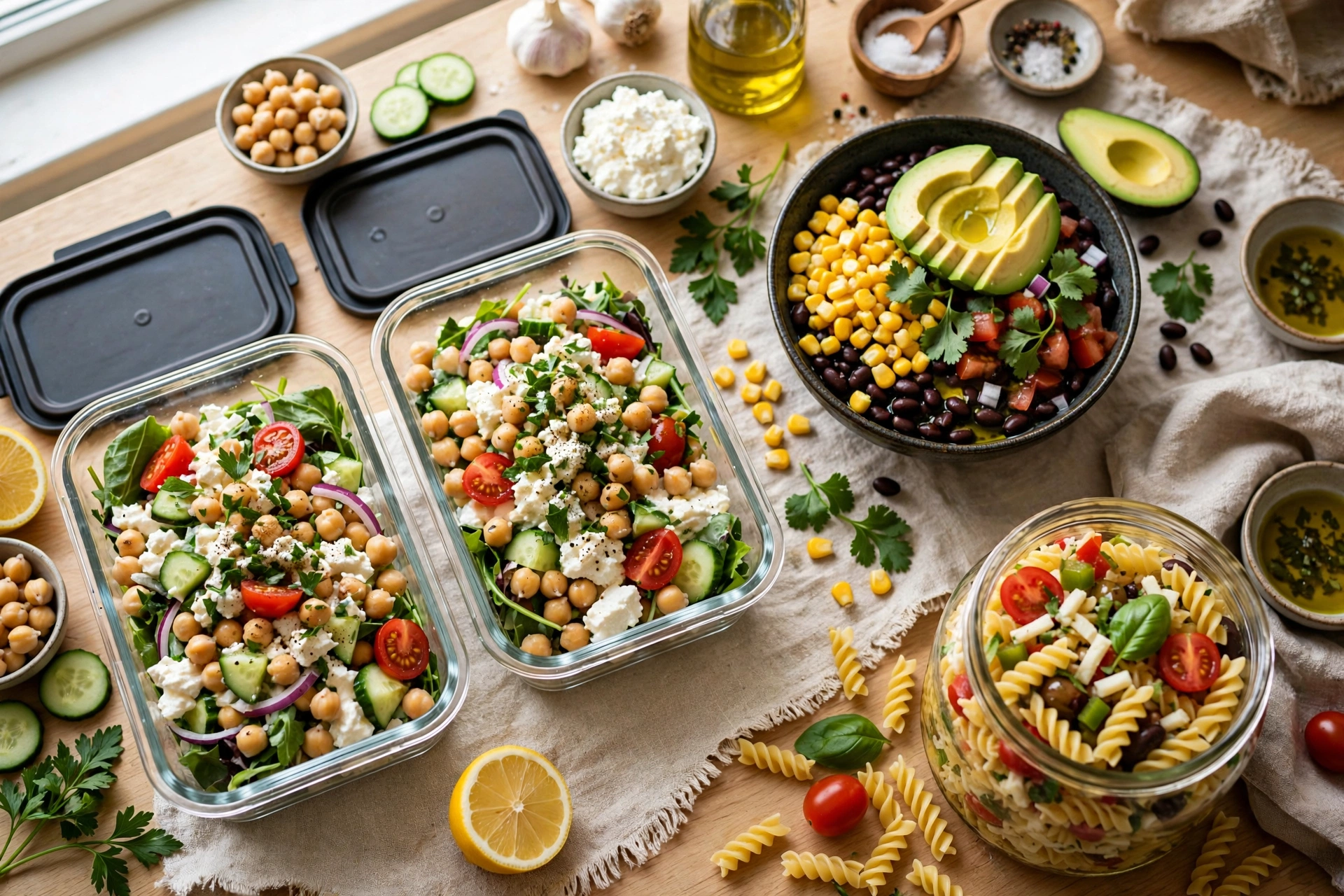
5. High-Protein Vegetarian Pasta Salad · About 25g protein · Makes 4 boxes
Ingredients: 300g dry pasta (penne or fusilli), 1 can chickpeas, drained (about 1½ cups), 1 cup Greek yogurt, 1 tbsp olive oil, juice of ½ lemon, 1 cup cherry tomatoes, 1 cucumber, ½ cup crumbled feta, a handful of basil or parsley, 1 tsp garlic powder.
Cook the pasta one minute shy of the packet time — it softens as it sits in dressing, and starting firm is the difference between salad and mush. Whisk yogurt, oil, lemon, and garlic into the dressing, then fold everything through while the pasta is just warm. Per serving: pasta ≈ 10g, yogurt ≈ 5.5g, chickpeas ≈ 5.5g, feta ≈ 3.5g. A note from my own testing: protein pasta pushes this to about 32g, but regular pasta keeps the texture better by day three, so I stay regular. Storage: 3 to 4 days. Reheat: none — add a spoon of yogurt or a splash of water and stir if it drinks too much dressing overnight.
6. Tofu and Vegetable Stir-Fry · About 28g protein · Makes 4 boxes
Ingredients: 2 blocks extra-firm tofu (700g), 4 cups frozen stir-fry vegetables, 3 tbsp soy sauce, 1 tbsp grated ginger (or 1 tsp ground), 2 garlic cloves, 1 tbsp sesame oil, 2 tbsp roasted peanuts, 3 cups cooked rice to serve.
Crisp the tofu first and set it aside — vegetables steaming on top of raw tofu is how you get grey cubes, and I have eaten enough grey cubes for one lifetime. Stir-fry the vegetables hard and fast, sauce in, tofu back through at the end just to coat. Per serving: tofu ≈ 21g, rice ≈ 3.5g, vegetables ≈ 2g, peanuts ≈ 1.7g. Storage: 3 to 4 days. Reheat: microwave 2½ minutes works; a hot skillet for 3 minutes works better and brings some of the edges back.
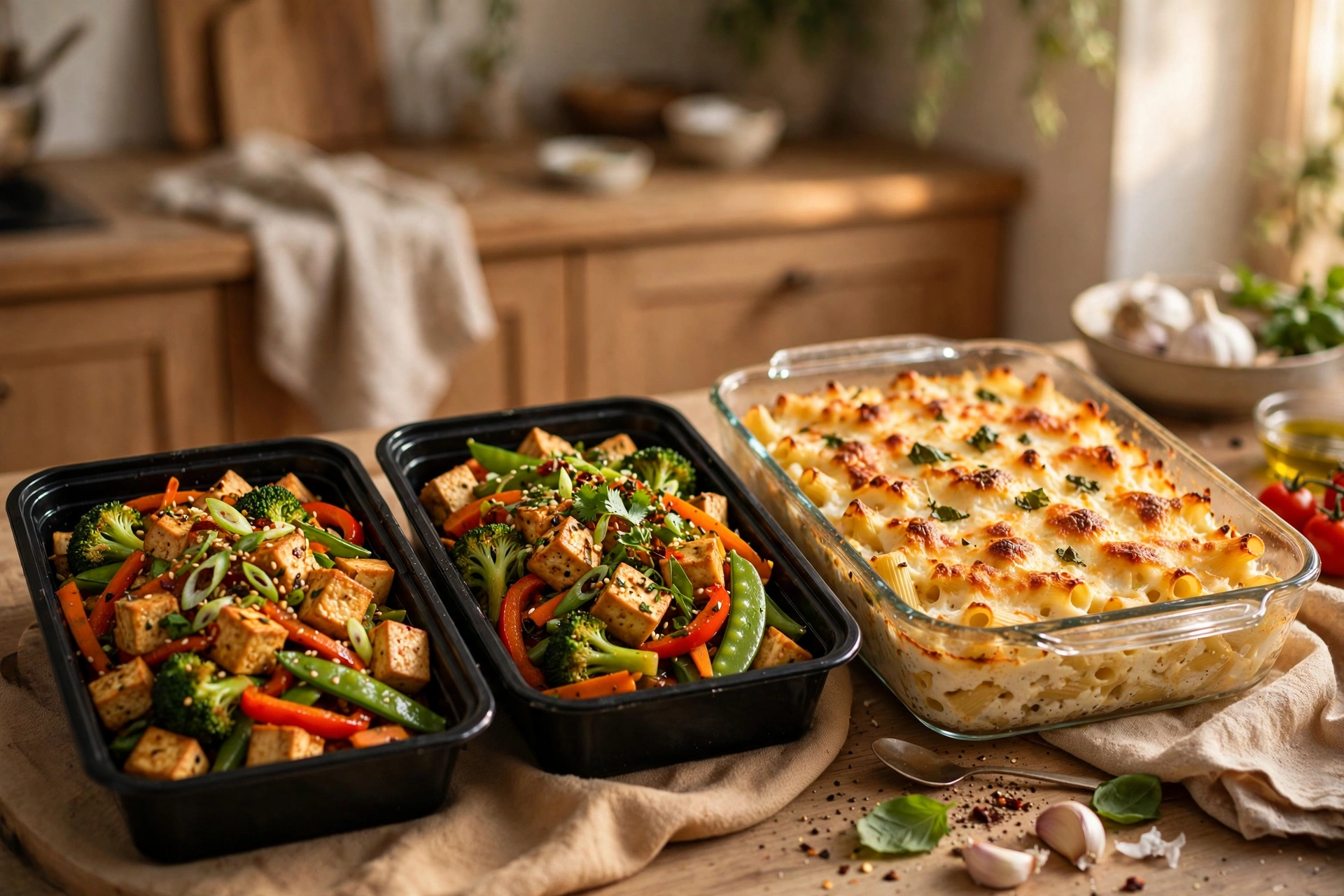
7. Cottage Cheese Baked Pasta · About 30g protein · Makes 4 portions
Ingredients: 300g dry penne, 2 cups cottage cheese, 1½ cups marinara, 1 cup shredded mozzarella, ¼ cup grated parmesan, 2 cups spinach, 1 tsp Italian herbs, 2 garlic cloves (or 1 tsp garlic powder).
Blend the cottage cheese smooth — same trick as my lasagna roll-ups — and stir it through just-cooked penne with the marinara, spinach, and herbs. Into a dish, mozzarella and parmesan over the top, bake at 190°C / 375°F for about 20 minutes until it bubbles at the edges. Per portion: pasta ≈ 10g, cottage cheese ≈ 12.5g, mozzarella ≈ 6g, parmesan ≈ 2g. Storage: 4 days in the fridge, and it freezes for up to 2 months — the only true freezer recipe on this list. Reheat: oven at 180°C / 350°F for 15 minutes covered, or microwave 3 minutes. The oven version tastes freshly made; I save it for the day-four portion on purpose.
How I run the session
My order, refined by mess: rice and quinoa on first, lentils simmering beside them. Tofu crisps while the grains cook. The baked pasta goes into the oven and uses the waiting time. Cold boxes — chickpea salad, pasta salad, burrito components — get assembled last, straight into their containers. Ninety minutes, one sink of washing up, five days of lunches and two dinners handled. If you want the meat-eater’s version of this rhythm, my full-week meal prep plan runs the same system, and my vegetarian dinners cover the fresh-cooked nights.
Questions people ask me
Can I freeze these?
The baked pasta, yes — two months, happily. The stir-fry and burrito bases freeze acceptably for two to three weeks, though the tofu goes chewier, which some people in my house actually prefer. The cold boxes and anything with cucumber or fresh tomato: no. Freeze the cooked parts, add the fresh parts later.
Do I need to combine proteins at every meal?
I do not, and the current evidence is on my side. The old rule about combining beans and grains at the same sitting has softened — what matters is variety across the day. These recipes happen to combine anyway, because lentils with quinoa tastes good, not because a rule told me to.
How do I make all of it vegan?
Swap the cottage cheese for a firm tofu blended with lemon and salt (the salad boxes survive it), the Greek yogurt for a soy yogurt, and the feta and mozzarella for vegan versions or a spoon of nutritional yeast in the pasta bake. Protein drops about 3 to 5 grams a serving on the dairy-heavy ones; the lentil, tofu, and bean recipes do not change at all.
Why do my prepped lunches taste tired by day three?
Usually two reasons: everything was reheated the same way, and the fresh element was prepped on Sunday too. Keep one thing fresh per box — herbs, avocado, spinach, a squeeze of lime — and alternate a cold box with a hot one. I plan cold on Monday and Wednesday, hot on Tuesday and Thursday, and the week stops tasting like a repeat.
References
Protein adequacy in vegetarian diets: Mariotti F & Gardner CD, “Dietary Protein and Amino Acids in Vegetarian Diets — A Review”, Nutrients, 2019 — DOI record The dietetics position: Melina V, Craig W & Levin S, “Position of the Academy of Nutrition and Dietetics: Vegetarian Diets”, Journal of the Academy of Nutrition and Dietetics, 2016 — DOI record Protein needs and meal planning on plant-based diets: Davis B & Melina V, Becoming Vegan: The Complete Reference to Plant-Based Nutrition, Comprehensive Edition (Book Publishing Company, 2014). Leftover storage times (3–4 days refrigerated): FoodSafety.gov Protein values for tofu, lentils, beans, chickpeas, cottage cheese, and quinoa: USDA FoodData Central
Pick three of the seven for your first week — I would start with the lentil bowls, the stir-fry, and the baked pasta — and let the system prove itself before you scale it. Meal prep did not change what I eat. It changed whether future me gets a say in it, and future me is grateful every single Thursday.